“A Kind of Fascism Is Replacing Our Democracy”

by Sheldon S. Wolin, Newsday, July 18, 2003


Sept. 11, 2001, hastened a significant shift in our nation’s self-understanding. It became commonplace to refer to an “American empire” and to the United States as “the world’s only superpower.”

Instead of those formulations, try to conceive of ones like “superpower democracy” or “imperial democracy,” and they seem not only contradictory but opposed to basic assumptions that Americans hold about their political system and their place within it. Supposedly ours is a government of constitutionally limited powers in which equal citizens can take part in power. But one can no more assume that a superpower welcomes legal limits than believe that an empire finds democratic participation congenial.

No administration before George W. Bush’s ever claimed such sweeping powers for an enterprise as vaguely defined as the “war against terrorism” and the “axis of evil.” Nor has one begun to consume such an enormous amount of the nation’s resources for a mission whose end would be difficult to recognize even if achieved.

Like previous forms of totalitarianism, the Bush administration boasts a reckless unilateralism that believes the United States can demand unquestioning support, on terms it dictates; ignores treaties and violates international law at will; invades other countries without provocation; and incarcerates persons indefinitely without charging them with a crime or allowing access to counsel.

The drive toward total power can take different forms, as Mussolini’s Italy, Hitler’s Germany and Stalin’s Soviet Union suggest.

The American system is evolving its own form: “inverted totalitarianism.” This has no official doctrine of racism or extermination camps but, as described above, it displays similar contempt for restraints.

It also has an upside-down character. For instance, the Nazis focused upon mobilizing and unifying the society, maintaining a continuous state of war preparations and demanding enthusiastic participation from the populace. In contrast, inverted totalitarianism exploits political apathy and encourages divisiveness. The turnout for a Nazi plebiscite was typically 90 percent or higher; in a good election year in the United States, participation is about 50 percent.

Another example: The Nazis abolished the parliamentary system, instituted single-party rule and controlled all forms of public communication. It is possible, however, to reach a similar result without seeming to suppress. An elected legislature is retained but a system of corruption (lobbyists, campaign contributions, payoffs to powerful interests) short-circuits the connection between voters and their representatives. The system responds primarily to corporate interests; voters become cynical, resigned; and opposition seems futile.

While Nazi control of the media meant that only the “official story” was communicated, that result is approximated by encouraging concentrated ownership of the media and thereby narrowing the range of permissible opinions.

This can be augmented by having “homeland security” envelop the entire nation with a maze of restrictions and by instilling fear among the general population by periodic alerts raised against a background of economic uncertainty, unemployment, downsizing and cutbacks in basic services.

Further, instead of outlawing all but one party, transform the two-party system. Have one, the Republican, radically change its identity:

From a moderately conservative party to a radically conservative one.

From a party of isolationism, skeptical of foreign adventures and viscerally opposed to deficit spending, to a party zealous for foreign wars.

From a party skeptical of ideologies and eggheads into an ideologically driven party nurturing its own intellectuals and supporting a network that transforms the national ideology from mildly liberal to predominantly conservative, while forcing the Democrats to the right and and enfeebling opposition.

From one that maintains space between business and government to one that merges governmental and corporate power and exploits the power-potential of scientific advances and technological innovation. (This would differ from the Nazi warfare organization, which subordinated “big business” to party leadership.)

The resulting dynamic unfolded spectacularly in the technology unleashed against Iraq and predictably in the corporate feeding frenzy over postwar contracts for Iraq’s reconstruction.

In institutionalizing the “war on terrorism” the Bush administration acquired a rationale for expanding its powers and furthering its domestic agenda. While the nation’s resources are directed toward endless war, the White House promoted tax cuts in the midst of recession, leaving scant resources available for domestic programs. The effect is to render the citizenry more dependent on government, and to empty the cash-box in case a reformist administration comes to power.

Americans are now facing a grim situation with no easy solution. Perhaps the just-passed anniversary of the Declaration of Independence might remind us that “whenever any form of Government becomes destructive …” it must be challenged.

Anne Applebaum on Russia

As I listened to Anne Applebaum, it appears that her current interest is in understanding how propaganda works and how it is being actually used. [A topic covered by Noam Chomsky’s Manufacturing Consent] Although propaganda is universal, her interest is focused on Russia, her field of expertise. She is the author of:
Between East and West: Across the Borderlands of Europe (1994);
Gulag: A History (2003);
Gulag Voices: An Anthology (2011);
Iron Curtain: The Crushing of Eastern Europe 1944-56 (2012)
Red Famine: Stalin’s War on Ukraine (2018)

Disinformation & the Threat to Democracy (Jan. 4, 2019 at the Library of Congress)

In Jan. 2013, she gave a lecture. Putinism: the Ideology. I would add to this title: Fake democracy by Fake opposition, by Real control, and by Real assassination.

Basic Income and/or Free Subsistence Land?

In the following videos, Rutger Bregman argues for a Universal Basic Income. This idea was first proposed by Bertrand Russell in his book Proposed Roads to Freedom, 1918, as a universal “vagabond wage.” A similar idea was also suggested by Milton Friedman in Capitalism and Freedom, 1962, as a “negative income tax.”

How not to argue

Tucker Carlson’s answer to Rutger Bregman’s claim that Carlson with his Fox interview show is doing the bidding of billionaires was this: “Why don’t you go fuck yourself, you tiny brain. And I hope this gets picked up because you’re a moron. I tried to give you a hearing, but you were too fucking annoying.”

Carlson’s retort is typical of people who are put in a corner with no reasonable response.

Where on Paul Graham’s hierarchy of disagreement pyramid does Carlson’s reply belong?

Taxes, Taxes, Taxes, . . . the rest is bullshit

I want to focus on the young Dutch historian, Rutger Bregman, who created media attention at the 2019 Davos World Economic Forum by focusing on the problem that the rich are allowed to avoid paying a fair share of taxes. His additional position is that there should be a universal Basic Income.


In the first video below is the discussion at Davos in which Bregman made his points.

In the second video, The Young Turks (TYT) comment on the exchange between Tucker Carlson and Rutger Bregman. Carlson invited Bregman to talk about the phenomenon of tax avoidance . . . but it never got there. Instead, Bregman focused on the problem of why such an issue as tax avoidance is not discussed by the major media, and his own answer was it is because billionaires pay millionaires — like Tucker Carlson — not to discuss it. At that point Carlson lost his composure with an emotive reaction of “go fuck yourself!”

The third video is the full exchange between Carlson and Bregman.


Video 1:

Video 2:

Video 3:

In the following clip, Noam Chomsky made the same charge against an interviewer as did Bregman against Carlson.

The Tyranny of Words

I have always been wary of political labels such as “fascism,” “nazism,” “communism,” “liberalism,” “socialism,” “Marxism,” — in fact, all “isms.” I never know what people mean by these words. I am suspicious that they themselves don’t know what they mean by them. I think they use them emotively to say something equivalent to Daffy Duck’s “you’re despicable.”

Take, for example, the label “fascism.” Stuart Chase, in his book, appropriately titled The Tyranny of Words, 1938, asked many people to tell him what “fascism” meant for them. Below is his take on “fascism,” and the result of his survey.


Pursuit of “fascism.” As a specific illustration, let us inquire into the term “fascism” from the semantic point of view. Ever since Mussolini popularized it soon after the World War, the word has been finding its way into conversations and printed matter, until now one can hardly go out to dinner, open a newspaper, turn on the radio, without encountering it. It is constantly employed as a weighty test for affairs in Spain, for affairs in Europe, for affairs all over the world. Sinclair Lewis tells us that it can happen here. His wife, Dorothy Thompson, never tires of drawing deadly parallels between European fascism and incipient fascism in America. If you call a professional communist a fascist, he turns pale with anger. If you call yourself a fascist, as does Lawrence Dennis, friends begin to avoid you as though you had the plague.

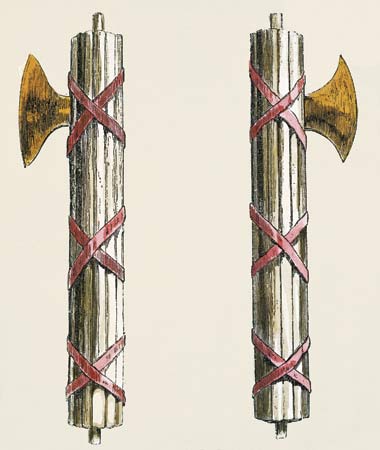
In ancient Rome, fasces were carried by lictors in imperial processions and ceremonies. They were bundles of birch rods, fastened together by a red strap, from which the head of an axe projected. The fasces were symbols of authority, first used by the Roman kings, then by the consuls, then by the emperors, A victorious general, saluted as “Imperator” by his soldiers, had his fasces crowned with laurel.

Mussolini picked up the word to symbolize the unity in a squad of his black-shirted followers. It was also helpful as propaganda to identify Italy in 1920 with the glories of imperial Rome. The programme of the early fascists was derived in part from the nationalist movement of 1910, and from syndicalism. The fascist squadrons fought the communist squadrons up and down Italy in a series of riots and disturbances, and vanquished them. Labour unions were broken up and crushed.

People outside of Italy who favoured labour unions, especially socialists, began to hate fascism. In due time Hitler appeared in Germany with his brand of National Socialism, but he too crushed labour unions, and so he was called a fascist. (Note the confusion caused by the appearance of Hitler’s “socialism” among the more orthodox brands.) By this time radicals had begun to label anyone they did not like as a fascist. I have been called a “social fascist” by the left press because I have ideas of my own. Meanwhile, if the test of fascism is breaking up labour unions, certain American communists should be presented with fasces crowned with laurel.

Well, what does “fascism” mean? Obviously the term by itself means nothing. In one context it has some meaning as a tag for Mussolini, his political party, and his activities in Italy. In another context it might be used as a tag for Hitler, his party, and his political activities in Germany. The two contexts are clearly not identical, and if they are to be used one ought to speak of the Italian and German varieties as facism1 and fascism2.

More important than trying to find meaning in a vague abstraction is an analysis of what people believe it means. Do they agree? Are they thinking about the same referent when they hear the term or use it? I collected nearly a hundred reactions from friends and chance acquaintances during the early summer cf 1937. I did not ask for a definition, but asked them to tell me what “fascism” meant to them, what kind of a picture came into their minds when they heard the term. Here are sample reactions:

Schoolteacher: A dictator suppressing all opposition.
Author: One-party government. “Outs” unrepresented.
Governess: Obtaining one’s desires by sacrifice of human lives.
Lawyer: A state where the individual has no rights, hope, or future.
College Student: Hitler and Mussolini.
United Stales senator: Deception, duplicity, and professing to do what one is not doing.
Schoolboy: War. Concentration camps. Bad treatment of workers. Something that’s got to be licked.
Lawyer: A coercive capitalistic state.
Teacher: A government where you can live comfortably if you never disagree with it.
Lawyer; I don’t know.
Musician: Empiricism, forced control, quackery.
Editor: Domination of big business hiding behind Hitler and Mussolini.
Short story writer: A form of government where socialism is used to perpetuate capitalism.
Housewife: Dictatorship by a man not always intelligent.
Taxi-driver: What Hitler’s trying to put over. I don’t like it.
Housewife: Same thing as communism.
College student: Exaggerated nationalism. The creation of artificial hatreds.
Housewife: A large Florida rattlesnake in summer.
Author: I can only answer in cuss words.
Housewife: The corporate state. Against women and workers.
Librarian: They overturn things.
Farmer: Lawlessness.
Italian hairdresser: A bunch, all together.
Elevator starter: I never heard of it.
Businessman: The equivalent of the ARA.
Stenographer: Terrorism, religious intolerance, bigotry.
Social worker: Government in the interest of the majority for the purpose of accomplishing things democracy cannot do.
Businessman: Egotism. One person thinks he can run everything.
Clerk: II Duce, Oneness. Ugh!
Clerk: Mussolini’s racket. All business not making money taken over by the state.
Secretary: Blackshirts. I don’t like it.
Author: A totalitarian state which does not pretend to aim at equalization of wealth.
Housewife: Oppression. No worse than communism.
Author: An all-powerful police force to hold up a decaying society.
Housewife: Dictatorship. President Roosevelt is a dictator, but he’s not a fascist.
Journalist: Undesired government of masses by a self-seeking, fanatical minority.
Clerk: Me, one and only, and a lot of blind sheep following.
Sculptor: Chauvinism made into a religious cult and the consequent suppression of other races and religions.
Artist: An attitude toward life which I hate as violently as anything I know. Why? Because it destroys everything in life I value.
Lawyer: A group which does not believe in government interference, and will overthrow the government if necessary.
Journalist: A left-wing group prepared to use force.
Advertising man: A governmental form which regards the individual as the property of the state.

Further comment is really unnecessary. It is safe to say that kindred abstractions, such as “democracy,” “communism,””totalitarianism,” would show a like reaction. The persons interviewed showed a dislike of “fascism,” but there was little agreement as to what it meant. A number skipped the description level and jumped to the inference level, thus indicating that they did not know what they were disliking. Some specific referents were provided when Hitler and Mussolini were mentioned. The Italian hairdresser went back to the bundle of birch rods in imperial Rome.

There are at least fifteen distinguishable concepts in the answers quoted. The ideas of “dictatorship” and “repression” are in evidence but by no means uniform. It is easy to lump these answers in one’s mind because of a dangerous illusion of agreement. If one is opposed to fascism, he feels that because these answers indicate people also opposed, then all agree. Observe that the agreement, such as it is, is on the inference level, with little or no agreement on the objective level. The abstract phrases given are loose and hazy enough to fit our loose and hazy conceptions interchangeably. Notice also how readily a collection like this can be classified by abstract concepts; how neatly the pigeonholes hold answers tying fascism up with capitalism, with communism, with oppressive laws, or with lawlessness. Multiply the sample by ten million and picture if you can the aggregate mental chaos. Yet this is the word which is soberly treated as a definite thing by newspapers, authors, orators, statesmen, talkers, the world over.


Using such words as “fascism” without knowing what they mean, is an example of the linguistic habit of “psittacism.” Take a look at Walter Laqueur’s chapter “Foreign Policy and the English Language” in his America, Europe, and the Soviet Union, 1983.

Catch-22 Bullshit

The concept of “catch-22” comes from Joseph Heller’s novel “Catch-22” (1961). In the novel, American pilots who fly combat missions must be crazy to do so. Now, the army has a rule that if one is crazy, one does not have to fly the missions. But to be excused, a pilot has to declare himself to be crazy. But by making the declaration, one demonstrates that one is not crazy, and therefore, has to fly the combat missions. So, crazy or not, one has to fly the combat missions.

So, “catch-22” is applicable to any self-defeating rule or situation. In the Wikipedia article, an example is given of trying to look for one’s lost eyeglasses. But to see your eyeglasses, you have to have eyeglasses, which you don’t have: catch-22.

What comes to my political mind are such matters as secessions. For example, Catalonia wanted to secede from Spain. To do so, by the Spanish Constitution, it needed a national referendum. And to have a national referendum, it needed a vote of Parliament, which was not forthcoming. It resorted to an “illegal” Catalonian referendum, which, in fact, favored secession. But the Spanish Supreme Court ruled this unconstitutional. So, for Catalonia to have a legal chance of secession, it would have to change the Constitution . . . a practical impossibility — hence, a catch-22 situation.

Generally, any radical change in politics, requires a change in the constitution. But constitutions are extremely hard to change. They are secured by catch-22 situations. Consider how difficult it is to amend the US Constitution.

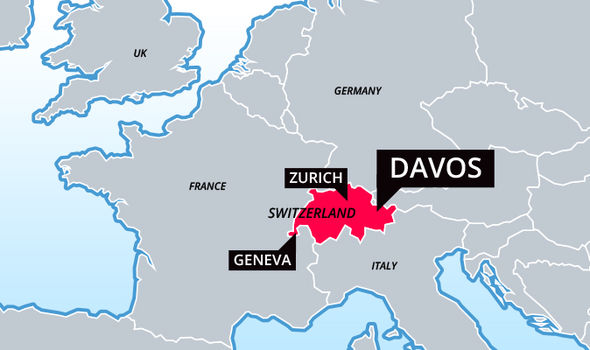
The only country which has allowed relatively easy democratic changes to its Constitution is Switzerland through national initiatives and referendums. See Switzerland

Origins of the State — by Conquest

In order to determine the origins of the State, one must have some conception of the nature of a State. Let us start with the Wikipedia entry for “State (polity).”

“A state is a compulsory political organization with a centralized government that maintains a monopoly on the legitimate use of force within a certain geographical territory.”

For my purposes, this definition will do. However, from my individual perspective, what is important to me and to everyone else, is the fact that we cannot occupy a piece of subsistence land for free, but must submit to the dictates of a centralized government.

How is the “State” different from a tribe, which also may prevent me from occupying a piece of land? Let us express the difference in the following way. If I am a member of a tribe, then I will be allowed to occupy a piece of land for free. But, if I am a member of a State, I will not be allowed to occupy a piece of land for free.

From this perspective, the question is: how is this transition from tribal free occupancy to a State non-free occupancy possible? This is the problem which has been labeled the problem of “primitive accumulation.”

One approach is to point out the differences in human natures. Some are gifted (i.e., intelligent, diligent, thrifty, etc.); others are not. OK, so the gifted will do better with their land holding than the less-gifted. Still, the less gifted will not work for the gifted unless their reward is equal or better than what they can accomplish on their own piece of land.

But the situation in a State is that many would be better off if they had access to free subsistence land; but they do not.

Despite the different theories of “State formation,”, only one is, for me, convincing. This is the conquest theory, which has been best formulated by Franz Oppenheimer in his book The State

I urge the reader to read the book. The author is clear, brief, reasonable, and convincing. I will only focus on what to me is the convincing, deductive argument for the conquest theory of the State.

He starts with the following assumption:

“No one will work for another if he can do as well or better by living off subsistence land. All teachers of natural law, etc., have unanimously declared that the differentiation into income- receiving classes and propertyless classes can only take place when all fertile lands have been occupied. For so long as man has ample opportunity to take up unoccupied land, "no one," says Turgot, "would think of entering the service of another"; we may add, "at least for wages, which are not apt to be higher than the earnings of an independent peasant working an unmortgaged and sufficiently large property"; while mortgaging is not possible as long as land is yet free for the working or taking, as free as air and water. Matter that is obtainable for the taking has no value that enables it to be pledged, since no one loans on things that can be had for nothing.

Let me formulate this as an explicit argument:

1. Person x will not work for person y, if x can do as well or better on his own.
2. x can do as well or better on his own, if he has free access to subsistence land
3. There are z acres of available fertile land in the world.
4. There are m number of people in the world
5. z/m = g
6. In order to subsist, x must have access to h acres of land
7. g > h
9. Therefore, there is enough subsistence land for each person

Oppenheimer gives us the statistics for available land in Germany as well as in the world, at the time when he wrote (1914); concluding that there is ample land for everyone. But despite this, we are prevented from taking free occupancy by States.

The rest of the book is a narrative of conquests of one group of people by another. I need no further convincing, since the history of man is a history of war and conquest.

I want to conclude with the observation that since Oppenheimer wrote, we have a massive increase in populations and a decrease in available subsistence land. When Oppenheimer wrote, he gave 1.8 billion as the number of people in the world, and estimated 181 billion acres of available land, which would give each person roughly 100 acres. We have now 7.7 billion people, which, if that same amount of land were available, would give each person about 23 acres, which is still sufficient for subsistence.

But the amount of land available for agriculture has dropped substantially . . .

***

Let me add the following:

“Private property in land has no justification except historically through power of the sword. In the beginning of feudal times, certain men had enough military strength to be able to force those whom they disliked not to live in a certain area. Those whom they chose to leave on the land became their serf’s, and were forced to work for them in return for the gracious permission to stay. In order to establish law in place of private force, it was necessary, in the main, to leave undisturbed the rights which had been acquired by the sword. The land became the property, of those who had conquered it, and the serfs were allowed to give rent instead of service. There is no justification for private property in land, except the historical necessity to conciliate turbulent robbers who would not otherwise have obeyed the law. This necessity arose in Europe many centuries ago, but in Africa the whole process is often quite recent. It is by this process, slightly disguised, that the Kimberley diamond mines and the Rand gold-mines were acquired in spite of prior native rights. It is a singular example of human inertia that men should have continued until now to endure the tyranny and extortion which a small minority are able to inflict by their possession of the land. No good to the community, of any sort or kind, results from the private ownership of land. If men were reasonable, they would decree that it should cease to-morrow, with no compensation beyond a moderate life income to the present holders.”

Bertrand Russell, Principles of Social Reconstruction, 1916,pp. 125-126.

Land and Liberty

I look at the history of the United States from the perspective of a person who is forced, in one way or another, to work for a living, as contrasted, for example, to an American Indian who could go anywhere and do anything he wanted. As Rousseau put it: “Man is born free, and everywhere he is in chains.” Why is this so?

I see myself as a wage-slave. Because some may think I am exaggerating, let me explain. There is a broad sense of the term “slave” such that anyone who is forced to do anything by anyone else is a slave to that person. In this broad sense, children are normally slaves of their parents; wives are often slaves of their husbands; soldier are slaves to their superiors; worker are slaves to their employers; prostitutes are slaves to their pimps.

Slavery, in a narrow or technical sense, applies to the condition of people who are, in some sense, the property of some other person — with or without the possibility of gaining freedom. The severest form of this condition is chattel slavery in which the master is free to kill the slave.

Slavery is, then, a continuum of conditions, with degrees of restrictions, degrees of penalties, and degrees of freedoms.

In general, as I view it, slavery consists of being forced to do work for someone else. This forcing can be direct or indirect. In civilized societies, all forms of slavery are the results of laws.

Direct slavery occurs where the law stipulates that a particular person is the slave, serf, servant, laborer, or apprentice of another. Some laws allowed people to sell themselves into bondage. An example of this is the American Colonial practice of indentured servitude, whereby for the price of passage to America an immigrant sold himself into servitude for a period ranging from 2 to 7 years.

Indirect slavery occurs when the penalty for not working for someone else is a deprivation of the means for existence — a deprivation of access to subsistence land.

In the American colonies, it was unlawful to be a vagabond, i.e., a homeless person. Such people were arrested and made into laborers for someone or other. If no one could be found to take them, they were whipped and branded through the right ear. For a third offence, they were executed. As remnants of this policy, the United States still has vagrancy laws.

Direct slavery still exists in the United States in the form of military induction (when invoked). In such an event, a civilian is being forced to become a soldier. If he refuses, he will be imprisoned or, under some circumstances, executed. On the other hand, enlistment into the military is like indentured servitude — one makes an agreement with the government to serve a number of years (technically it is eight years), and the punishment for breaking such an agreement (with exceptions) is normally imprisonment.

Indirect slavery is the result of a deprivation of access to free subsistence land. The United States does not provide for free access to subsistence land, and in this manner forces everyone to get money for subsistence. Even if one manages to buy some land (or even get it for a nominal fee as was provided by the Homestead Act of 1862), one cannot simply subsist on it, because there are always state property taxes to be paid. And if these taxes are not paid, the land is confiscated by the state.

For this reason alone, it is proper to call the present economic and government system of the United States one of wage-slavery. The ultimate land owner is the government which collects property, sales, income, and other taxes as it sees fit.

In addition, because the government does have an enormous amount of money, it is also the largest employer and buyer. The bulk of its budget — about half a trillion dollars — is spent on military agents and tools of enforcement — airplanes, warships, tanks, bombs, missiles, bullets, and such. Often, the youth who are lured into the military are those who cannot afford to pay for education or job training. This is an “economic draft” which ensures that the United States government will have a steady supply of enforcers and canon fodder, drawn largely from the poor.

Capitalism, as I understand it, is the economic system which makes all land into a sellable and taxable commodity. It is a system which does not recognize an unalienable (unsellable) right to free land — though such a right is implict in the Declaration of Independence as the unalienable (unsellable) right to the pursuit of happiness. Happiness, in this instance, is nothing more than subsistence, and one cannot subsist in an independent and self-sufficient manner without access to land.

All major peasant uprisings and peasant revolutions have recognized the connection between liberty and free land. And this sentiment was expressed by peasants; not by landlords or merchants (bourgeoise). Landlords simply wanted to maintain possession of their lands, while merchants wanted to purchase land. It was to the advantage of peasants only to have access to free land.

The English, the American, and the French Revolutions were not peasant revolutions — they were revolutions of the aristocracy against a monarchy. Though there were many peasant and slave revolts throughout history, the first successful revolution of slaves was the Haitian Revolution of 1804. In the 20th century, the Mexican, the Russian, and the Spanish Revolutions are examples of three major peasant revolutions — and it is not surprising that their slogans were “Tierra y Libertad,” “Zemlya y Volya,” Land and Liberty.

The purpose of Political Liberty is to foster Economic Liberty. Political liberty is needed to get agreement for economic policies. And although the United States allows more political freedom than any other country, because of media control by corporations, it is extremely hard to get a political consensus about better economic policies. Right now, both domestically and internationally, the United States is against any policy which would give away land for free to anyone, without also making it a sellable commodity. Consequently, the following may be a true generalization of U.S. foreign policy: it is a suffecient reason for U.S. intervention in another country, if that country adopts an agrarian policy of giving away land for free. The underlying reason is that a country of self-sufficient and independent land owners will not yield a pool of cheap wage-slaves, including soldiers, for capitalists.

“In former times the marauding minority of mankind, by means of physical violence, compelled the working majority to render feudal services, or reduced them to a state of slavery or serfdom, or at least made them pay a tribute. Nowadays the dependence of the working classes is secured in a less direct but equally efficacious manner, viz. by means of the superior power of capital; the labourer being forced, in order to get his subsistence, to place his labour power entirely at the disposal of the capitalist. So there is a semblance of liberty; but in reality the labourer is exploited and subjected, because, all the land having been appropriated, he cannot procure his subsistence directly from nature, and, goods being produced for the market and not for the producer’s own use, he cannot subsist without capital. Wages will rise above what is wanted for the necessaries of life, where the labourer is able to earn his subsistence on free land, which has not yet become private property. But wherever, in an old and totally occupied country, a body of labouring poor is employed in manufactures, the same law, which we see at work in the struggle for life throughout the organized world, will keep wages at the absolute minimum”


F. A. Lange, Die Arbeiterfrage. Ihre Bedeutung fur Gegenwart und Zukunft. Vierte Auflage. 1861, pp. 12, 13. Quoted by H. J. Nieboer, Slavery: As an Industrial System (Ethnological Researches), 2d edition, 1909, p. 421.

Solution to the Unemployment Problem

A Free Land Amendment to the Constitution of the United States

Each person has a right to free and non-taxable subsistence land.

“. . . every man has, by the law of nature, a right to such a waste portion of the earth as is necessary for his subsistence.” Thomas More, Utopia

“Not the constitution, but free land, and its abundance of natural resources open to a fit people, made the democratic type of society in America for three centuries.” Frederick Turner, Chapter XI, The West and American Ideals, Frontier in American History.

If a person has no access to land, then that person


  1. must work for someone, or
  2. get charity from someone, or
  3. live by criminal activity, or
  4. starve.

If a person is unemployed and does not want to starve and does not want charity, then that person must live by criminal activity.

Economic Democracy = everyone has a right to free private (subsistence) land


Caveat

“. . . overpopulation is critical today and may well make the distribution question moot tomorrow.” Paul and Anne Ehrlich, The Population Explosion (1990), p. 21.

My speech on May 1, 2018 at the Haymarket Monument, Forest Home Cemetery, Forest Park, IL