Many Native American reservations in the United States are located on lands that are less suitable for gardening and agriculture. This is largely a result of historical policies that forcibly relocated tribes to areas deemed undesirable by settlers. These lands often have poor soil quality, limited access to water, or harsh climates, making them less viable for traditional farming or gardening.
Key Reasons for Unsuitability
Historical Land Seizures:
During the 19th century, tribes were forcibly removed from fertile ancestral lands and relocated to less arable or marginal lands as part of policies like the Indian Removal Act (1830).
Reservations were often established on land that settlers or the U.S. government did not consider valuable for agriculture or development.
Soil Quality:
Many reservations are located on arid, rocky, or sandy terrain, which lacks the nutrients required for farming.
Soil erosion and desertification further degrade the land’s productivity.
Water Scarcity:
Access to reliable water sources is a major issue. Many reservations are in arid or semi-arid regions with limited rainfall.
Disputes over water rights often leave tribes with insufficient water for irrigation.
Climate Challenges:
Harsh climates, such as extreme heat in the Southwest or cold in the Northern Plains, make growing seasons shorter and farming more challenging.
Limited Infrastructure:
Reservations often lack the infrastructure needed to support large-scale agriculture, such as irrigation systems, storage facilities, and transportation networks.
Examples of Challenges
Southwest Tribes (e.g., Navajo, Hopi):
These reservations are located in desert regions with limited water and poor soil.
Traditional farming methods like dry farming are still practiced, but productivity is low.
Great Plains Tribes (e.g., Lakota, Cheyenne):
The Plains have fertile land, but many reservations were assigned areas with rocky or sandy soil unsuitable for traditional agriculture.
Pacific Northwest Tribes:
Access to fertile lands is better for some tribes, but economic and political barriers can limit their agricultural productivity.
Northeast Tribes (e.g., Haudenosaunee/Iroquois):
Reservations in this region often have better growing conditions but are small in size, limiting agricultural scalability.
Efforts to Overcome Challenges
Community Gardening:
Tribes are increasingly turning to community gardens and small-scale sustainable agriculture to address food insecurity.
Traditional Farming Practices:
Revitalizing traditional methods, like planting the “Three Sisters” (corn, beans, squash), helps mitigate poor soil quality.
Food Sovereignty Movement:
This movement advocates for tribal control over food systems and encourages the revival of traditional crops and farming methods.
Federal and Tribal Support:
Programs like the Native Farm Bill Coalition and grants from the U.S. Department of Agriculture (USDA) provide funding and technical assistance for tribal agricultural projects.
Conclusion
While many reservations are located on lands that are less suitable for gardening and agriculture, Native communities continue to demonstrate resilience through traditional practices, innovation, and advocacy for improved resources and land management. Addressing systemic issues like water rights and infrastructure investment is crucial for improving agricultural viability on reservations.
Andrew Chrucky’s analysis of Milton Friedman’s Capitalism and Freedom (1962) offers an intriguing critique that situates Friedman’s ideas within an anarchist framework. Chrucky’s argument revolves around the perceived inconsistency between Friedman’s principles of limited government intervention and his failure to address the conditions necessary for the existence of truly “independent households,” a core aspect of Friedman’s libertarian vision. Let’s break down the evaluation:
Friedman’s Two Principles and Chrucky’s Critique
Chrucky begins by outlining two explicit political principles that Friedman presents in the opening chapters of Capitalism and Freedom:
The principle of minimal government intervention in economic matters, arguing that the government’s role should be limited to protecting individual freedoms.
The importance of voluntary, mutually beneficial exchanges in economic and political interactions, which aligns with a laissez-faire system.
Chrucky agrees with these principles in theory but argues that Friedman’s applications of these principles are problematic because they ignore an essential third principle: the condition of independent households. This third principle, Chrucky argues, is implicit in Friedman’s work but is never directly addressed.
The Anarchist Critique
Chrucky suggests that Friedman’s vision of an ideal society aligns with anarchism, at least in the sense that it describes a world where individuals or households interact voluntarily without coercion. According to Chrucky, anarchism can be understood as:
A community of independent households, each self-sufficient and able to exchange goods and services freely.
Political and economic cooperation through voluntary agreements rather than state-imposed laws or force.
The central problem, as Chrucky sees it, is that in industrialized societies, “independent households” are a myth. True independence—particularly economic independence—requires access to subsistence land, a condition that industrial societies, particularly capitalist ones, systematically deny. In these societies, land is privately owned and subject to taxation or other legal controls, meaning that households are not independent in the way Friedman envisions. The absence of access to land makes true independence impossible for most people, leading to a system of dependency.
Friedman’s Oversight of Independent Households
Chrucky argues that if Friedman were truly committed to his vision of independent households, he would need to advocate for agrarian reform, which would involve redistributing land to ensure that everyone has access to the resources necessary to live independently. However, Friedman fails to address this issue, which Chrucky interprets as a major oversight. Instead of addressing land access or proposing a reform to guarantee independence, Friedman focuses on policies like the negative income tax, which Chrucky argues would merely create dependence on the state or on other households. A truly independent household, according to Chrucky, should not rely on transfers from others but should be self-sustaining.
The “Robinson Crusoe” Problem
Chrucky highlights a key passage in Capitalism and Freedom where Friedman uses the example of Robinson Crusoe to illustrate the principle of voluntary exchange and the role of property rights. In this thought experiment, Crusoe, stranded on an island, decides whether to share his resources with others who are similarly stranded. Friedman uses this scenario to argue against forced redistribution of wealth, suggesting that it would be unjust for the three Crusoes on barren islands to compel the Crusoe with a large, fruitful island to share his wealth.
Chrucky criticizes this analogy, pointing out that land is not like a random $20 bill one might find on the street. Access to land, especially arable land for subsistence, is a fundamental need, not just a luxury. The analogy breaks down because it fails to address the necessity of land for survival, and instead treats property as a matter of individual choice and chance. Chrucky argues that if Friedman’s theory of independent households is to hold, it should require a universal right to land or a subsistence land guarantee for all individuals.
Implicit Entitlement Theory and Inequities of Land Distribution
Friedman’s apparent acceptance of entitlement theory—the idea that people’s rights to property are just based on their first occupancy or acquisition—also comes under scrutiny from Chrucky. Chrucky contends that while entitlement theory may apply to things like personal labor or wealth one has accumulated, it fails to justify existing land holdings, which are the product of historical decisions and social structures (such as colonialism or feudalism) that do not reflect the principles of voluntary exchange or equality.
Chrucky suggests that an anarchist perspective would demand a recognition of the unjust nature of current land ownership patterns and would call for a system that guarantees individuals access to land as a basic right. Only then could individuals be truly independent in the way that Friedman envisions.
The Role of Government in Anarchism
Chrucky challenges Friedman’s belief that government intervention is inherently coercive and should be minimized or eliminated. Anarchists, as Chrucky points out, are not necessarily against all forms of government but are against coercive, centralized state power. Anarchism, as Chrucky sees it, envisions a decentralized form of governance, where voluntary agreements between independent households form the basis of social coordination. This kind of system could allow for the cooperative, voluntary economic relationships that Friedman advocates without relying on state-enforced policies.
For Chrucky, the ideal system of government would not be a top-down bureaucratic state but a federation of independent households—a decentralized community where households coordinate with one another through voluntary contracts or delegates, much like the Amish or federated communes. This, he argues, would be a closer realization of Friedman’s vision than the current model of centralized governance.
Conclusion: The Inconsistencies in Friedman’s Vision
Ultimately, Chrucky concludes that Friedman’s principles are inconsistent because he overlooks the necessary conditions for true economic independence—namely, access to subsistence land. Without addressing this issue, Friedman’s ideas about voluntary exchange and minimal government intervention are, at best, idealistic and, at worst, impractical and inconsistent with the reality of dependency in modern society. For a truly anarchistic society to emerge, Chrucky argues, it would require not only decentralized government and laissez-faire economics but also a universal right to subsistence land for all individuals.
This critique invites a deeper exploration of the ways in which anarchism and libertarianism might intersect, offering a vision of a society where individual autonomy is protected by ensuring that all have access to the basic resources necessary for independence.
Jerry Cohen is the Chichele Professor of Social and Political Theory and Fellow of All Souls Oxford. In tonight’s opinions, he argues that capitalism deprives people of their rightful share in the world’s resources, and it frustrates the satisfaction of fundamental human needs.
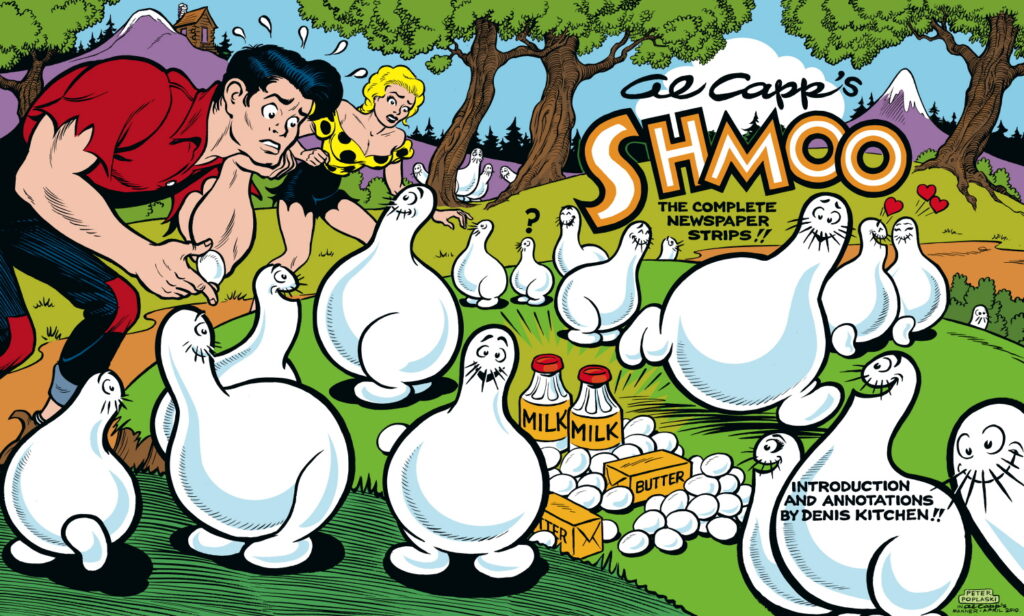
I’m going to start with a story which was told by the American cartoonist Al Capp. The story’s about a creature called the Shmoo. The Shmoo
was 10 inches high, something like a pear in shape, and a beautiful creamy white in color. It had no arms, tiny feet, and big whiskers under its nose. The Shmoo had only one desire: to serve the needs of human beings. And it was well equipped to do so. It’s skin could be made into any kind of fabric. Its flesh was edible. Its dead body could go brick hard, and be used for building, and its whiskers — well its whiskers — had more uses than you can imagine. If you looked at a Shmoo with real hunger in your eye, it dropped dead in rapture because you wanted it, after first cooking itself into your favorite flavor. Well, since they multiplied rapidly, there were plenty of schmoos for everybody, and they even looked good in the environment. Almost everyone approved of the schmoos. But some people weren’t keen on them. The rich capitalists hated the Shmoos. Since Shmoos provided everything people needed, nobody had to work for capitalists anymore because nobody had to make the wages to buy the things capitalists sold. And so as the Shmoos spread across the face of America, the capitalists began to lose their position and their power. And this made them take drastic action. They got the government to tell the people that the Shmoo was un-American. The Shmoo was causing chaos, undermining the social order, people weren’t turning up for work, and they weren’t going to the department stores to buy anything. Well, the government propaganda, convinced the people, and the President ordered the FBI to gather the Shmoos and gunned them down. Then things went back to normal. But a country lad called Li’l Abner managed to save one female and one male Shmoo. He carried them off to a distant valley where he hoped they’d be safe. “Folks ain’t yet ready for the Shmoo,” Li’l Abner said. But Li’l Abner was wrong. Folks were ready for the Shmoo. It was only the capitalists that weren’t. The capitalists didn’t like the Shmoo because it gave people independence. And when people don’t depend on them for work and for goods, capitalists lose their privileged place.
People haven’t always depended on capitalists. They never, of course, had Shmoos. But they did have land. And the things they get from Shmoos in Al Capp story, they got by working the land in pre-capitalist history. It’s true that they didn’t keep everything they produced on the land. Monarchs and their hangers-on, and various lords and ladies were usually able to take quite a bit of their product. But the people didn’t depend for their survival on any superiors until after a long history of forced expropriation, and plain and crooked dealing, they found themselves without any resources for producing things except their own labor. And in order to survive, they had to hire themselves out to capitalists who now had all the other resources. So they got a new set up. And in this new set up, workers sold their labor and capitalists bought it. And the buyers treated the sellers as nothing but sources of profit. So when the buyers didn’t need all the labor that was offered, some workers were denied employment. And since they had no land or Shmoos to live off, they became beggars, and vagabonds, and inmates of work houses. Or, they simply wasted away.
Well, of course things aren’t quite that bad now. Capitalism isn’t as pure and ruthless as it used to be. The dispossessed workers defended themselves by uniting and trade unions and the coming of the welfare state with its public provision of necessities means that workers don’t depend for everything they need on finding someone who wants to buy their labor. The trade unions and the welfare state were savagely resisted by the capitalists, but they’ve come to stay now.
Now, advocates of pure capitalism describe it as a system in which people freely exchange their own private property. Socialists denied the freedom and fairness of that exchange. They complain that some are able to bring vast assets to market, while most people have nothing to sell except their own capacity to work. That’s the socialist complaint.
But against that socialist complain, lots of capitalists will say, “Hang on a minute, wait a second. It’s true that I have vast assets now, but I started with practically nothing except my own talent and courage. And it was by using them that I made my pile. You can’t talk about lack of fairness. I had no unfair advantage in the race for wealth.”
Well, the socialists might reply that it’s pretty rare these days for a capitalist to begin with brains and grit alone. But I want to focus here on just such self-made capitalists, since their wealth does look pretty legitimate. Well, if you think about that. Wealth, what’s it made of, in its immediate form? It’s just bits of paper, records and Leisure’s share certificates, and so on. But the reason why those things are valuable is that they entitle their possessor to material resources — to raw and transformed parts of nature, to iron ore that’s been turned into steel, to factories, and energy, and power lines, and tracts of land, and minerals under the sea. The capitalist is happy to tell us how he got all that stuff. He says, “Look, I got it through my own hard work and enterprise. I didn’t get it from my parents. I didn’t get it by stealing or cheating.”
But we can ask a deeper question — a question which is much more difficult for him to answer, a question which is prompted by the realization that everything he owns — everything either is or was made of something which once was nobody’s private property. The deep question is: how did it come to be anybody’s private property in the first place? You see, the capitalist says that he got his wealth through free market exchange, and that means that he’s defending his title to it by invoking the title of those who transferred it to him. But I’m asking: what was the source of their right to it? The fact that they got it from still earlier owners. Well, that kind of justification can’t go on forever. Eventually we’re going to be pushed back to the very first private owners of land and the raw materials of nature. And they didn’t get them from earlier legitimate owners. They simply took nature’s resources. And I’m asking: what gave them the right not merely to use the world, because that’s okay, but to establish permanent bequeathable private property in it so that others could no longer use it freely. What gave that right?
The self-made capitalist explains how: through honest industry and straight dealing, he accumulated an enormous amount of private property. But why was there that private property to accumulate in the first place? No story about the exchange and accumulation of private property can justify the transformation of things into private property in the first place. The fact that the world’s resources were once privately owned by nobody, and then grabbed, supports the socialist idea that they should be restored to the people as a whole.
But now, I want to look at a different line of defense of capitalism which says: “Come on, forget about past history. Let bygones be bygones. Don’t be obsessed with the misty origins of capitalism. It doesn’t matter how capitalist property came into being. Whatever the origin of capitalism was, it’s an excellent system since even the poorest people do better under capitalism than they would in any other form of economy.”
Well, the argument for the idea that capitalism promotes human benefit is pretty familiar. It goes something like this. Capitalist firms survive only if they make money. And they make money only if they prevail in competition against other capitalist firms. Since that competition is severe, the firm to survive has to be efficient. If firms producing incompetently, they go under. so they have to seize every opportunity to improve their productive facilities and techniques so that they can produce cheaply enough to make enough money to go on. Its admitted in this justification of capitalism that the capitalist firm doesn’t aim to satisfy people, but the firms can’t get what they are aiming at — which is money — unless they do satisfy people, and satisfy them better than rival firms do.
Well, I agree with part of this argument. Capitalist competition that has to be acknowledged has induced a remarkable growth in our power to produce things. But the argument also says that capitalism satisfies people. And I’m going to claim that the way the system uses technical progress generates widespread frustration; not satisfaction.
My anti-capitalist argument starts with the very same proposition with which the argument praising capitalism begins, namely this proposition: the aim of the capitalist firm is to make as much money as it can. It isn’t basically interested in serving anybody’s needs. It measures its a performance by how much profit it makes. Now, that doesn’t prove straight off that it isn’t good at serving need. In fact, the case for capitalism that I expressed a moment ago, might be put as follows: Competing firms trying not to satisfy needs but to make money, will in fact serve our needs extremely well since they can’t make money unless they do so. Okay, that’s the argument.
But I’m now going to show that the fact that capitalist firms aren’t interested in serving human needs, does have harmful consequences. Recall that improvement in productivity is required if the firm is going to survive in competition. Now, what does improve productivity mean? It means more output for every unit of labor. And that means that you can do two different things when productivity goes up. One way of using enhanced productivity is to reduce work and extend leisure, while producing the same output as before. Alternatively, output may be increased while labor stays the same. Now, let’s grant that more output is a good thing. But it’s also true that for most people, what they have to do to earn a living, isn’t a source of joy. Most people’s jobs, after all, are such that they benefit not only from more goods and services, but also from a shorter working day and longer holidays. Just consider, if God gave all of us the pay we now get, and granted us freedom to choose whether or not to work at our present jobs for as long as we pleased, but for no extra pay, then there’d be a big increase in leisure time pursuits. So, improved productivity makes two things possible. It makes possible either more output or less toil. Or, of course, some mixture of both.
But capitalism is biased in favor of the first option only: increased output, since the other reduction of toil threatens a sacrifice of the profit associated with greater output and sales. What does the firm do when the efficiency of its production improves?
Well, it doesn’t just reduce the working day of its employees and produce the same amount as before, instead it makes more stuff. It makes more of the goods it was already making. Or, if that isn’t possible, because the demand for what it’s selling won’t expand, then it lays off part of its workforce and seeks a new line of production in which to invest the money it thereby saves. Eventually new jobs are created, and output continues to expand although there’s a lot of unemployment and suffering along the way.
Now the consequence of the increasing output which capitalism favors is increasing consumption. And so, we get an endless chase after consumer goods just because capitalist firms are geared to making money, and not to serving the interests of consumers. Alfred P. Sloan, who once ran General Motors in the United States, said that it was the business of the automobile industry to make money; not cars. I agree. And that I’m saying is why it makes so many cars. It would make far fewer if its goal weren’t money but, say, providing people with an efficient and an inoffensive form of transport. If the aim of production were the satisfaction of need, then rather less would be produced and consumed than is in fact produced and consumed. And most of us would lead less anxious lives and have more time and energy for the cultivation and enjoyment of our own powers.
Now, I am not some kind of fanatical Puritan who’s against consumer goods. I’m not knocking consumer goods. Consumer goods are fine. But the trouble with the chase after goods in a capitalist society is that we’ll always — most of us — want more goods than we can get, since the capitalist system operates to ensure that people’s desire for goods is never satisfied. Business, of course, wants contented customers but they mustn’t become too contented, since when customers are satisfied with what they’ve got, they buy less and work less. And business dwindles. That’s why in a capitalist society, an enormous amount of effort and talent goes into trying to get people to want what they don’t have. That’s why there’s feverish product innovation, huge investments in sales and advertising, and planned obsolescence. In order to keep going as a system, capitalism has to keep people on the go, and it creates a great deal of strain and nervous tension. The Rockefellers make sure that the Smiths need to keep up with the Joneses. And in a forlorn attempt to keep up because not everybody can manage to keep up. People work their lives away, and sometimes take extra jobs in order to buy things they don’t have the time to enjoy because of the time they spend working to buy them. Well, in earlier periods of capitalist history, its preference for output conferred on the system a progressive historical role. Capitalism raised us above the scarcity imposed by nature under which pre-capitalist peasants labored. But as that natural scarcity recedes, the output preference renders capitalism reactionary. It can’t realize the possibilities of liberation it creates. Having lifted the burden of natural scarcity, it contrives an artificial scarcity which means that people never feel they have enough. Capitalism brings humanity to the very threshold of liberation and then locks the door. We get near it, but we remain on a treadmill just outside it. Sometimes people fall off that treadmill. And recently in this country, that’s happened on a large scale. I’m referring again to the problem of unemployment which is now enormous in Britain. The same system that overworks people in the interest of profit also deprives them entirely of when it’s not profitable to employ them. And what we get as a result is not something that we could imagine: a reasonable amount of work, and a balanced existence for everyone, but grotesque over employment for some, together with rending unemployment for others. How can they say that this system satisfies human need when homeless people in Britain need housing and unemployed bricklayers need work? How can anybody think that it’s a system that promotes human benefit when it projects the message that the only way to self esteem is to be the owner of a BMW, or at least a Ford Sierra? And then it throws millions of families into a destitution where they can barely afford sausages to feed their children. So, I’m very skeptical about the claim that capitalism is so good at satisfying our needs as consumers. And anyway, people have needs which go beyond the need to consume.
One of those needs will — because it’s so important — occupy most of the rest of this talk: it’s a person’s need to develop and exercise his or her talents. When people’s capacities lie unused they don’t enjoy the zest for life which comes when their faculties flourish. Now, people are able to develop themselves only when they get good education. But in a capitalist society, the education of children is threatened by those who seek to fit education to the narrow demands of the labour market. And some of them think that what’s now needed to restore profitability to an ailing British capitalism is a lot of cheap unskilled labour. And they conclude that education should be restricted to ensure that it’ll supply that labour.
The present Chancellor of the Exchequer, Nigel Lawson, said in a speech a couple of years ago that we should now think about training people for jobs which are — as he put it — not so much low-tech as no tech. Now, what sort of education is contemplated in that snappy statement, “Not so much low-tech as no tech”? Not an education that nourishes the creative powers of young people, and brings forth their full capacity. Nigel Lawson is saying that it’s dangerous to educate the young too much because then we produce cultivated people who aren’t suited to the low-grade jobs the market will offer them. An official at the Department of Education and Science recently said something similar.
He said — and I’m here quoting his words — “that we are beginning to create aspirations which society cannot match. When young people can’t find work which meets their abilities and expectations, then we’re only creating frustration with disturbing social consequences. We have to ration educational opportunities so that society can cope with the output of education. People must be educated once more to know their place.” That’s the end of the quote.
But what if we got here? Something very frightened. We’ve got a policy of deliberately restricting educational provision so that state schools can produce willing sellers of low-grade labor power. It’s hard to imagine a more undemocratic approach to education. And notice that to prefer a democratic distribution of educational opportunity, you don’t have to believe that everyone is just as clever as everyone else. Nigel Lawson isn’t saying that most people are too dimmed to benefit from a high level of education. It’s precisely because people respond well to education that the problem which worries him arises. You see, there’s a lot of talent in almost every human being. You can see it in kids. But in most people that talent remains undeveloped since they haven’t had the time and the freedom and the facilities to develop it. Throughout history, only a leisured minority have enjoyed such freedom on the backs of the toiling majority. And that’s been unavoidable up to now. But now it’s no longer unavoidable. We have a superb technology which could be used to restrict unwanted labour to a modest place in life. But capitalism doesn’t use that technology in a liberating way. It continues to imprison people in largely unfulfilling work. And it shrinks from providing the enriching education which the technology it has created makes possible.
Some supporters of British capitalism disagree with Lawson’s idea that there’s a danger that people will get too much education. They say that what the market now needs is a better trained labor force. Well, whoever’s right about that, I’m confident that we shouldn’t stake our children’s future on the hope that the capitalist market will need what’s good for them. The educational system shouldn’t be subject to the capricious demands of capitalism. And it shouldn’t cater to the tendency of capitalism to treat enormous numbers of people as nothing but sources of profit. And when they can’t be profitably exploited, as redundant and expendable, because that’s what the capitalist firm does.
Is it possible to create a society which goes beyond the unequal treatment that capitalism imposes? Many would say that the idea of such a society is an idle dream. Many would agree with the negative things I’ve said about capitalism.
But they’d say, “Look, there’s no point getting upset about it. There’s always been inequality of one kind or another, and there always will be.”
But I think that reading of history is too pessimistic. There’s actually much less inequality now than there was, for instance, a hundred years ago.
A hundred years ago, only a few radicals proposed that everybody should have the vote. Others thought that was a dangerous idea. And most would have considered it to be an unrealistic one. But today we have the vote. We are a political democracy. But we’re not an economic democracy. We don’t share our material resources. And most people in this country would regard that as an unrealistic idea. Yet, I’m sure it’s an idea whose time will come. Society won’t always be divided into those who control its resources and those who have only their own labour to sell. But it’ll take a lot of thought to work out the design of a democratic economic order. And it’ll take a lot of struggle against privilege and power to bring it about. We can’t go back to being independent peasant communities, and even if we could, we’d be sacrificing the tremendous gains we owe to capitalism if we did so nor is anybody going to provide us with Shmoos. The obstacles to economic democracy are considerable. But just as no one now would defend slavery or serfdom, I believe that a day will come when no one will be able to defend a form of society in which a minority profit from the dispossession of the majority
Heather Heying and Bret Weinstein talk about their book, A Hunter-Gatherer’s Guide to the 21st Century: Evolution and the Challenges of Modern Life, 2021:
A paradox is a seeming contradiction. But a contradiction is necessarily false. So, the task is to explain the appearance of a contradiction. In a previous blog, I made references to an article by Quine which dealt with paradoxes: “Paradox” — a type of bullshit
While glancing at the index of Karl Popper’s The Open Society and Its Enemies, vol.2, under the heading “paradoxes,” there are a few that have become famous. There are the paradox of freedom, the paradox of tolerance, the paradox of democracy, and others.
In this blog, I want to alert you to a paradox which I previously have not heard of. When listening to its description, it resonated with me as absolutely true. This is the paradox of choice, presented by Barry Schwartz. Here is the video which enlightened me.
John Rawls in his A Theory of Justice (1971) posits a group of rational people who are told to deliberate on rules of justice for a life they will have after being transported into some unpredictable human condition in some unpredictable institutional situations.
He concludes that the only rational choice is to agree on two principles.
The following formulation here will suffice:
The two principles of justice are the liberty principle and the difference principle. The two principles are intended to apply to the basic structure of society–the fundamental political and economic arrangements–as opposed to particular actions by governmental officials or individual statutes. The liberty principle requires that the basic structure provide each citizen with a fully adequate scheme of basic liberties — such as freedom of conscience, freedom of expression, and due process of law. The difference principle requires that inequalities in wealth and social position be arranged so as to the benefit the worst off group in the world. Rawls states that the two principles are lexically ordered, with the liberty principle taking precedence over the difference principle in the case of conflict.
As it turns out, although the altered condition of the people in the Original Position is unpredictable, their transported institutional situation seems to be a liberal democratic society with a capitalist economy. So, in effect they are asked to write a meta-law for, let’s say, the Constitution of the United States. In effect, the second principle would require the introduction of either a right to a job for all or a basic income for all, and perhaps a free universal health care.
What these people in the Original Position seem to have forgotten is that they are animals on earth who need access to subsistence, and that they can get this subsistence if they have a free access to land. Before the contents of some agreed to rule is adopted, it is first necessary to make agreements in the first place. So, it seems that the first order of business is to come up with two meta-rules: Meta-Rule 1: Make Agreement (on Rules) rather than resort to coercion (War); Meta-Rule 2: Abide by the agreements (Rules).
Really, instead of the contrived Original Position, a more historically realistic situation is envisioned by John Stuart Mill. He imagines a group of colonists arriving at some uninhabited land.
Book II, Chapter 1. Principles of Political Economy:
In considering the institution of property as a question in social philosophy, we must leave out of consideration its actual origin in any of the existing nations of Europe. We may suppose a community unhampered by any previous possession; a body of colonists, occupying for the first time an uninhabited country; bringing nothing with them but what belonged to them in common, and having a clear field for the adoption of the institutions and polity which they judged most expedient; required, therefore, to choose whether they would conduct the work of production on the principle of individual property, or on some system of common ownership and collective agency.
If private property were adopted, we must presume that it would be accompanied by none of the initial inequalities and injustices which obstruct the beneficial operation of the principle in old societies. Every full grown man or woman, we must suppose, would be secured in the unfettered use and disposal of his or her bodily and mental faculties; and the instruments of production, the land and tools, would be divided fairly among them, so that all might start, in respect to outward appliances, on equal terms. It is possible also to conceive that in this original apportionment, compensation might be made for the injuries of nature, and the balance redressed by assigning to the less robust members of the community advantages in the distribution, sufficient to put them on a par with the rest. But the division, once made, would not again be interfered with; individuals would be left to their own exertions and to the ordinary chances, for making an advantageous use of what was assigned to them. If individual property, on the contrary, were excluded, the plan which must be adopted would be to hold the land and all instruments of production as the joint property of the community, and to carry on the operations of industry on the common account. The direction of the labour of the community would devolve upon a magistrate or magistrates, whom we may suppose elected by the suffrages of the community, and whom we must assume to be voluntarily obeyed by them. The division of the produce would in like manner be a public act. The principle might either be that of complete equality, or of apportionment to the necessities or deserts of individuals, in whatever manner might be conformable to the ideas of justice or policy prevailing in the community.
Examples of such associations, on a small scale, are the monastic orders, the Moravians, the followers of Rapp, and others: and from the hopes, which they hold out of relief from the miseries and iniquities of a state of much inequality of wealth, schemes for a larger application of the same idea have reappeared and become popular at all periods of active speculation on the first principles of society. In an age like the present [1848], when a general reconsideration of all first principles is felt to be inevitable, and when more than at any former period of history the suffering portions of the community have a voice in the discussion, it was impossible but that ideas of this nature should spread far and wide. The late revolutions in Europe have thrown up a great amount of speculation of this character, and an unusual share of attention has consequently been drawn to the various forms which these ideas have assumed: nor is this attention likely to diminish, but on the contrary, to increase more and more.
Rawls’ problem is caused by starting off with a bad idea of justice. Justice, in short, is simply the virtue of keeping to your agreements.
Let me start with a confession. I have been prone to commit a genetic fallacy — namely, not to bother reading some writings simply because they were by self-proclaimed Catholic authors. One could also call this a prejudice. Well, I am going to correct this mistake.
Generally, it is a fallacy to dismiss a conclusion of an argument because the argument is fallacious. In other words, a person may be defending something which is true or sensible, but for bad reasons. Also, it would be some kind of fallacy of bad association to think that because a person is wrong about some subject X, that this person is also wrong about subject Y.
Specifically, I reject superstitions, including religions. So for me to ignore writers who proclaim an adherence to a religious faith, is narrow minded.
For a bird’s eye view of Distributism, let’s start with the Wikipedia entry: Distributism. [It is generally wise to start an investigation by looking at a Wikipedia entry. But it is foolish to stop there.]
I found the following video on G. K. Chesterton by Laurie M. Johnson helpful — though I would like to add some commentary later on. She is talking about the following book: G. K. Chesterton,
THE OUTLINE OF SANITY, 1927.
Introduction to G.K. Chesterton and Distributism
This video introduces you briefly to GK Chesterton and then discusses his definitions of Capitalism, Socialism and Distributism. I point out that Aristotle’s views on property in The Politics may be the origin of distributist thought, and give some background information that may help understand why Chesterton defines Capitalism and Communism as he does. Chesterton criticizes Capitalism for really being “Proletarianism” or a system of wage dependency. He criticizes Socialism for being dangerous because it places all resources and decisions into the hands of the state. Both of them concentrate property into a few hands, whereas Distributism calls for spreading property ownership more evenly. Spain’s Mondragon corporation is used as an example of contemporary distributism at work.
More of her videos on Distributism can be found here: Laurie M. Johnson
Commentary:
In the above video, Laurie Johnson claims that Chesterton did not really mean that everyone should have 3 acres and a cow. Well, what he probably meant is that people should have a private plot sufficiently large for self-sufficient subsistence. But Laurie thinks that this today is unrealistic, and offers a worker-owned enterprise such as the Mondragon Corporation as an example of Distributionism. Well, this may be Laurie’s proposal, but it was not what Chesterton had in mind.
However, in the following video with her participants she is more reflective of what is involved in sustaining subsistence farming (as in India), and the problems involved in switching to a more agrarian form of life.
The straightforward answer is: South Africa, from July 9 to July 18, 2021. As a background to what occurred, see: 2021 South African unrest.
Here is a video of the recent events in South Africa:
where do such rebellious people come from? Slums. And it only takes some event such as the killing of George Floyd in the United States for the alienated poor to go on a rampage. Below are videos describing some slums around the world.
Here is a video of the Kibera Slums in Kenya:
Here is a video of a slum in Mumbai:
Here is a slum in Rio de Janeiro, Brazil:
Lunik 9, the biggest Roma slum in Kosice, Slovakia, Europe:
All over the world there are people who live in small villages, grow their own food and raise animals for food as well. I am especially interested in how this is possible in eastern Europe. It is possible, of course, if one has access to free subsistence land. And, without the infrastructure of water pipes, gas pipes, or an electric grid, or a sewer system, this is comparable to living on a homestead in the 19th century American frontier. Water is obtained from wells or a spring, heating is by burning wood, and a toilet is an out-house.
But I keep looking for other videos. Recently I watched the following video:
Village Life in Romania
What struck me and stuck in my brain in this video was the comment of an old woman living in a remote village. She said, “”We have everything but we have no money.” She did not mean this literally because she was receiving a small pension from the government. The way I interpret what she said is this: We have all the necessities for life, but we have no money for luxuries. By “luxuries” I mean to include all those things which lessen the burdens of living.
What has puzzled me about village life in eastern Europe is: What about property taxes?
I found the following facts about property taxes in Ukraine. Unlike the property taxes in the United States, and most of Europe, which are based on an assessment of the worth of your property on the real estate market, in Ukraine property taxes are based on the square meter of your dwelling. An apartment dwelling of 60 square meters (645.8 square feet) and a house of 120 square meters (1291.6 square feet) are not taxed at all. And each additional square meter is taxed at the rate of 1.5% of the minimum national living wage. [This is about $216 dollars a month; so, each additional square meter of space would cost about $3.24.] My house in Chicago is 121 square meters and the assessed property value in 2017 was $303,220. My property tax in 2017 was $5,772.80 (this is with an exemption for our ages). In Ukraine, my property tax would have been $3.24
In addition, according to Article 121 of the Ukrainian Land Code each citizen has a right to get land for free. [See: “How to get land in Ukraine for free?”]
So, at least in Ukraine, it is still possible to live without money.
You may be wondering why this an issue?
I view city-life as being precarious. What happens when the infra-structure collapses as it did in New Orleans during Hurricane Katrina in 2005:
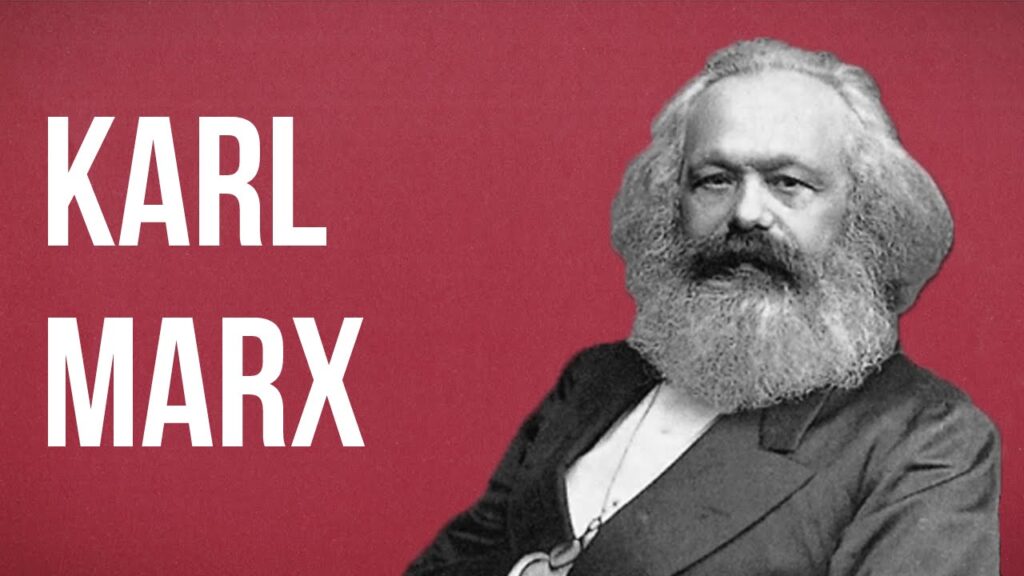
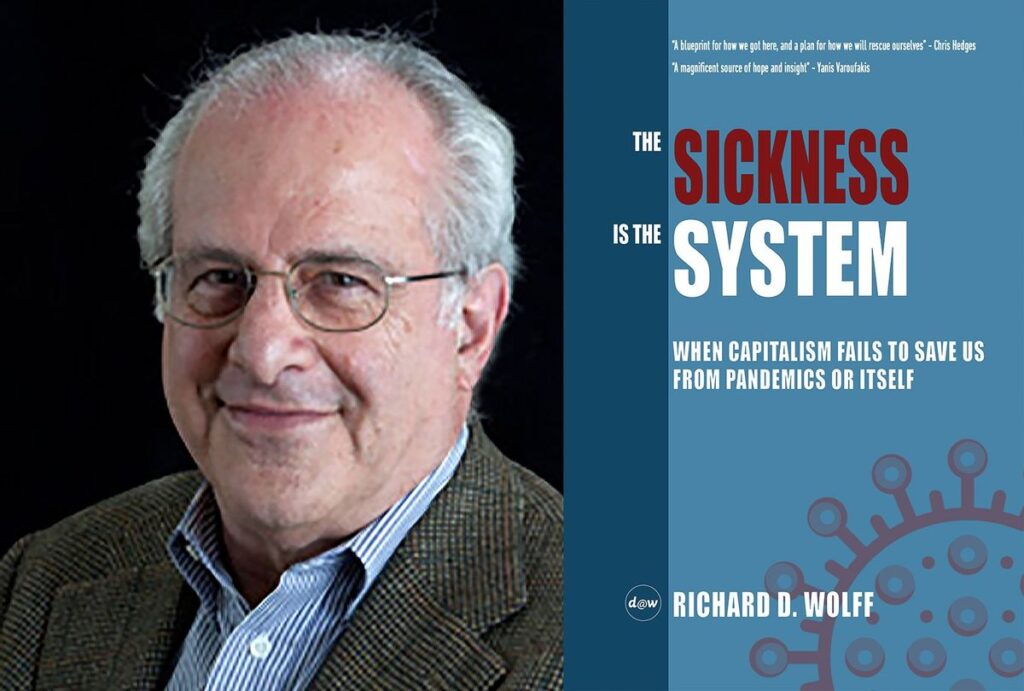
Richard Wolff, whom I admire, calls himself a “Marxist economist.” I find this puzzling and odd. Why? Because calling oneself a Marxist, suggests that one is a disciple, just as calling oneself a Christian suggests that one is a follower of Christ. It also suggests that one has devoted a considerable time to the study of Marx or Christ. But having devoted a considerable time of study about a person and their teachings, does not imply that one agrees with these teachings. One could very well be a staunch critic. Let us distinguish the latter by calling such a person a Marx or Christ scholar, as contrasted with someone who believes that everthing that Marx wrote or everything that Christ preached is true and worthy of emulation. So, what is a “Marxist”? A Marx-scholar or a disciple?
Now, why is it that if one agrees with the findings of scientists such as Galileo, Kepler, or Newton, one does not call oneself either a Galilean, a Keplerian, or Newtonian, even though one agrees with some of their findings, and can even claim to be a scholar of these men?
Perhaps it has to do with the nature of their writing. Scientists want to find the truth about the universe, while religious figures, such as Christ, Abraham, Muhammad, Zoroasted, prescribe a way of life.
So the question becomes: was Marx a scientist, a prescriber, or both? And calling oneself a Marxist makes some sense if Marx offered prescriptions.
I am not a Marx scholar; so my knowledge of what Marx wrote is limited. But I have read some of what Marx wrote as well as some of what Marx scholars have written. And my understanding is that Marx — on the basis of his analysis of the nature of capitalistic production — predicted that capitalism will self-destruct. And his prediction was based on an idealized version of capitalist production. But given that he did not include the various deviation from his model of capitalism, his prediction in the short-run did not occur, but it is still too early to say that even a modified version of capitalism will not self-destruct.
Richard Wolff, who calls himself a Marxist economist, is perpetually looking not only at the short-comings of capitalism, but also at its cruel repercussions on the environment and humanity. I too see the evil and injustice of capitalism, but I am also more cynical than either Wolff or Marx. I do not anticipate the self-destruction of capitalism, but the destruction of humanity as such.
Although I am not a Marxist either as a disciple or scholar, I find the truth about capitalism spelt out superbly in the last part of Capital I: Part III: The so-called Primitive Accumulation (pp.713-74).
In my own words: It is through conquest that the State arose giving rise to a class division between the rulers and the ruled. This took several forms. The rulers took tribute and taxation; the ruled became slaves, serfs, or free-laborers. And underlying all these relations was the fact that the rulers controlled access to land. [For some reason Richard Wolff focuses on the employer-employee relation, but refrains from examining how such a relation arose in the first place or how it is possible.]