
Further commentary on Ian Shapiro’s course: “Moral Foundations of Politics”

There is much in his course that I admire, and I appreciate his summaries, and various insights. But still I have fundamental disagreements.

These disagreement are based on the fact that I have my own independent outlook which acts as a base for evaluating the views of others, including the history of political thinking of others, and views of Shapiro himself.

To begin with, I am wary of ambiguous and vague abstractions and hasty generalizations as, for example, giving a historical period names, i.e., periodizations, placing thinkers into Schools and Movements. Shapiro classifies his course into three idiosyncratic parts: Enlightenment, Anti-Enlightenment, and Democratic Theory. By doing this, he is answering his fundamental question as to the moral foundation of politics with the following general answers: (1)[Enlightenment] the moral foundations of politics are x, y, or . . . z. (2)[Anti-Enlightenment] there are no moral foundations of politics, and (3) [Democratic Theory] the best form of current politics is some form of democracy.

Furthermore, His whole course seems to be based on an idiosyncratic concept of the Enlightenment, which he says is based on two claims. The first is that science can provide foundations for morality and politics. The second is an endeavor for freedom. But the nature of this freedom is left unspecified.

Concerning the first claim. If science seeks the truth, and truth concerns what is; while morality concerns what ought to be the case and what I ought to do, and David Hume, who lived during the Enlightenment, observed that “is does not imply ought,” [as Shapiro himself point out] then at least one Enlightenment thinker did not subscribe to the claim that science can provide moral foundations for politics.

As to Shapiro’s second characteristic of the Enlightenment — as a search for freedom — suffers from ellipsis. More precisely it should be formulated as freedom from … and freedom to do …

And Shapiro could have done better in his description of the Enlightenment by citing Immanuel Kant’s essay “What is Enlightenment?” in which the whole endeavor of the Enlightenment is expressed as: critically assessing all opinions; with a call to the government for freedom for everyone to publicly express their opinions.

My blog “Escaping from bullshit,” exemplifies this Enlightenment project.

From this perspective, the Enlightenment project started in ancient Greece through the systematic use of the principle of non-contradiction. This is the principle that two contradictory claims cannot be true simultaneously. This principle was used in the Middle Ages to systematize theology. However, the period up to the 17th century was loaded with all sorts of mythologies which could not be assessed simply on the basis of non-contradiction.

But with the scientific discoveries in the 17th centuries, an additional principle was established for determining superstitions (mythologies). This extended rationality from just relying on non-contradiction to an appeal to empirical scientific claims as providing better explanations.

The other serious problem was the existence of censorship — both religious and secular. Religion persecuted heretics (which still persists in Muslim countries); while the Monarchs favored the myth of a divine right of kings, and suppressed any political criticism — again, a problem which persists even today.

However, during the 18th century one unsolved problem remained which gave succor to theology — the existence of a complex, law-regulated cosmos, especially the existence of life forms, culminating in human beings. This mystery of life and lawful complexity left room for God, for free will, and room for an immortal soul. Thus, if one was free from contradictory beliefs and from the fact that science was limited, one could be justified in being at least a Deist.

This problem of the existence of life forms was solved by the theory of evolution, with the publication of Darwin’s Origin of Species (1859), which ushered in an Age of Secularism or Materialism.

The achievement and progress of the Enlightenment is scholarly expressed by Andrew Dickson White’s book: A History of the Warfare of Science with Theology (1896-7)
Commentary on Ian Shapiro’s course: “Moral Foundations of Politics”

In a previous blog Professor Ian Shapiro’s course at Yale University: “Power and Politics in Today’s World” I praised and recommended his course “Power and Politics in Today’s World.”

However his other course titled “Moral Foundations of Politics,” is a mixed bag. On the one hand, it is admirable in introducing some of the key figures and in providing plausible interpretations of some of their thoughts. But, on the other hand, I have objections to several key tenets.

Before I make my comments, be aware that there are two sets of videos for the course “Moral Foundations of Politics.” One set consists of his preliminary presentation to two students as to what will be covered in the course, and then there is the course itself.

In discussing his intentions for the course he says that he will examine the views presented from his own perspective. This means that he will (1) selects the material to be examined, and he will take a (2) critical perspective.

Formally, this amount to the position that he will examine hypotheses H1, H2, . . . , Hn. At the end of the course, he finds fault with all the hypotheses which he has examined.

This reminds one of Socrates in his dialogues, where all the examined hypotheses have been rejected, and we are left in the dark as to a solution, except to say that we know that we are ignorant of the solution.

Let me take a stab at introducing my own critical remarks as well as my own selection of some hypotheses which Shapiro has omitted.

Shapiro, in his preliminary discussions of his intentions, states that he wants to answer the questions: “What makes government legitimate?” and “Sources of State Legitimacy?” And, as he explains, legitimacy for him means morally justifiable.

These questions assume that there is a moral foundation to States, or, put otherwise, that States can be legitimate. But, really, is there a moral foundation to States? And even: Can there be a moral foundation to States? Or: Is a moral foundation of States possible?

Before continuing, let me distinguish a government of some primitive tribe from that of a centralized government (with its bureaucracy) as in modern countries. The governments of primitive small tribes are direct democracies to which all consent, and I do not call them States. It is the governments of huge populations which are to be called States. And States were not formed through consent, and if consent (or agreement) is the foundation of morality, then States are not founded on morality.

By not asking these preliminary questions, he is leaving out of account, the whole Anarchist Tradition, and he is failing to take into account the views of perhaps the greatest public intellectual anarchist of our times, Noam Chomsky.

An indicator of Chomsky’s attitude toward States, i.e., centralized governments, can be gleaned from the Wikipedia entry for “Pirates and Emperors”:

Pirates and Emperors, Old and New: International Terrorism in the Real World is a book by Noam Chomsky, titled after an observation by St. Augustine in City of God, proposing that what governments coin as “terrorism” in the small simply reflects what governments utilize as “warfare” in the large. Yet, governments coerce their populations to denounce the former while embracing the latter. In the City of God, St. Augustine tells the story
Indeed, that was an apt and true reply which was given to Alexander the Great by a pirate who had been seized. For when that king had asked the man what he meant by keeping hostile possession of the sea, he answered with bold pride, “What do you mean by seizing the whole earth; because I do it with a petty ship, I am called a robber, while you who does it with a great fleet are styled emperor”.

Below is a clip which extends this idea:

Let me add another writer and book which Ian Shapiro fails to include in his survey. This is Franz Oppenheimer’s book: The State (1919). The thesis of the book is that States have originated through conquest, and have morphed from monarchies into modern constitutional States while retaining their monopoly on violence.

I think of States in the same way as did King Louis XIV, who said, “L’État, c’est moi.” [“I am the State”], or as as President George W. Bush said: “I am the decider.” And these “deciders” tend to be Hitlers, Stalins, and other megalomaniacs who act on their whims like tigers in the wild. To think of Hitler as acting immorally sounds too weak. He is evil, just as any natural disaster is evil. A Hitler, who is the State, is like a mentally retarded person or a tiger. Consider how you would describe a tiger which attacks you. A tiger is neither moral nor immoral, but amoral. In an analogous sense, an enemy soldier (or pirate, or emperor, or a Hitler) who attacks you is also amoral. So, perhaps it is more proper to view the State as an amoral phenomenon, which like the tiger, or an enemy soldier, pirate, or emperor, or Hitler, must be imprisoned or destroyed; and not morally justified.

To be fair. Perhaps my initial criticism is really an appeal to what Shapiro undertakes to examine in his 3rd lecture: Natural Law Roots of the Social Contract Tradition, and the 13th lecture: Appropriating Locke Today.


As an aside, I believe that all such courses involving controversy should be taught by at least two teachers: a person like Ian Shapiro, and someone like me, his critic.

Professor Ian Shapiro’s course at Yale University: “Power and Politics in Today’s World”

I came across this televised course at Yale University covering the last 30 years of world politics from 1989 to 2019. I was impressed by its comprehensive focus on the major events which have shaped the political state of our present world. I know of no better such presentation which is available on the internet.

Here is the syllabus for this course: Syllabus


Lecture 1: Introduction to Power and Politics in Today’s World

Lecture 2: From Soviet Communism to Russian Gangster Capitalism

Lecture 3: Advent of a Unipolar World: NATO and EU Expansion

Lecture 4: Fusing Capitalist Economics with Communist Politics: China and Vietnam

Lecture 5: The Resurgent Right in the West

Lecture 6: Reorienting the Left: New Democrats, New Labour, and Europe’s Social Democrats

Lecture 7: Shifting Goalposts: The Anti-Tax Movement

Lecture 8: Privatizing Government I: Utilities, Eminent Domain, and Local Government

Lecture 9: Privatizing Government II: Prisons and the Military

Lecture 10: Money in Politics

Lecture 11: Democracy’s Fourth Wave? South Africa, Northern Ireland, and the Middle East

Lecture 12: Business and Democratic Reform: A Case Study of South Africa

Lecture 13: The International Criminal Court and the Responsibility to Protect

Lecture 14: 9/11 and the Global War on Terror

Lecture 15: Demise of the Neoconservative Dream From Afghanistan to Iraq

Lecture 16: Denouement of Humanitarian Intervention

Lecture 17: Filling the Void – China in Africa

Lecture 18: Political Limits of Business: The Israel-Palestine Case

Lecture 19: Crisis, Crash, and Response

Lecture 20: Fallout: The Housing Crisis and its Aftermath

Lecture 21: Backlash – 2016 and Beyond

Lecture 22: Political Sources of Populism – Misdiagnosing Democracy’s Ills

Lecture 23: Building Blocks of Distributive Politics

ecture 24: Unemployment, Re-employment & Income Security

Lecture 25: Tough Nuts – Education and Health Insurance

Lecture 26: Agendas for Democratic Reform


Power and Politics in Today’s World – Office Hours 1: The Collapse of Communism and its Aftermath

Power and Politics in Today’s World – Office Hours 2: The Collapse of Communism and its Aftermath II

Power and Politics in Today’s World – Office Hours 3: A New Global World Order?

Power and Politics in Today’s World – Office Hours 4: The End of the End of History

Power and Politics in Today’s World – Office Hours 5: The Politics of Insecurity

Timothy Snyder and Gore Vidal on the American Imperial (“Tyrannical”) Presidency

Timothy Snyder, in the following video, notes that the Presidency of Trump has the earmarks of tyranny.

I agree with what he says, except for his praise of the Constitution. He thinks that the Constitution was designed to prevent tyranny through a division of powers. That may well have been the intention. But the Constitution is flawed in many respects.

Among these flaws, the most egregious one is in having created the office of a President, elected by an electoral college and mass democracy. A better system would have been to have a prime minister nominated and elected by Congress, and even better one would have been a system with two co-equal prime-ministers, nominated by two parties with each minister having veto power over the other, as was the case in ancient Roman Republic with their two consuls. But a still better system would have been to imitate Switzerland and have four political parties nominate a seven-member executive council and cabinet, which would then be confirmed by Congress.

The present system allows persons of low caliber to be elected as Presidents. Worse, once elected Presidents have enormous powers in nominating cabinet posts and federal judges, and they also have great discretionary powers as military commanders-in-chief to declare martial law, and send troops to quell uprisings. For example, the so-called American Civil War, was not a war against a foreign aggressor, but was taken to be a domestic rebellion, which did not require a Congressional declaration of war, but was entirely within the powers of the President. And President Lincoln decided to send troops to the south to squash this “rebellious secession” of the South — a mopping up operation, as it may be called, which cost over 600,000 lives.

Timothy Snyder does not seem to appreciate the fact that the exercise of power which Trump is exhibiting is granted to him by the Constitution, and the mechanism of impeachment is too weak to curtail his abuse of these powers.

The Constitution, as it exists, is geared to making sure that the rich are in control. How so? Well, given mass democracy it will be the rich who will predominate in Congress because of election expenditures. And, let’s not forget, the Senate, as originally established, was to be selected by State legislatures, which themselves would be controlled by the rich, and would elect Senators who were friends of the rich. Furthermore, the Senators were to serve six years which would outlast any temporary political upheavals.

Anyway, several years ago, Gore Vidal gave a very insightful analysis of the existing Imperial Presidency:

Collapse!

I know that it is very difficult to predict with any accuracy about what will happen to humans — there are too many factors to consider. Nonetheless, there are some generalizations which can be made. One is that the sun will burn out is some 4 to 5 billion years. Another is that given finite resources, infinite growth is impossible. It is this last generalization which has been at the horizon of my thinking — made explicit by Thomas Malthus, who in 1789 published an essay noting that resources (specifically food) grow arithmetically, while populations grow exponentially. The conclusion seemed obvious to me: there is a limit to growth. And a report by that name, “The Limits to Growth” was published in 1973, using a computer to take into account various factors. [Here is a documentary about this project:

The criticism was that the predictions failed. This is true. But the claim that there is a limit to growth with finite resources seems to me to be a truism, as does Paul Ehrich’s “The Population Bomb” (1968). Again, the criticism of these books was not that there is a population problem, but a disagreement about the severity of it, and what will take care of this problem.

We are now living in the midst of an ecological crisis, as well as with other possible global collapses. This impending sense of collapse has been analyzed and proclaimed by a host of people. One of them is Jared Diamond in his book “Collapse” (2005). Below is his 2003 TED talk on this subject:

Recently, I came across the compelling documentary film “Prophets of Doom” (2011):

It includes the following six “prophets”:

  • Michael Ruppert (1951-2014): “Confronting Collapse,” “Crossing the Rubicon”
  • Nathan Hagens
  • John Cronin: “The Riverkeepers”
  • James Howard Kunstler: “The Long Emergency,” “Home From Nowhere”
  • Hugo De Garis
  • Robert Gleason: “End of Days”

    Chris Hedges, The Myth of Progress and the Collapse of Complex Societies

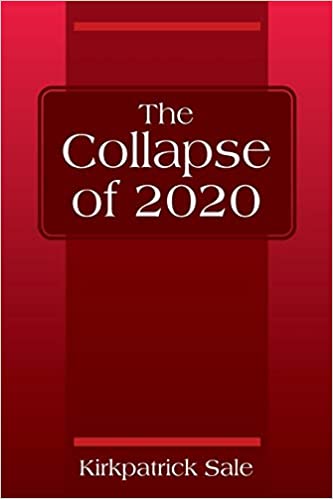
    Kirkpatrick Sale, The Collapse of 2020, 2020.

  • Propaganda and Rationality

    Susan Stebbing in Chapter 7 of Thinking to Some Purpose (1939) made two important distinctions. The first was to disambiguate the concept of propaganda in the neutral sense of propagating information, of making it widely available; from the disparaging sense of propagating false information (what nowadays is sometimes referred to as “fake” news).

    The other distinction which she wished to stress was between what she stipulated as “conviction” and “persuasion.” She stipulated that conviction was to be the result of reasonable arguments, whereas persuasion was the result by all other means.

    In view of the fact — which Stebbing admitted — that “conviction” and “persuasion” are often used synonymously, it would be clearer to simply prefix the adjective “rational” to these terms. We way then speak of rational persuasion (or conviction), irrational persuasion (or conviction), and non-rational persuasion (or conviction).

    Why have these distinctions? The idea of non-rational is to apply to the cognitive life of animals (and we are animals, after all), which includes instinct, association, and conditioning. These cognitive modes are operative as passions — including beliefs, which in humans are shaped linguistically. And there must be some kind of Weltanshauung which people acquire while being raised and living in some linguistic culture. Call it a pre-reflective ideology, if you like. It has also been called an “inherited conglomerate.” In my dissertation on Wilfrid Sellars, I called it an Alpha World, as distinct from a transformed or successor Beta World.

    I am reminded here of George Santayana’s idea of “animal faith” and the idea that we must start in “medias res.” I am also reminded of Alfred North Whitehead’s point in “Science and the Modern World,” that each age has a set of presuppositions.

    Now, the culture in which you find yourself may be riddled with pseudo-scientific myths, slogans, epigrams, and proverbs — which are false. And the task is to free — at least — yourself from this Platonic cave of bullshit. At the same time there are various bullshitters keeping you in (cognitive) chains.

    Bullshitters — intentionally or non-intentionally — use non-rational means to persuade (convince). And — worse — through cognitive dissonance you may even be persuaded to accept that which is irrational. It is irrational to accept a contradiction.

    Escape from the cave is through rationalism. I agree with Karl Popper’s description of rationalism in “The Open Society and Its Enemies,” Chapter 24:

    Since the terms ‘reason’ and ‘rationalism’ are vague, it will be necessary to explain roughly the way in which they are used here. First, they are used in a wide sense; they are used to cover not only intellectual activity but also observation and experiment. It is necessary to keep this remark in mind, since ‘reason’ and ‘rationalism’ are often used in a different and more narrow sense, in opposition not to ‘irrationalism’ but to ‘empiricism’; if used in this way, rationalism extols intelligence above observation and experiment, and might therefore be better described as ‘intellectualism’. But when I speak here of ‘rationalism’, I use the word always in a sense which includes ‘empiricism’ as well as ‘intellectualism’; just as science makes use of experiments as well as of thought. Secondly, I use the word ‘rationalism’ in order to indicate, roughly, an attitude that seeks to solve as many problems as possible by an appeal to reason, i.e. to clear thought and experience, rather than by an appeal to emotions and passions. This explanation, of course, is not very satisfactory, since all terms such as ‘reason’ or ‘passion’ are vague; we do not possess ‘reason’ or ‘passions’ in the sense in which we possess certain physical organs, for example, brains or a heart, or in the sense in which we possess certain ‘faculties’, for example, the power of speaking, or of gnashing our teeth. In order therefore to be a little more precise, it may be better to explain rationalism in terms of practical attitudes or behaviour. We could then say that rationalism is an attitude of readiness to listen to critical arguments and to learn from experience. It is fundamentally an attitude of admitting that ‘I may be wrong and you may be right, and by an effort, we may get nearer to the truth’. It is an attitude which does not lightly give up hope that by such means as argument and careful observation, people may reach some kind of agreement on many problems of importance; and that, even where their demands and their interests clash, it is often possible to argue about the various demands and proposals, and to reach — perhaps by arbitration — a compromise which, because of its equity, is acceptable to most, if not to all. In short, the rationalist attitude, or, as I may perhaps label it, the ‘attitude of reasonableness’, is very similar to the scientific attitude, to the belief that in the search for truth we need co-operation, and that, with the help of argument, we can in time attain something like objectivity.

    It is of some interest to analyse this resemblance between this attitude of reasonableness and that of science more fully. In the last chapter, I tried to explain the social aspect of scientific method with the help of the fiction of a scientific Robinson Crusoe. An exactly analogous consideration can show the social character of reasonableness, as opposed to intellectual gifts, or cleverness. Reason, like language, can be said to be a product of social life. A Robinson Crusoe (marooned in early childhood) might be clever enough to master many difficult situations; but he would invent neither language nor the art of argumentation. Admittedly, we often argue with ourselves; but we are accustomed to do so only because we have learned to argue with others, and because we have learned in this way that the argument counts, rather than the person arguing. (This last consideration cannot, of course, tip the scales when we argue with ourselves.) Thus we can say that we owe our reason, like our language, to intercourse with other men.

    Karl Popper on a possible “abstract society” and our current practice of cellphone snubbing (i.e., phubbing).

    WASHINGTON, DC – OCTOBER 13: Young adults split their time between the televisied debate and Twitter on their smart phones during a debate watch party at the Local 16 bar and restaurant October 13, 2015 in Washington, DC. Democratic candidates Jim Webb, Bernie Sanders, Hillary Clinton, Martin O’Malley and Lincoln Chafee squared off on the CNN-hosted debate in Las Vegas. (Photo by Chip Somodevilla/Getty Images)

    Below is a passage from Karl Popper’s “The Open Society and Its Enemies” (1945), Chapter 10: “The Open Society and Its Enemies,” Sect. I. Compare what Popper says here with the articles at the bottom of this posting.

    “As a consequence of its loss of organic character, an open society may become, by degrees, what I should like to term an ‘abstract society’. It may, to a considerable extent, lose the character of a concrete or real group of men, or of a system of such real groups. This point which has been rarely understood may be explained by way of an exaggeration. We could conceive of a society in which men practically never meet face to face — in which all business is conducted by individuals in isolation who communicate by typed letters or by telegrams, and who go about in closed motor-cars. (Artificial insemination would allow even propagation without a personal element.) Such a fictitious society might be called a ‘completely abstract or depersonalized society’. Now the interesting point is that our modern society resembles in many of its aspects such a completely abstract society. Although we do not always drive alone in closed motor cars (but meet face to face thousands of men walking past us in the street) the result is very nearly the same as if we did — we do not establish as a rule any personal relation with our fellow-pedestrians. Similarly, membership of a trade union may mean no more than the possession of a membership card and the payment of a contribution to an unknown secretary. There are many people living in a modern society who have no, or extremely few, intimate personal contacts, who live in anonymity and isolation, and consequently in unhappiness. For although society has become abstract, the biological make-up of man has not changed much; men have social needs which they cannot satisfy in an abstract society.

    Of course, our picture is even in this form highly exaggerated. There never will be or can be a completely abstract or even a predominantly abstract society — no more than a completely rational or even a predominantly rational society. Men still form real groups and enter into real social contacts of all kinds, and try to satisfy their emotional social needs as well as they can. But most of the social groups of a modern open society (with the exception of some lucky family groups) are poor substitutes, since they do not provide for a common life. And many of them do not have any function in the life of the society at large.

    Another way in which the picture is exaggerated is that it does not, so far, contain any of the gains made — only the losses. But there are gains. Personal relationships of a new kind can arise where they can be freely entered into, instead of being determined by the accidents of birth; and with this, a new individualism arises. Similarly, spiritual bonds can play a major role where the biological or physical bonds are weakened; etc. However this may be, our example, I hope, will have made plain what is meant by a more abstract society in contradistinction to a more concrete or real social group; and it will have made it clear that our modern open societies function largely by way of abstract relations, such as exchange or co-operation. (It is the analysis of these abstract relations with which modern social theory, such as economic theory, is mainly concerned. This point has not been understood by many sociologists, such as Durkheim, who never gave up the dogmatic belief that society must be analysed in terms of real social groups.)

    In the light of what has been said, it will be clear that the transition from the closed to the open society can be described as one of the deepest revolutions through which mankind has passed. Owing to what we have described as the biological character of the closed society, this transition must be felt deeply indeed. Thus when we say that our Western civilization derives from the Greeks, we ought to realize what it means. It means that the Greeks started for us that great revolution which, it seems, is still in its beginning — the transition from the closed to the open society.”

    *******

    Julie Beck, Ignoring People for Phones Is the New Normal: A study looks at how phone snubbing—“phubbing”—becomes socially acceptable. The Atlantic, June 14, 2016.

    Varoth Chotpitayasunondh and Karen M. Douglas, “How “phubbing” becomes the norm: The antecedents and consequences of snubbing via smartphone,” Computers in Human Behavior, Volume 63, October 2016, Pages 9-18.