If you are like me, you have collected many books which you intend to read, but don’t get to them for years, and then there are those “archaic” books which take up your attention instead. The result is missing out on what is currently published or in fashion.
Well, I finally read some of Martin Gardner’s “The Whys of a Philosophical Scrivner” (1983); “Postscript” (1999). He tells us that he believes in a God, in soul, in immortality, and in the efficacy of prayers. And he has no justification for any of these beliefs except for the fact that he believes them. Period. So much for the Enlightenment project!
Well, I am not interested in his personal faith, and so, most of his book is of little interest to me, except for the three chapters in which he expounds his political views. These are chapter 7: The State: Why I am not an Anarchist; chapter 8: The State: Why I am not a Smithian; chapter 9: Liberty: Why I am not a Marxist.
These three chapters could have been combined with the title: Why I am a Social Democrat.
He correctly points out that political labels are ambiguous and vague; so we must understand them as used by Gardner. Extreme socialism (which he identifies with Marxism), for him, is a position in which the State owns and operated the means of production; every industry in nationalized, as it was in the Soviet Union. By “Smithian” he mean laissez faire capitalism with a minimal State, as expounded, for example, by Robert Nozick in “Anarchy, State, and Utopia” and by Milton Friedman in “Freedom and Capitalism.” By “anarchism” he means a Stateless society (which he extends to mean “governmentless”).
He thinks a Stateless society is now unfeasible in view of industrialization. But he does not want industry to be totally in private hands. He wants some industries to be nationalized, private industries to be regulated by government, and he wants a welfare State. And he wants a constitutional democracy. This conglomerate of ideas he calls “social democracy.”
He points out that most States are a mixture of free enterprise and government control. The problem is to find the right balance between the two.
In response. From my perspective the problem is “constitutional democracy” — which Gardner talks about only in a peripheral manner.
He writes: “Democracy clearly functions best to the degree that voters are intelligent and well informed, which means, of course, that the efficiency of democracy is strongly tied to education.” … “education may not keep pace with extensions of the franchise, that ignorant voting will substitute a rule by boobs for a rule by the wise.” p. 120.
And we do have rule by boobs.
But the problem is not simply that we have an uneducated electorate. The problem is many-fold. Given mass democracy (as contrasted with micro democracy), a candidate for office must rely on advertisement (which takes money), and, as Gardner pointed out, in 1967, in Picoaza, Ecuador, a foot powder, called Polvapies, was elected mayor. Gardner confesses to not knowing how to solve this problem except through better education.
Also given mass democracy and the need for candidates to advertise, the probability is that only the rich and the friends of the rich will be elected. And once elected, they will work for the rich — as is definitely the case in the United States.
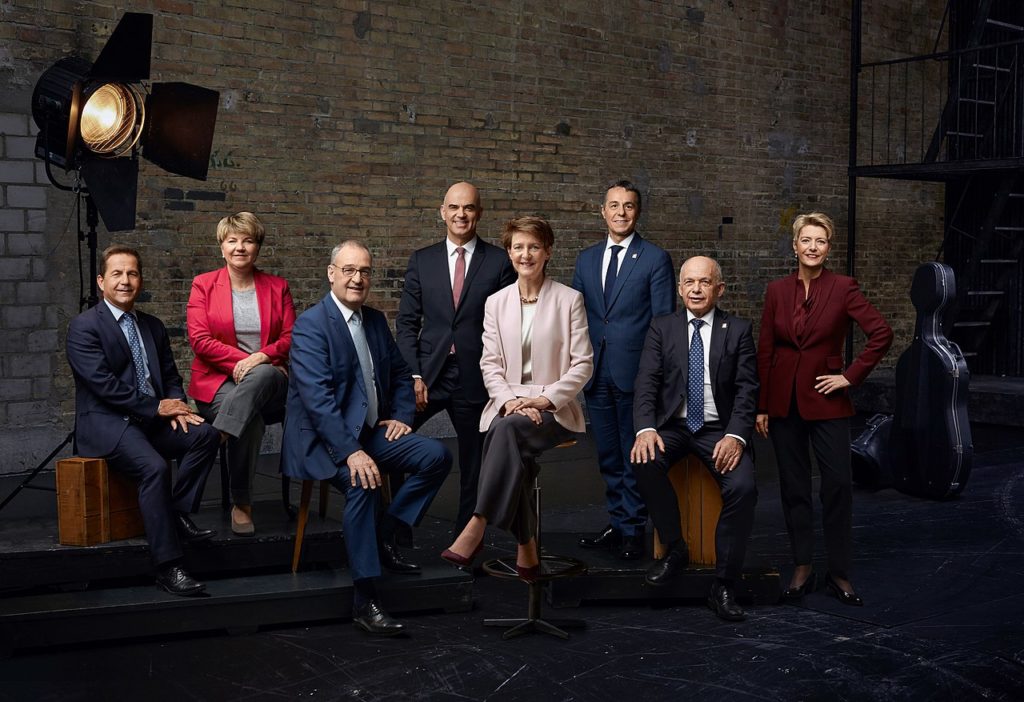
We also have right now in the U.S. a President, who happens to be a boob. In Switzerland they don’t have this problem. They have a Federal Council of seven individuals. So, even if one of them is a boob, there are six others to keep him in his place.
Gardner, I fear, never understood what was capitalism. It is a free-enterprise system which is aided by a government which forbids people from free access to subsistence land. And given the nature of mass democracy in which the rich rule, there never will be passed a law which gives people a free access to subsistence land.
This can only occur with anarchism, which is based on micro democracy in which the unit of government is a small community of some 100 families federated with other such communities into a confederation. Gardner was unaware of this form of anarchism in Ukraine under Nestor Makhno during the Russian Civil War 1918-1921; nor of the anarchism which flourished in Spain during their Civil War and Revolution 1936-1939, with worker-controlled enterprises both in industry and agriculture.
Gardner rejected anarchism because he did not know what it was.
While searching the internet for items on “rights,” I came across an interesting Youtube site: “After Skool.” It is a collection of various videos in which, while some voice is narrating, there is a video illustrating — mostly with cartoons — of what is narrated. Very nice!
Below is a video illustrating George Carlin’s take on “rights.” Makes one think of what to make of “inalienable rights” — ey?
In my previous postings I have commented on the course given at Yale University by Ian Shapiro, and on the course given at Harvard University by Michael Sandel. In both courses there is use made of the language of “rights.” And there is mention in both courses the appeal to rights in John Locke and in the American Declaration of Independence. But there is no attempt at giving an independent analysis of what this kind of language means. This raises the question of why the evasion or omission? Especially when the professors could have made use of the following book which addresses this issue in a scholarly and comprehensive manner. The book is: David G. Ritchie, Natural Rights: A Criticism of Some Political and Ethical Conceptions (1903)
Below is the table of contents, which indicates the scope of the coverage.
PART I. — THE THEORY OF NATURAL RIGHTS.
I. THE PRINCIPLES OF ’89
II. ON THE HISTORY OF THE IDEA OF “NATURE” IN LAW AND POLITICS
III. ROUSSEAU AND ROUSSEAUISM
IV. DE DIVISIONE NATURAE
V. WHAT DETERMINES RIGHTS?
PART II. — PARTICULAR NATURAL RIGHTS.
VI. THE RIGHT OF LIFE
VII. THE RIGHT OF LIBERTY: LIBERTY OF THOUGHT
VIII. TOLERATION
NOTE A. — Religious Persecution and Toleration: Some Historical Illustrations
NOTE B. — Measures for Suppressing Mormonism in the United States
IX. THE RIGHTS OF PUBLIC MEETING AND ASSOCIATION
X. FREEDOM OF CONTRACT, NATIONAL FREEDOM, ETC.
XI. RESISTANCE TO OPPRESSION
XII. EQUALITY
XIII. THE RIGHT OF PROPERTY
XIV. THE RIGHT OF PURSUING AND OBTAINING HAPPINESS
APPENDIX.
THE VIRGINIAN DECLARATION OF RIGHTS June 12, 1776
EXTRACT FROM THE DECLARATION OF INDEPENDENCE July 4, 1776
FRENCH DECLARATION OF RIGHTS OF 1789 (Constitution of 1791), WITH PAINE’S TRANSLATION
I have watched Michael Sandel’s Harvard course on justice, as well as some of his other public appearances, such as:
TED talk: The lost art of democratic debate
I find myself viewing his performances from different perspectives.
First, he claims as his agenda to promote public discourse on the common good. On this he is deluded. There are countless writings on moral issues. But very few read them. Then there are the speeches of eminent public speakers, such as Chomsky, Hedges, Hitchens, Zinn, Kinzer, Vidal, Pilger; and such programs as Democracy Now, Real News, and all sorts of Progressive publications. But who is aware of any of this? And who will listen to and take note of what Sandel is doing?
Second, he claims to be providing an example of what public discourse should look like. So what is his example? It is to introduce controversial questions, and offer the audience (or students) an opportunity to express their opinions with a reason. This is followed by Sandel’s own (sometimes prepared) commentary — not necessarily to adjudicate from his own perspective. One is left with the questions unresolved.
Third, his approach does not question our political institutions, but raises questions as a way of prescribing what the government should do. He does not seem to realize that our prescriptions to the government are otiose. As an example, in the U.S. preparation for an attack on Iraq in 2003, there were huge protests against this action both in the United States and the world. The result? Iraq was attacked.
The conclusion I draw is that public (democratic) opinion in the U.S. and in most other countries does not much matter.
Fourth, the issue he should be discussing is whether our political institutions function to promote the common good. Apparently, Sandel himself thinks that they do not. But he offers no guidance as to how to improve them.
Fifth, I have fundamental disagreements with him about his discourse on justice. Let me do this by saying something about the four cardinal virtues: moderation (or temperance), fortitude (or courage), prudence (or wisdom), and justice.
Virtues are habits or dispositions. The first three virtues can be exercised by a solitary individual like Robinson Crusoe on an island. The fourth virtue — justice — concerns behavior towards others; let us say of Crusoe towards Friday. And if justice is a habit or disposition, what is this disposition? My simple answer is that it is a disposition to abide by agreements.
And what will be the agreements which Crusoe and Friday make?
Their common concern is to stay alive: self-preservation. And to do this they have to have a free access to the land and water for food and shelter — in short, the necessities for sustaining life. So, they will agree on some equal division of land or on some equal mode of access to the necessities for life. They will also agree not to harm each other nor to interfere with their pursuit of these necessities. But I think they would also agree to an exception clause, namely, that these agreements are not binding if they threaten self-preservation.
Justice or morality is the disposition to sincerely abide by these agreements. And injustice or immorality is to act counter to these agreements. That is all.
I know that the usual view of justice has to do with something like an equal application of the law. Well, if, let us say, Crusoe and Friday agree to have a judge or arbitrator — call him Joe, then Joe will agree to use an impartial rule to decide cases. And if Joe abides by such an agreement, Joe will act justly as a judge; otherwise, he will act unjustly by not abiding by the agreement to act impartially.
My sixth and last comment, is that a discussion of justice has to take into consideration history and sociology; specifically, we have to take into account the fact that, as argued by Franz Oppenheimer, in his book The State, states have arisen through conquest, and have morphed from slave empires, to feudal kingdoms, to constitutional democracies and dictatorships. In all cases states have been resilient to moral considerations, and have supported various forms of plutocracy and capitalism.
I agree with the idea of democracy as the claim that government, if moral, should be founded on the will of the people. However, Shapiro seems to use American Democracy, as if it were the paradigm of democratic government. My objection is that there are many different existing types of democratic governments, which Shapiro should have mentioned.
Shapiro mentioned Robert Dahl as being — according to him — the foremost current scholar of democracy. Because of this endorsement, I have read his book, On Democracy (1998). Dahl, in his turn, recommended looking at the freedom ranking of governments at the site:
Freedom House. What is more interesting for me is the type of governments which exist in these “free” democracies. And for that answer — by Dahl’s recommendation — we should look at the studies of Arend Lijphart, whose most important book is Patterns of Democracy (1st ed. 1999; 2d ed. 2012). [available on the Internet]
Lijphart’s main classification of democracies is into two types: Majoritarian (also known as the Westminister model) and Consensus models. For example, the United Kingdom uses majoritarian democracy; whereas Switzerland uses consensus democracy.
I am not going to get into the details except to point out two features. In England the House of Commons is elected by a principle that whichever party gets the most votes wins, and then this party chooses the Prime Minister. Whereas in Switzerland, party members are elected by proportional representation, and the four parties with the largest number of representatives nominate the 7-member Federal Council.
Swiss Federal Council 2020
Arend Lijphart believes that Consensus type of democracy is preferable to the Majoritarian type.
My criticism of Ian Shapiro’s course boils down to this. He failed to tell the audience that there are different types of democracies in the world, and failed to consider which is preferable.
But that is not his only failing: i.e., the failure to differentiate and to grade democracies. Beside actual different types of democracies, there are also ideal and utopian types of democracies which are never mentioned by Shapiro. For example, Part III “Utopia” of Robert Nozick’s Anarchism, State, and Utopia points in this direction. [Contrary to Nozick, I would call his framework for utopias as the framework for anarchism] And a general description of anarchist proposals could be summarized as bottom-up federated democracies.
And without considering these alternative ideal democracies, there is no prospect for finding “the moral foundations of politics.”
Let me start with the following advice. I am commenting on the videos of a course at Yale University presented by Ian Shapiro. For you to properly evaluate my criticism of the opinions of Ian Shapiro, you have to watch the videos; otherwise you are in no position to know whether I am misrepresenting his views, or whether his reasoning is more compelling than my.
In this blog, I wish to assess his views on the Social Contract theories. I was especially taken aback by his comments on Jean-Jacques Rousseau’s views presented in his “The Social Contract” (1761) in the following video:
Shapiro puts on a screen the following passage from Book II, chapter III: whether the general will is fallible:
There is often a great deal of difference between the will of all and the general will; the latter considers only the common interest, while the former takes private interest into account, and is no more than a sum of particular wills: but take away from these same wills the pluses and minuses that cancel one another, and the general will remains as the sum of the differences.
Shapiro does not know what sense can be made of “the general will” in contrast to the “will of all.” So, he sees no alternative to some kind of vote, and goes on to examine justifications for majority rule. This appeal to voting is not the intention of Rousseau as I will point out. By the way, this failure by Shapiro to appreciate what Rousseau was after is the same failure he exhibits with John Locke as well.
So, let me explain what both Locke and Rousseau have in common.
First, not all interests have the same importance. The fundamental interest is in self-preservation. And what is required for sustaining animal life, including our own is known in a general way by all people. If it was not known to some people, then they would not have survived — and they, as well as suicidal persons, are of no concern to us in our endeavor for self-preservation. In addition, science can be more precise in telling us what is necessary for survival. This will to survive and the means to survival constitutes what Rousseau calls “the general will.” And it has nothing to do with voting. All other interests are secondary, and can be voted on in some way or other.
Whether an individual lives alone or in groups, there are certain things which are needed for survival: air, water, food, clothes, shelter, fuel, temperature, tools. And all these can be obtained from a suitable area of land. So access to subsistence land is a necessity for a solitary individual. Unfortunately, a solitary individual is liable to attacks and misfortunes; so, banding together is more effective for safeguarding and sustaining life. But before any divisions of labor are agreed to, it is necessary, first, to have this access to subsistence land and to secure whatever one manages to get from one’s labor. This arrangement with others to keep what one gets from nature is a social agreement (contract) called “property.” And this is why Locke and Rousseau write a great deal about property, and which is the original rationale for social life.
Once we understand this idea that access to subsistence land is necessary for sustaining life, then any political action which denies us this access is against our will and consent, and can be done only through coercion and violence and is, therefore, amoral (because not freely agreed to).
Now, I find it odd that in John Rawls theorizing within the Original Position, in which the characteristic of human beings was known, it was not taken into account that all human beings need necessities for life, and that such necessities are obtainable by a free access to subsistence land.
As to Marx, Shapiro focuses on Marx discussion of exploitation without raising the question of how exploitation is possible. But the answer is given by Marx in pointing out that a proletariat class is required for capitalism. A proletarian is someone who does not have free access to subsistence land. And such denial of free access to subsistence land is only possible by force through a State — that is why States are amoral.
In conclusion, Shapiro is not really interested in finding the moral foundations for States — because, as David Hume pointed out, they were never formed by a social contract, and Shapiro cannot find the roots of legitimacy for States; so, he shifts his interest to the problem of how can the lives of people be improved under the present conditions of States through some form of democracy.