Roads to Anarchism

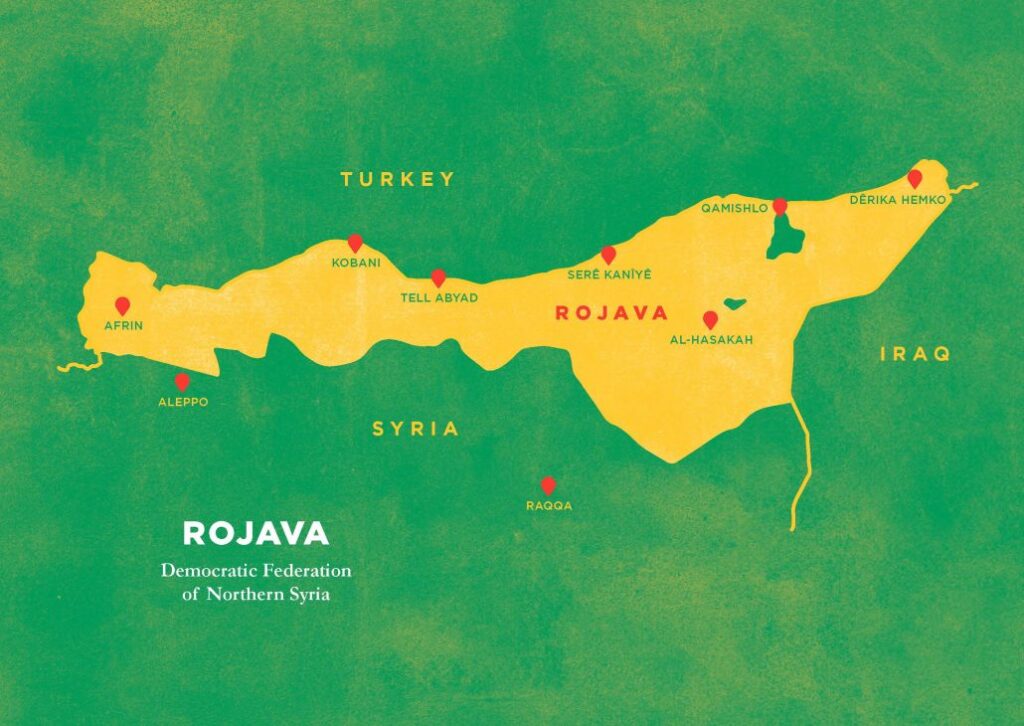
With the current project in Rojava, which so far is succeeding as an experiment in an anarchist society, I thought it would be interesting to reflect on past attempts at anarchism. I have in mind Mexico, Ukraine, Spain, and currently Rojava.

The common feature of all of them is that what transpired in these places was during civil wars. This means that the normal police powers of a State were either suspended or inoperative, and this created a period of time in which some other forms of organization could be tried. And if these experiments were to be experiments in anarchism, two things had to come into play — especially with peasants: redistribution of the land in some fair manner, and giving political power to a local community, such as, for example, a village. A third element operating in some of these circumstances, which may have acted as a catalyst, was a leader.

Let me consider each of these experiments in turn.

The Mexican Revolution. The beginning of the Mexican Revolution is taken to be November 20, 1910. It was started by Francisco Madero with his Plan of San Luis Potosi, which aimed to overthrown the then President of Mexico, Porfirio Diaz — which it did. [I am hesitant to call a coup — however orchestrated — a revolution. It is more like a non-democratic replacement of one “dictator” by another. This is also true of all the recent so-called “color” revolutions.]

What is of interest to me as an anarchist is the activity of Emiliano Zapata whose Plan of Ayala called for the restitution of land to the peasants of Morelos. This was one step towards anarchism. The other step would have been the formation of local autonomous communities. If Zapata had anything like this in mind, he wanted it to be implemented through a central government. And so, he pinned his hopes on a visionary President. In this respect, he was not an anarchist. But what is important is that there was a leader to whom the peasants flocked for the sake of land rights.

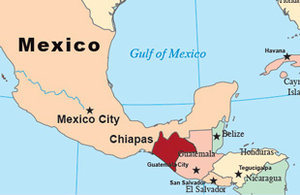
[Since 1994, there has been an anarchist movement in Mexico, in Chiapas. It calls itself the Zapatista Army of National Liberation. Unlike the other anarchist movements which I focus on, it is taking place during a period in which Mexico is relatively stable.]
In Ukraine, during the Russian Revolution and Civil War (1917-1921), while various centralizing armies (Red, White, Nationalists) were aggresively expanding (through territorial incursions), Nestor Makhno, a self-conscious anarchist, and follower of Kropotkin, was engaged in two projects. The first was to fend off all military incursion into his territory. The second was to institute local councils for handling land distribution and self-organization. In both regards he was successful until overwhelmed by superior Bolshevik military strength.

In Spain there was a long-standing historical involvement with anarchism from the days of Bakunin. There was the CNT, a huge libertarian union, and there was the FAI, an anarchist federation. When Civil War broke out in 1936, in the anarchist areas, people collectivized farms and industry. Spain was an exception in not having one anarchist leader; instead it had an anarchist tradition. However, one anarchist fighter did stand out — Buenaventura Durruti, who was killed on Nov. 20, 1936.

The Spanish Republicans (including anarchists and communists) lost the Civil War to Franco who was aided both by Hitler and Mussolini.

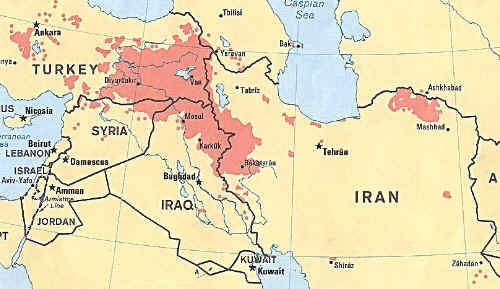
We come now to the present and the plight of the Kurds. After World War I, and despite Woodrow Wilson’s rhetoric about the self-determination of nationalities [Fourteen Points], the Kurds did not get a State; instead they are scattered within four States in the region known as Kurdistan.
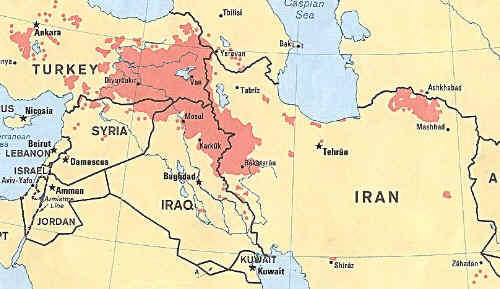
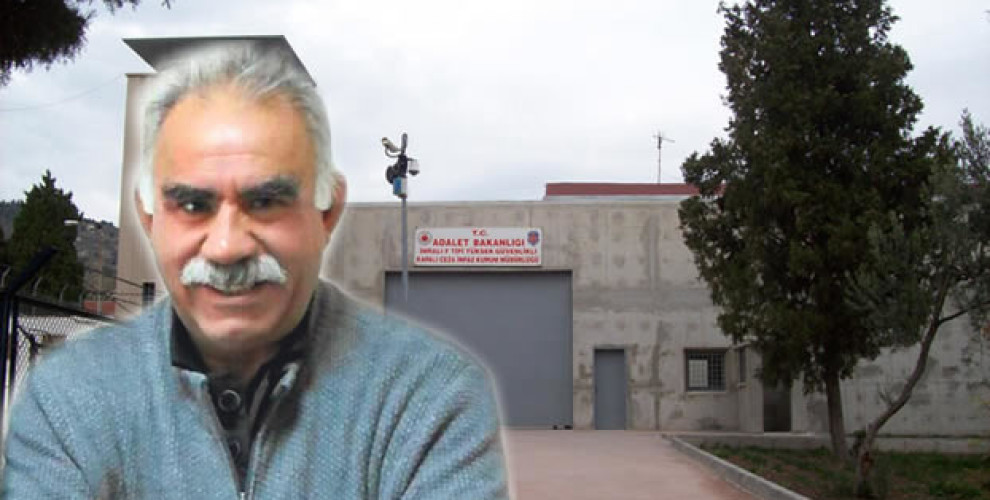
The Kurds are fortunate to have a leader, Abdullah Ocelan, who combines the features of the Ukrainian freedom and independence fighter Stepan Bandera and that of the anarchists Nestor Makhno and Mykhailo Drahomanov. Ocelan helped to found the PKK in 1978, a Marxist Kurdish worker’s party which waged guerrilla warfare against Turkey for an independent Kurdistan. This is analogous to Stepan Bandera as the head of the OUN-B fighting for Ukrainian independence. In 1999, Ocelan was abducted from Nairobi, Kenya and flow to Turkey, where he was tried, convicted, and sentence to be executed. This was commuted to life inprisonment on the island of Imrali on the Sea of Marmara.

In 2005 Ocalan issues the Declaration of Democratic Confederalism in Kurdistan. This marked a break with his Marxism and an advocacy of anarchism, a position which was adopted by the PKK. His main inspiration came from Murray Bookchin‘s “The Ecology of Freedom [1982].”

[Ocalan’s current position is very similar to that which was advocated by Mykhailo Drahomanov, under similar circumstances when the Ukrainian population was living in territories ruled by Austro-Hungary in the west, and Russia in the east.]

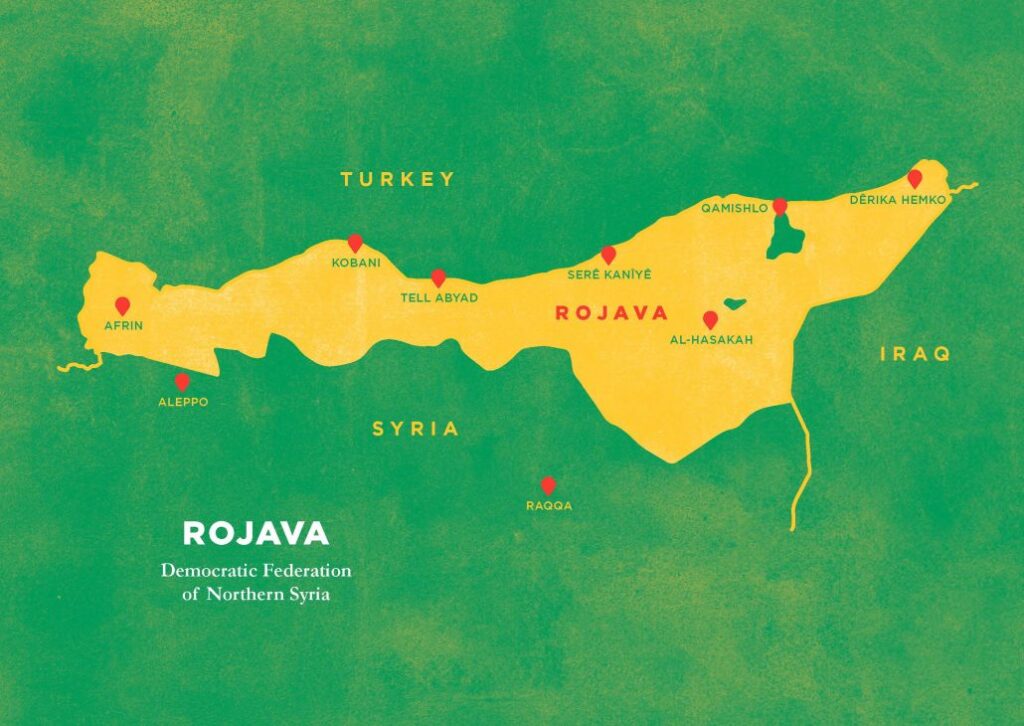
So far since 2012, the Kurds in Syria have created a polyethnic Autonomous Administration of North and East Syria (Rojava) — an anarchist experiment. The hope is that all of Kurdistan can be made a part of federated States.

Whether Rojava and the hope of federalism will survive is yet to be seen.
Is anarchism understood only by people who are highly self-conscious?

Yes and No.

Yes. From a theoretical or speculative perspective, it seems that the idea of anarchism is difficult for people to grasp. First, they probably understand it in the sense of lawlessness — a sort of random rampage. So, it is the word “anarchism” which is not understood by people in a scholarly manner. Again, as to the political theory of anarchism, ordinary people are totally ignorant of it. This is also true of historical events. Inasmuch as people are ignorant of history, to that extant they are also ignorant of anarchist movements.

No. If we understand by anarchism (1) free access to subsistence land, and (2) direct democracy by a small group, then (1) an anarchistic society is the most natural and normal society of people. All indigenous people — I am thinking of hunter/gatherers primarily — untouched by States are anarchists. This is the anthropological finding. (2) Under conditions of civil war as occurred in Mexico, Ukraine, Spain, and now in Syria [Rojava], people — especially peasants — become anarchists. They divide the land equally and gather together to make decisions through direct democracy.

Three attempts at an anarchist society

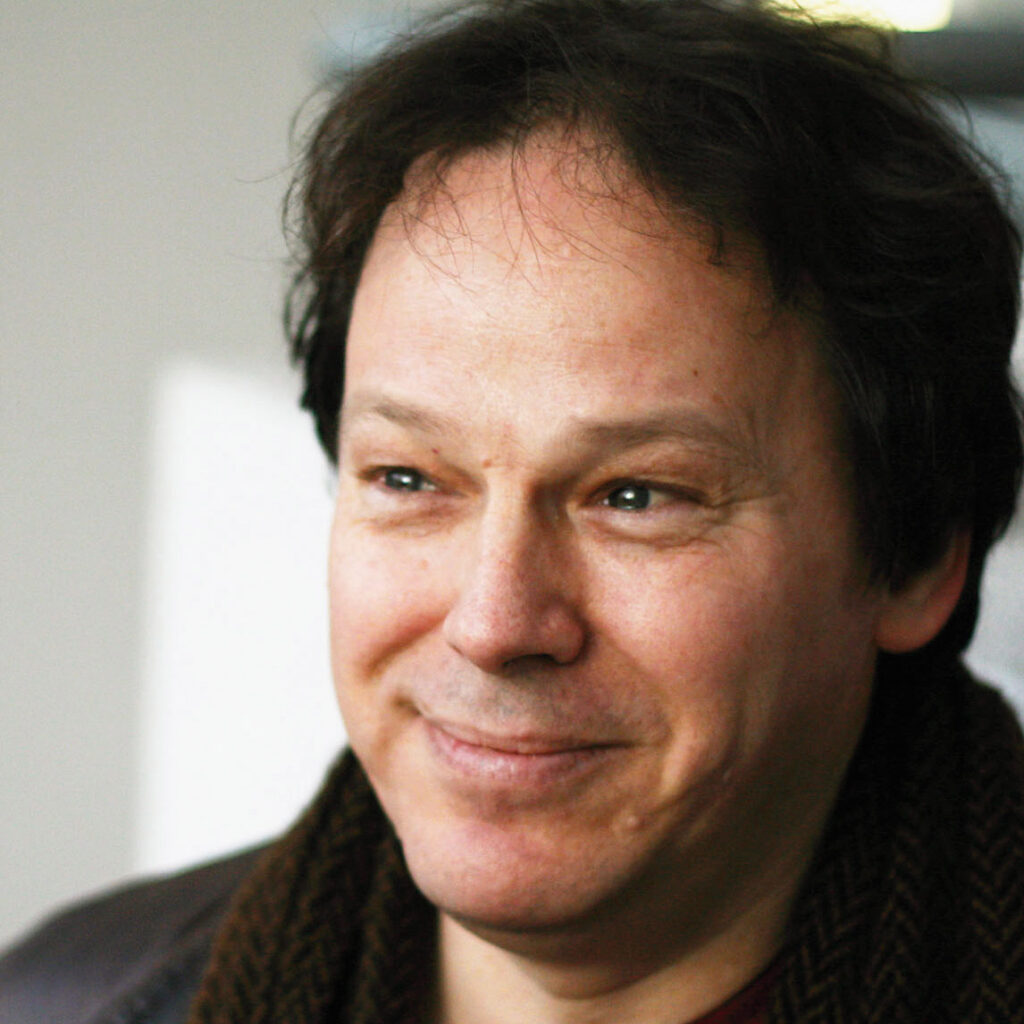
David Graeber, being an anthropologist, knew that an anarchistic way of life was possible because indigenous people — when not contaminated by modernity — are all anarchists (in Marxist terminology they are “primitive communists”). By my lights, anarchism requires two things: (1) free access to subsistence land, and (2) direct democracy on a small scale.

Other than indigenous or primitive anarchism, there were only two temporarily successful anarchist experiments.

The first one was in Ukraine, during the Russian and Ukrainian Civil War (1917-1921). The military leader of this anarchist movement was Nestor Makhno who managed to control the southeaster area of Ukraine. The program consisted of distributing land to those who worked it, and instituting local councils which operated by direct democracy. [a caveat: anarchism is not against government; it is against a hierarchical top-down democracy — if it is a democracy — elected through mass or macro-voting]. The Makhnovchina — as the territory was know — eventually was conquered by Bolsheviks due to a lack of weapons.

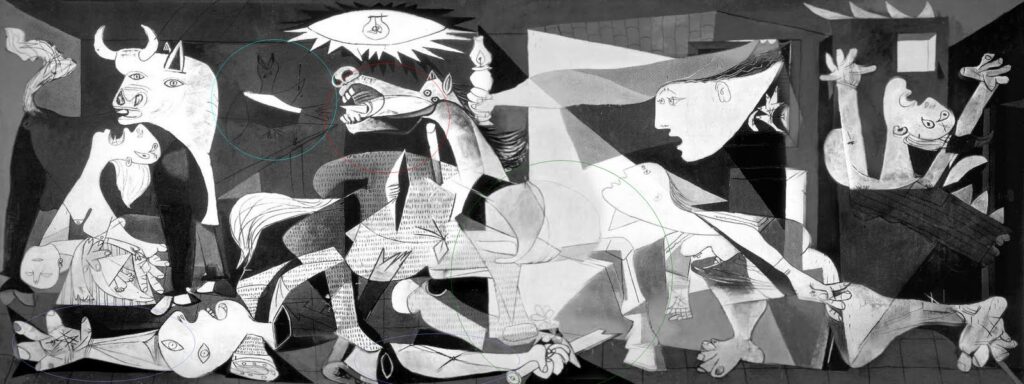
The second attempt at an anarchist society occurred in Spain — particularly in Catalonia (see George Orwell’s “Homage to Catalonia”) — between 1936 and 1939. The experiment failed because the Spanish Republic lost to the coup of Franko, aided by the arms of Hitler and Mussolini (a destruction so well depicted by Picasso’s “Guernica”)

Currently there is a third attempt at forming an anarchist society in northeastern Syria, in the region called Rojava. When David Graeber, an anarchist himself, became aware of it he became terribly excited and a great supporter of this effort. And it is through him that I became aware of Rojava and the ideologue behind it — Abdullah Ocalan. I too am excited about this.

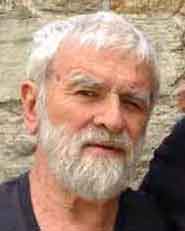
Abdullah Öcalan (1948- ) — The Idealogue of Rojava

“Abdullah Öcalan is the founder of the Kurdistan Workers’ Party (PKK), regarded as one of the Kurds’ most important political representatives and a leading strategist. Ever since his abduction from Kenya in 1999 and subsequent trial and death sentence — commuted to life imprisonment without the possibility of parole — he has been held in total isolation on İmralı island. For almost eleven years, he was the sole prisoner there.”

“Öcalan has written extensively on history, philosophy, and politics, and is regarded as a key figure for a political solution of the Kurdish issue. Since the author has been held totally incommunicado and not been able to consult his lawyers or receive regular visits for many years, this op-ed has been edited from his prison writings and recent statements by his collaborators and sent to Jacobin for publication. His recent works include The Sociology of Freedom (2020) and The Political Thought of Abdullah Öcalan (2017).”

His current thoughts are partially expresses in the following article:

Abdullah Öcalan: My Solution for Turkey, Syria, and the Kurds,” Jacobin, Aug. 7, 2020.

Publications by Abdullah Öcalan in English

Books

Pamphlets Compiled from the Prison Writings

  • War and Peace in Kurdistan (Cologne: International Initiative Edition, revised edition, 2017).
  • Democratic Confederalism. (Cologne: International Initiative Edition, revised edition, 2017).
  • Liberating Life: Woman’s Revolution (Cologne: International Initiative Edition, 2013).
  • Democratic Nation (Cologne: International Initiative Edition, 2016).

On the writings of Abdullah Öcalan:

Building Free Life: Dialogues with Öcalan, 2020

David Graeber (1961-2020)

Wiki article on David Graeber

David Graeber, 1961–2020, The New York Review of Books, Sept. 5, 2020.

David Graeber, Toward An Anthropological Theory of Value , 2001.

David Graeber, Fragments of an Anarchist Anthropology, 2004.

David Graeber, Debt: The First 5,000 Years, 2011.

David Graeber, The Utopia of Rules: On Technology, Stupidity, and the Secret Joys of Bueaucracy , 2015.

David Graeber and Marshall Sahlins, On Kings, 2017.

David Graeber, Bullshit Jobs, 2018.

Bibliography of David Graeber’s Works, The Anarchist Library

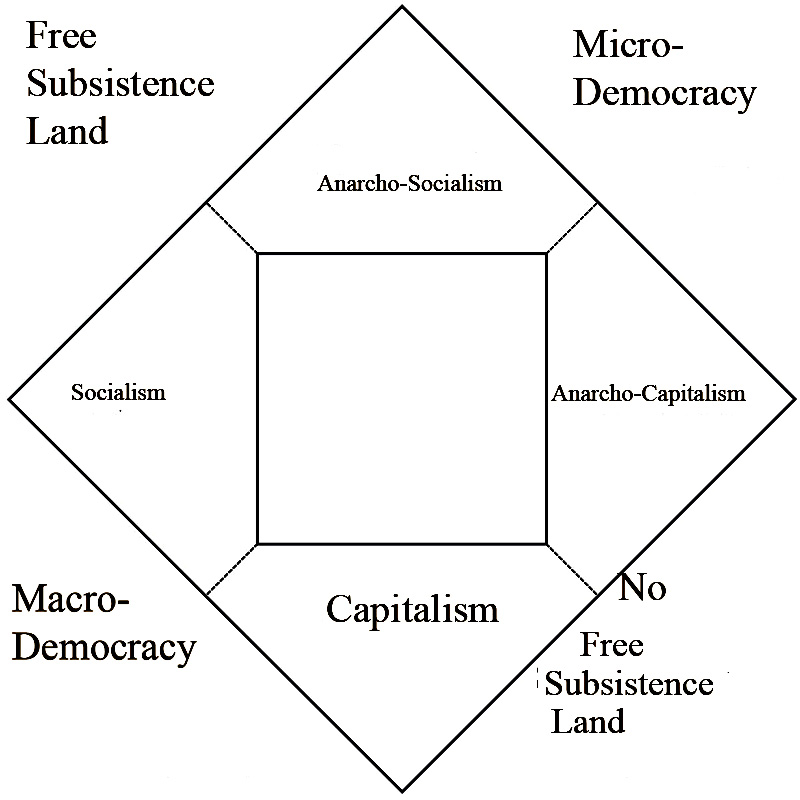
Andrew Chrucky’s Politico-Economic Democratic Chart

Commentary:

The crucial concept in this chart is “capitalism.” But for some inscrutable reason no living public figure seems to be able to define it. And the most popular self-proclaimed Marxist economist, Richard Wolff, too is stymied. Why? He tells us that there was slavery, then feudalism, now capitalism. And he tells us that slavery consisted of a master and slave; feudalism of a lord and serf; and capitalism of employer and employee. And his complaint or criticism is that the employer gets a profit by “exploiting” the employee.

I find this description too superficial. For one because the employer-employee arrangement probably always existed at all times — though to a limited degree. For example, I live in a town-home association which employs all sorts of people for maintenance of the grounds. Ideally, the association will hire those who will work for the least amount of pay. Is the association “exploiting” anybody?

The evil which exists under capitalism is due to political laws which prohibits people for taking up subsistence land for free. As a result this creates proletarians or “free laborers.” They are called “free” because they are not bound to any specific employer, but they are bound to some employer or other, that is they must work for employer E(1) or E(2) or . . . E(n), or be self-employed by selling some service or other to people. In other words, they must enter the market-economy, and, in this sense, they are not free to live as indigenous people live in a self-sufficient manner.

Furthermore, this prohibition of taking up free subsistence land cannot occur with a small group such as is the case with indigenous people. It occurs in States with centralized government. Even it a country has democracy, it is invariably a mass or macro-democracy, which by its nature requires politicians to advertise. And advertising support comes from the rich, whose interest is to have proletarians: a reserve army of potential workers.

As the essence of capitalism is the barring of people from free subsistence land, the antithesis of capitalism is socialism — which in an ideal form — allows free access to subsistence land. But in lieu of this, what is called “socialism” is simply providing people with welfare: food, housing, medical care, education, and other social services.

Caveats: I find the concept of anarcho-capitalism — frankly — incoherent. The incoherence consists in wishing for everyone to have a homestead. But this would — by my lights — not be capitalism. But they think as long as there are free agreements between an employer and an employee, this is enough for capitalism to exist. No, free agreement is just barter, which existed at all times.

I am not against an employer-employee arrangements. All I am proposing is that every person have the alternative of free access to subsistence land. And under such circumstances, the employer-employee relation which Richard Wolff criticizes will turn into worker-owned enterprises which Richard Wolff desires.


Further Commentary:

Instead of trying to figure out what anarchism is through etymology of the term, the better approach is to determine something like the necessary and sufficient conditions which is given by some person who calls himself an anarchist. In other words, if that person uses that label on himself.

And let’s remember that it is pointless to argue about definitions. View this matter of definitions as a stipulation by an author of how he wishes to use the term; rather than as an attempt to provide a lexical (dictionary) definition.

I have tried to provide the necessary and sufficient conditions in my chart. So instead of going off on tangents, let us talk about my chart.

I have given two conditions for (my stipulated definition of anarchism. (1) Free access to subsistence land. (2) Micro-democracy.

Let me explain. By free access to subsistence land I mean nothing more than what hunter/gatherers had. Now, there is no such free access to land in States. Land is a commodify which must be bought, and which is subject to taxation by the State. Even temporary use of land is restricted by place and fee. (Except in the Scandinavian countries which have the a “‘right to roam,” as they call it.)

As to micro-democracy, the necessary condition for this is a small community (no greater than 150 families), federated with other communities, in nested councils, and supervised by elected councils.

Switzerland has a structure in some respects similar to this. It is federated, and it elects councils. But it also has macro-democratic features which are antithetical to my micro-democracy and necessary condition for anarchism. These macro-democratic features are: (1) Their local communities are larger than 150 families. (2) They have a bicameral parliament elected by macro-democracy. (3) They have macro-democratic referendums and initiatives.

I don’t have an intimate knowledge of Rojava, but from a superficial appearance, it seems to coincide with my requirements for an anarchistic society.

See also:

Why I am an anarcho-socialist