Chelsea Manning refused to cooperate with the Grand Jury on principle. Below is an episode of The Rockford Files depicting the proceedings of a Grand Jury.
Andrew Chrucky
Chelsea Manning refused to cooperate with the Grand Jury on principle. Below is an episode of The Rockford Files depicting the proceedings of a Grand Jury.
Noam Chomsky on Venezuela:
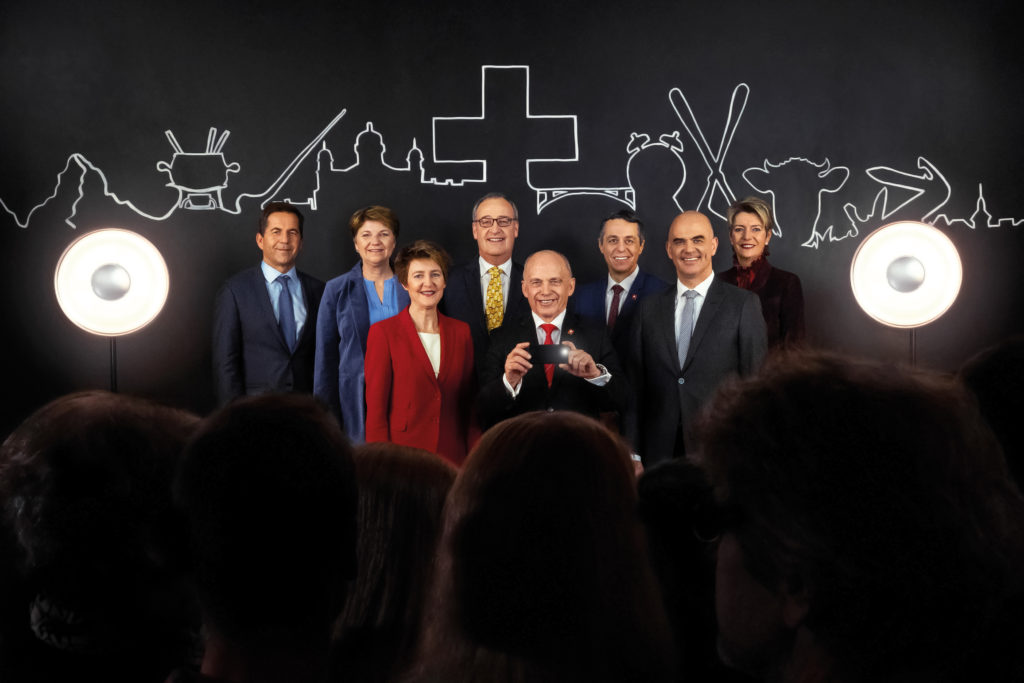
The focus of all the media — corporate and independent — is on judging the actions of the leader (be it president, prime-minister, governor, or mayor). The only country which does not seem to bother with the actions of the executive is Switzerland. Why? Because it is composed of a council of seven individuals drawn from four political parties, deliberating in secret, but judging with one voice (unlike the Supreme Court of the United States, which broadcasts the opinions of the individual judges).
Name a single member of the Swiss Federal Council. You can’t, because they do not make the news. But you know the leaders of the US, Germany, France, England, Russia — because they are perpetually stirring things up — mostly from a sense of self-interest. And if we glance back at history, you can identify the individuals who caused genocides, wars, and conquests.
As I write, Ukrainians are all stirred up about their upcoming Presidential election. And, as usual, the question is who is the least evil. And, as in the United States, some form of evil will be chosen — it is almost guaranteed. And then for the next five years there will be perpetual complaints, with the hope that the next President will not be so evil. Become wiser! All leaders — once in power — are evil (except in Switzerland, of course).
It was Thomas Carlyle who glorified such persons in his lectures, published as “On Heroes, Hero-Worship, and The Heroic in History” (1841) .
It is true that within a tribe, i.e., a small group of about 150 adults, the best person in some area can be determined because everyone knows everyone else. And in such groups, there is usually some elder person who acts as a “moderator” in group meetings, and may even act as an adjudicator for minor disputes. But such a person is neither a king nor a military leader, nor Plato’s philosopher-king.
Plato’s philosopher-king is actually an idealized god. No human being has the capacity for universal knowledge or wisdom. But, something like what Plato wanted is being approximated in the world of computers in the form of artificial intelligence. [But take note of what happens when a quirk happens to a computer, as to HAL in 2001: A Space Odyssey]. Humans are driven by different interests, and it is questionable which interests are to prevail, and how to reach compromise; and so, there is an intrinsic problem of decision which humans — not computers — must make.
The celebration of a one-man rule is originally the celebration of a military leader — a warlord. What we learn in school as history is the history of war and conquest. The State, as Franz Oppenheimer, Ludwig Gumplowicz and Karl Marx taught, is the product of conquest. It is conquest which explains the prevalence of the tradition and fetish or superstition of one man rule. The State is the result of military conquests of territories. If the territory is small, he is — to use the Japanese terminology — the warlord. If the territory is large, we can call him a Shogun or Emperor. We have our own names “king,” “prince,” “baron,” “landlord.” Consider the etymology of the word “lord”.
The State is a mirror of an army, except we call it a bureaucracy. In ancient Rome, there were the Consuls as the highest executives, and Proconsuls in distant territories. But ancient Romans and Spartans had a distrust of one man rule. In order to check their powers, they had two Consuls and two Kings. A single leader the Romans called a “dictator.”
I am convinced by the arguments of Franz Oppenheimer that the State is the product of conquest, and that the acceptance of a one man rule is both a tradition, a fetish, and a delusion.
When we study political history, we are studying how power is achieved and extended by war and conquest.
And war and conquest are a function of one man rule. Giving a single person the power to rule, he will use it to gain more power and more wealth, just as a capitalist will continue to expand his businesses ad infinitum. I think that a person who gets to rule, imagines he is playing chess with other rulers. And with computer technology, he is further removed from reality by playing a computer game of virtual chess.
There is competition among States, as there is competition among capitalists. And as Sheldon Wolin has shown, in Democracy Incorporated (2008), [Preface] that the State is now the instrument of the capitalist corporations, giving rise to “inverted totalitarianism.” Wolin means by “totalitarianism” a total political control by a single individual or a clique (a party) as in Nazi Germany, Fascist Italy, and Bolshevik Russia. The difference, it seems, is that neither Hitler, nor Mussolini, nor Stalin desired personal wealth, as do modern leaders like Putin or Trump, and their shadow oligarchs and corporations.
What am I driving at? Imitate Switzerland. Replace one man rule by a Federal Council.
by Sheldon S. Wolin, Newsday, July 18, 2003
Instead of those formulations, try to conceive of ones like “superpower democracy” or “imperial democracy,” and they seem not only contradictory but opposed to basic assumptions that Americans hold about their political system and their place within it. Supposedly ours is a government of constitutionally limited powers in which equal citizens can take part in power. But one can no more assume that a superpower welcomes legal limits than believe that an empire finds democratic participation congenial.
No administration before George W. Bush’s ever claimed such sweeping powers for an enterprise as vaguely defined as the “war against terrorism” and the “axis of evil.” Nor has one begun to consume such an enormous amount of the nation’s resources for a mission whose end would be difficult to recognize even if achieved.
Like previous forms of totalitarianism, the Bush administration boasts a reckless unilateralism that believes the United States can demand unquestioning support, on terms it dictates; ignores treaties and violates international law at will; invades other countries without provocation; and incarcerates persons indefinitely without charging them with a crime or allowing access to counsel.
The drive toward total power can take different forms, as Mussolini’s Italy, Hitler’s Germany and Stalin’s Soviet Union suggest.
The American system is evolving its own form: “inverted totalitarianism.” This has no official doctrine of racism or extermination camps but, as described above, it displays similar contempt for restraints.
It also has an upside-down character. For instance, the Nazis focused upon mobilizing and unifying the society, maintaining a continuous state of war preparations and demanding enthusiastic participation from the populace. In contrast, inverted totalitarianism exploits political apathy and encourages divisiveness. The turnout for a Nazi plebiscite was typically 90 percent or higher; in a good election year in the United States, participation is about 50 percent.
Another example: The Nazis abolished the parliamentary system, instituted single-party rule and controlled all forms of public communication. It is possible, however, to reach a similar result without seeming to suppress. An elected legislature is retained but a system of corruption (lobbyists, campaign contributions, payoffs to powerful interests) short-circuits the connection between voters and their representatives. The system responds primarily to corporate interests; voters become cynical, resigned; and opposition seems futile.
While Nazi control of the media meant that only the “official story” was communicated, that result is approximated by encouraging concentrated ownership of the media and thereby narrowing the range of permissible opinions.
This can be augmented by having “homeland security” envelop the entire nation with a maze of restrictions and by instilling fear among the general population by periodic alerts raised against a background of economic uncertainty, unemployment, downsizing and cutbacks in basic services.
Further, instead of outlawing all but one party, transform the two-party system. Have one, the Republican, radically change its identity:
From a moderately conservative party to a radically conservative one.From a party of isolationism, skeptical of foreign adventures and viscerally opposed to deficit spending, to a party zealous for foreign wars.
From a party skeptical of ideologies and eggheads into an ideologically driven party nurturing its own intellectuals and supporting a network that transforms the national ideology from mildly liberal to predominantly conservative, while forcing the Democrats to the right and and enfeebling opposition.
From one that maintains space between business and government to one that merges governmental and corporate power and exploits the power-potential of scientific advances and technological innovation. (This would differ from the Nazi warfare organization, which subordinated “big business” to party leadership.)
The resulting dynamic unfolded spectacularly in the technology unleashed against Iraq and predictably in the corporate feeding frenzy over postwar contracts for Iraq’s reconstruction.
In institutionalizing the “war on terrorism” the Bush administration acquired a rationale for expanding its powers and furthering its domestic agenda. While the nation’s resources are directed toward endless war, the White House promoted tax cuts in the midst of recession, leaving scant resources available for domestic programs. The effect is to render the citizenry more dependent on government, and to empty the cash-box in case a reformist administration comes to power.
Americans are now facing a grim situation with no easy solution. Perhaps the just-passed anniversary of the Declaration of Independence might remind us that “whenever any form of Government becomes destructive …” it must be challenged.
“A state is a compulsory political organization with a centralized government that maintains a monopoly on the legitimate use of force within a certain geographical territory.”
For my purposes, this definition will do. However, from my individual perspective, what is important to me and to everyone else, is the fact that we cannot occupy a piece of subsistence land for free, but must submit to the dictates of a centralized government.
How is the “State” different from a tribe, which also may prevent me from occupying a piece of land? Let us express the difference in the following way. If I am a member of a tribe, then I will be allowed to occupy a piece of land for free. But, if I am a member of a State, I will not be allowed to occupy a piece of land for free.
From this perspective, the question is: how is this transition from tribal free occupancy to a State non-free occupancy possible? This is the problem which has been labeled the problem of “primitive accumulation.”
One approach is to point out the differences in human natures. Some are gifted (i.e., intelligent, diligent, thrifty, etc.); others are not. OK, so the gifted will do better with their land holding than the less-gifted. Still, the less gifted will not work for the gifted unless their reward is equal or better than what they can accomplish on their own piece of land.
But the situation in a State is that many would be better off if they had access to free subsistence land; but they do not.
Despite the different theories of “State formation,”, only one is, for me, convincing. This is the conquest theory, which has been best formulated by Franz Oppenheimer in his book The State
I urge the reader to read the book. The author is clear, brief, reasonable, and convincing. I will only focus on what to me is the convincing, deductive argument for the conquest theory of the State.
He starts with the following assumption:
“No one will work for another if he can do as well or better by living off subsistence land. All teachers of natural law, etc., have unanimously declared that the differentiation into income- receiving classes and propertyless classes can only take place when all fertile lands have been occupied. For so long as man has ample opportunity to take up unoccupied land, "no one," says Turgot, "would think of entering the service of another"; we may add, "at least for wages, which are not apt to be higher than the earnings of an independent peasant working an unmortgaged and sufficiently large property"; while mortgaging is not possible as long as land is yet free for the working or taking, as free as air and water. Matter that is obtainable for the taking has no value that enables it to be pledged, since no one loans on things that can be had for nothing.
Let me formulate this as an explicit argument:
1. Person x will not work for person y, if x can do as well or better on his own.
2. x can do as well or better on his own, if he has free access to subsistence land
3. There are z acres of available fertile land in the world.
4. There are m number of people in the world
5. z/m = g
6. In order to subsist, x must have access to h acres of land
7. g > h
9. Therefore, there is enough subsistence land for each person
Oppenheimer gives us the statistics for available land in Germany as well as in the world, at the time when he wrote (1914); concluding that there is ample land for everyone. But despite this, we are prevented from taking free occupancy by States.
The rest of the book is a narrative of conquests of one group of people by another. I need no further convincing, since the history of man is a history of war and conquest.
I want to conclude with the observation that since Oppenheimer wrote, we have a massive increase in populations and a decrease in available subsistence land. When Oppenheimer wrote, he gave 1.8 billion as the number of people in the world, and estimated 181 billion acres of available land, which would give each person roughly 100 acres. We have now 7.7 billion people, which, if that same amount of land were available, would give each person about 23 acres, which is still sufficient for subsistence.
But the amount of land available for agriculture has dropped substantially . . .
Let me add the following:
“Private property in land has no justification except historically through power of the sword. In the beginning of feudal times, certain men had enough military strength to be able to force those whom they disliked not to live in a certain area. Those whom they chose to leave on the land became their serf’s, and were forced to work for them in return for the gracious permission to stay. In order to establish law in place of private force, it was necessary, in the main, to leave undisturbed the rights which had been acquired by the sword. The land became the property, of those who had conquered it, and the serfs were allowed to give rent instead of service. There is no justification for private property in land, except the historical necessity to conciliate turbulent robbers who would not otherwise have obeyed the law. This necessity arose in Europe many centuries ago, but in Africa the whole process is often quite recent. It is by this process, slightly disguised, that the Kimberley diamond mines and the Rand gold-mines were acquired in spite of prior native rights. It is a singular example of human inertia that men should have continued until now to endure the tyranny and extortion which a small minority are able to inflict by their possession of the land. No good to the community, of any sort or kind, results from the private ownership of land. If men were reasonable, they would decree that it should cease to-morrow, with no compensation beyond a moderate life income to the present holders.”
Bertrand Russell, Principles of Social Reconstruction, 1916,pp. 125-126.
I look at the history of the United States from the perspective of a person who is forced, in one way or another, to work for a living, as contrasted, for example, to an American Indian who could go anywhere and do anything he wanted. As Rousseau put it: “Man is born free, and everywhere he is in chains.” Why is this so?
I see myself as a wage-slave. Because some may think I am exaggerating, let me explain. There is a broad sense of the term “slave” such that anyone who is forced to do anything by anyone else is a slave to that person. In this broad sense, children are normally slaves of their parents; wives are often slaves of their husbands; soldier are slaves to their superiors; worker are slaves to their employers; prostitutes are slaves to their pimps.
Slavery, in a narrow or technical sense, applies to the condition of people who are, in some sense, the property of some other person — with or without the possibility of gaining freedom. The severest form of this condition is chattel slavery in which the master is free to kill the slave.
Slavery is, then, a continuum of conditions, with degrees of restrictions, degrees of penalties, and degrees of freedoms.
In general, as I view it, slavery consists of being forced to do work for someone else. This forcing can be direct or indirect. In civilized societies, all forms of slavery are the results of laws.
Direct slavery occurs where the law stipulates that a particular person is the slave, serf, servant, laborer, or apprentice of another. Some laws allowed people to sell themselves into bondage. An example of this is the American Colonial practice of indentured servitude, whereby for the price of passage to America an immigrant sold himself into servitude for a period ranging from 2 to 7 years.
Indirect slavery occurs when the penalty for not working for someone else is a deprivation of the means for existence — a deprivation of access to subsistence land.
In the American colonies, it was unlawful to be a vagabond, i.e., a homeless person. Such people were arrested and made into laborers for someone or other. If no one could be found to take them, they were whipped and branded through the right ear. For a third offence, they were executed. As remnants of this policy, the United States still has vagrancy laws.
Direct slavery still exists in the United States in the form of military induction (when invoked). In such an event, a civilian is being forced to become a soldier. If he refuses, he will be imprisoned or, under some circumstances, executed. On the other hand, enlistment into the military is like indentured servitude — one makes an agreement with the government to serve a number of years (technically it is eight years), and the punishment for breaking such an agreement (with exceptions) is normally imprisonment.
Indirect slavery is the result of a deprivation of access to free subsistence land. The United States does not provide for free access to subsistence land, and in this manner forces everyone to get money for subsistence. Even if one manages to buy some land (or even get it for a nominal fee as was provided by the Homestead Act of 1862), one cannot simply subsist on it, because there are always state property taxes to be paid. And if these taxes are not paid, the land is confiscated by the state.
For this reason alone, it is proper to call the present economic and government system of the United States one of wage-slavery. The ultimate land owner is the government which collects property, sales, income, and other taxes as it sees fit.
In addition, because the government does have an enormous amount of money, it is also the largest employer and buyer. The bulk of its budget — about half a trillion dollars — is spent on military agents and tools of enforcement — airplanes, warships, tanks, bombs, missiles, bullets, and such. Often, the youth who are lured into the military are those who cannot afford to pay for education or job training. This is an “economic draft” which ensures that the United States government will have a steady supply of enforcers and canon fodder, drawn largely from the poor.
Capitalism, as I understand it, is the economic system which makes all land into a sellable and taxable commodity. It is a system which does not recognize an unalienable (unsellable) right to free land — though such a right is implict in the Declaration of Independence as the unalienable (unsellable) right to the pursuit of happiness. Happiness, in this instance, is nothing more than subsistence, and one cannot subsist in an independent and self-sufficient manner without access to land.
All major peasant uprisings and peasant revolutions have recognized the connection between liberty and free land. And this sentiment was expressed by peasants; not by landlords or merchants (bourgeoise). Landlords simply wanted to maintain possession of their lands, while merchants wanted to purchase land. It was to the advantage of peasants only to have access to free land.
The English, the American, and the French Revolutions were not peasant revolutions — they were revolutions of the aristocracy against a monarchy. Though there were many peasant and slave revolts throughout history, the first successful revolution of slaves was the Haitian Revolution of 1804. In the 20th century, the Mexican, the Russian, and the Spanish Revolutions are examples of three major peasant revolutions — and it is not surprising that their slogans were “Tierra y Libertad,” “Zemlya y Volya,” Land and Liberty.
The purpose of Political Liberty is to foster Economic Liberty. Political liberty is needed to get agreement for economic policies. And although the United States allows more political freedom than any other country, because of media control by corporations, it is extremely hard to get a political consensus about better economic policies. Right now, both domestically and internationally, the United States is against any policy which would give away land for free to anyone, without also making it a sellable commodity. Consequently, the following may be a true generalization of U.S. foreign policy: it is a suffecient reason for U.S. intervention in another country, if that country adopts an agrarian policy of giving away land for free. The underlying reason is that a country of self-sufficient and independent land owners will not yield a pool of cheap wage-slaves, including soldiers, for capitalists.
| “In former times the marauding minority of mankind, by means of physical violence, compelled the working majority to render feudal services, or reduced them to a state of slavery or serfdom, or at least made them pay a tribute. Nowadays the dependence of the working classes is secured in a less direct but equally efficacious manner, viz. by means of the superior power of capital; the labourer being forced, in order to get his subsistence, to place his labour power entirely at the disposal of the capitalist. So there is a semblance of liberty; but in reality the labourer is exploited and subjected, because, all the land having been appropriated, he cannot procure his subsistence directly from nature, and, goods being produced for the market and not for the producer’s own use, he cannot subsist without capital. Wages will rise above what is wanted for the necessaries of life, where the labourer is able to earn his subsistence on free land, which has not yet become private property. But wherever, in an old and totally occupied country, a body of labouring poor is employed in manufactures, the same law, which we see at work in the struggle for life throughout the organized world, will keep wages at the absolute minimum”
F. A. Lange, Die Arbeiterfrage. Ihre Bedeutung fur Gegenwart und Zukunft. Vierte Auflage. 1861, pp. 12, 13. Quoted by H. J. Nieboer, Slavery: As an Industrial System (Ethnological Researches), 2d edition, 1909, p. 421. |
A Free Land Amendment to the Constitution of the United States
Each person has a right to free and non-taxable subsistence land.
“. . . every man has, by the law of nature, a right to such a waste portion of the earth as is necessary for his subsistence.” Thomas More, Utopia
“Not the constitution, but free land, and its abundance of natural resources open to a fit people, made the democratic type of society in America for three centuries.” Frederick Turner, Chapter XI, The West and American Ideals, Frontier in American History.
| If a person has no access to land, then that person
If a person is unemployed and does not want to starve and does not want charity, then that person must live by criminal activity. |
“. . . overpopulation is critical today and may well make the distribution question moot tomorrow.” Paul and Anne Ehrlich, The Population Explosion (1990), p. 21. |