It is abundantly clear that both the Democratic and the Republican Parties represent the interests of the rich. And this message was superbly expressed by Chris Hedges (see below):
Andrew Chrucky
It is abundantly clear that both the Democratic and the Republican Parties represent the interests of the rich. And this message was superbly expressed by Chris Hedges (see below):
Laura Flanders begins by citing the work of Karl Marx, The Eighteenth Brumaire of Louis Bonaparte, 1851-2.
Richard Wolff calls himself a Marxist. And though he doesn’t offer any definitions, he focuses on the phenomenon which he calls “exploitation.” And “exploitation” means that the employer gets a “profit” while the employee does not. There would be no “exploitation” if the employees shared equally in the “profit.” And he thinks this is possible only if the workers jointly owned the enterprise.
If this is “Marxism,” it is a severe truncation of what Marx wrote. Marx major work “Capitalism” is subtitled “A Critique of Capitalist Production.” It is, in the main, an economic analysis of how capitalistic businesses work, and why if they run unregulated (laissez-faire), they will self- destruct.
And although Wolff is right about capitalist “exploitation” and the fact that the employer reaps a profit, Wolff does not seem to concern himself with how this kind of “exploitation” is possible, even though under capitalism worker-owned enterprises are possible.
A fuller understanding of Marx, requires taking into account also how capitalistic mode of production is possible and how historically it came about. This is explained by Marx in the 8th part of Capital: “The So-Called Primitive Accumulation,” especially Chapter 26: “The Secret of Primitive Accumulation,” where it is written: “In actual history it is notorious that conquest, enslavement, robbery, murder, briefly force, play the great part.”
The simple truth is that by the conqueror’s law (which morphs into a centralized government) people are barred from a free access to subsistence land, and, following the period of the Black Death, there were instituted laws controlling employment and forbidding vagabondage, i.e., it was forbidden to be without work if you did not possess land. Sort of catch-22: you did not have to work for someone if you had land, but you couldn’t get land without working for someone. But even if you did have land, you had to pay rent or taxes, or both.
Marx believed that it was the technology which accounted for the various forms of production, and gave rise to different forms of political organizations (= the alleged thesis of historical materialism). But according to one critic, Rudolf Stammler in his Wirtschaft und Recht nach der materialistischen Geschichtsausffassung (1896), Marx inverted the reality: “the social relations of production cannot exist outside a definite system of legal rules.” [Karl Marx: Selected Writings in Sociology & Social Philosophy (1956), edited by T. B. Bottomore, in his “Introduction,” p. 33.]
My answer to Wolff striving for worker-controlled industries is that this can be achieved without resorting to a law such as that all factories are to be worker-controlled. If — by a different law — everyone is given a right to free subsistence land, then any entrepreneur will be able to secure workers only if he pays them something equivalent or better than they would get from working on their subsistence land. In other words, the worker would have better bargaining power resulting in a minimization or even a disappearance of profits.
Remember what Franz Oppenheimer wrote in, The State:
“For as long as man has ample opportunity to take up unoccupied land, “no one,” says Turgot, “would think of entering the service of another;” we may add, “at least for wages, which are not apt to be higher than the earnings of an independent peasant working an unmortgaged and sufficiently large property;” while mortgaging is not possible as long as land is yet free for the working or taking, as free as air and water.” p. 9-10
My naive picture of war used to be the picture of a battle in which two armies faced each other — something like the Napoleonic battles. Below is a depiction the Battle of Austerlitz:
.
But mass extermination has no semblance to these pictures of two armies facing each other. It has semblance more to an execution or pest control.
As to Napoleonic type battles which represent all State wars of the past, they all have the stench of Pyrrhic victories. Who is the winner? And the winner of what?
The winner is normally some individual — a monarch, a president, a general, or, today, some corporation and some CEO.
And who is the loser? The countless bodies on the battlefields (the “pawns”) and civilians . Think of Napoleon’s invasion of Russia in 1812. It involved more that 1.5 million soldiers, of these .5 million dead French soldiers, and .4 million dead Russians.
Or, think of Abraham Lincoln’s invasion of the South in 1861. [It was not a “civil war” since it did not involve a struggle over the replacement of the federal government; it was a war against secession.] According to Wikipedia, “The war resulted in at least 1,030,000 casualties (3 percent of the population), including about 620,000 soldier deaths—two-thirds by disease, and 50,000 civilians.”
What is appalling today are the assassinations and “collateral damages” by the U.S. “turkey shoots.” I have in mind the targeted killings by the use of helicopters and drones as below:
And there is concerted effort today in the U.S. to suppress reporting about such “turkey shoots.” Julian Assange is facing a British court which is deciding whether to extradite him to the U.S. to stand trial for violating the Espionage Act (1917) by publishing on Wikileaks materials provided to him by Chelsea Manning about such U.S. “turkey shoots.”
I find this description too superficial. For one because the employer-employee arrangement probably always existed at all times — though to a limited degree. For example, I live in a town-home association which employs all sorts of people for maintenance of the grounds. Ideally, the association will hire those who will work for the least amount of pay. Is the association “exploiting” anybody?
The evil which exists under capitalism is due to political laws which prohibits people for taking up subsistence land for free. As a result this creates proletarians or “free laborers.” They are called “free” because they are not bound to any specific employer, but they are bound to some employer or other, that is they must work for employer E(1) or E(2) or . . . E(n), or be self-employed by selling some service or other to people. In other words, they must enter the market-economy, and, in this sense, they are not free to live as indigenous people live in a self-sufficient manner.
Furthermore, this prohibition of taking up free subsistence land cannot occur with a small group such as is the case with indigenous people. It occurs in States with centralized government. Even it a country has democracy, it is invariably a mass or macro-democracy, which by its nature requires politicians to advertise. And advertising support comes from the rich, whose interest is to have proletarians: a reserve army of potential workers.
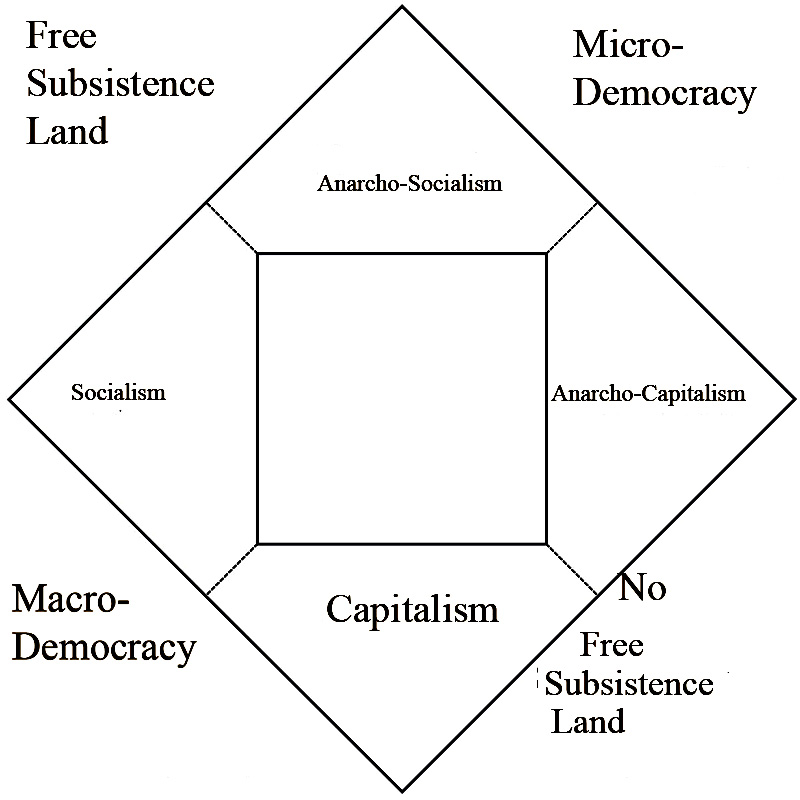
As the essence of capitalism is the barring of people from free subsistence land, the antithesis of capitalism is socialism — which in an ideal form — allows free access to subsistence land. But in lieu of this, what is called “socialism” is simply providing people with welfare: food, housing, medical care, education, and other social services.
Caveats: I find the concept of anarcho-capitalism — frankly — incoherent. The incoherence consists in wishing for everyone to have a homestead. But this would — by my lights — not be capitalism. But they think as long as there are free agreements between an employer and an employee, this is enough for capitalism to exist. No, free agreement is just barter, which existed at all times.
I am not against an employer-employee arrangements. All I am proposing is that every person have the alternative of free access to subsistence land. And under such circumstances, the employer-employee relation which Richard Wolff criticizes will turn into worker-owned enterprises which Richard Wolff desires.
Further Commentary:
Instead of trying to figure out what anarchism is through etymology of the term, the better approach is to determine something like the necessary and sufficient conditions which is given by some person who calls himself an anarchist. In other words, if that person uses that label on himself.
And let’s remember that it is pointless to argue about definitions. View this matter of definitions as a stipulation by an author of how he wishes to use the term; rather than as an attempt to provide a lexical (dictionary) definition.
I have tried to provide the necessary and sufficient conditions in my chart. So instead of going off on tangents, let us talk about my chart.
I have given two conditions for (my stipulated definition of anarchism. (1) Free access to subsistence land. (2) Micro-democracy.
Let me explain. By free access to subsistence land I mean nothing more than what hunter/gatherers had. Now, there is no such free access to land in States. Land is a commodify which must be bought, and which is subject to taxation by the State. Even temporary use of land is restricted by place and fee. (Except in the Scandinavian countries which have the a “‘right to roam,” as they call it.)
As to micro-democracy, the necessary condition for this is a small community (no greater than 150 families), federated with other communities, in nested councils, and supervised by elected councils.
Switzerland has a structure in some respects similar to this. It is federated, and it elects councils. But it also has macro-democratic features which are antithetical to my micro-democracy and necessary condition for anarchism. These macro-democratic features are: (1) Their local communities are larger than 150 families. (2) They have a bicameral parliament elected by macro-democracy. (3) They have macro-democratic referendums and initiatives.
I don’t have an intimate knowledge of Rojava, but from a superficial appearance, it seems to coincide with my requirements for an anarchistic society.
See also:
To get oriented about what is going on, watch the interview below.
Nick Brana, founder, executive director of Movement for a People’s Party talks with journalist Chris Hedges about the US’ two political party system, the need for third and fourth parties and his experience campaigning for Bernie Sanders in the 2016 presidential election.
It is abundantly clear that both the Democratic and the Republican Parties represent the interests of the rich. And this message was superbly expressed by Chris Hedges (see below):
I found most of the other speakers boring and the whole program too long. Anyway, if the goal is to push for a third party, why out of all the speakers only Chris Hedges urged people to vote for the Green Party, and everyone else spoke as if there is no existing third party?
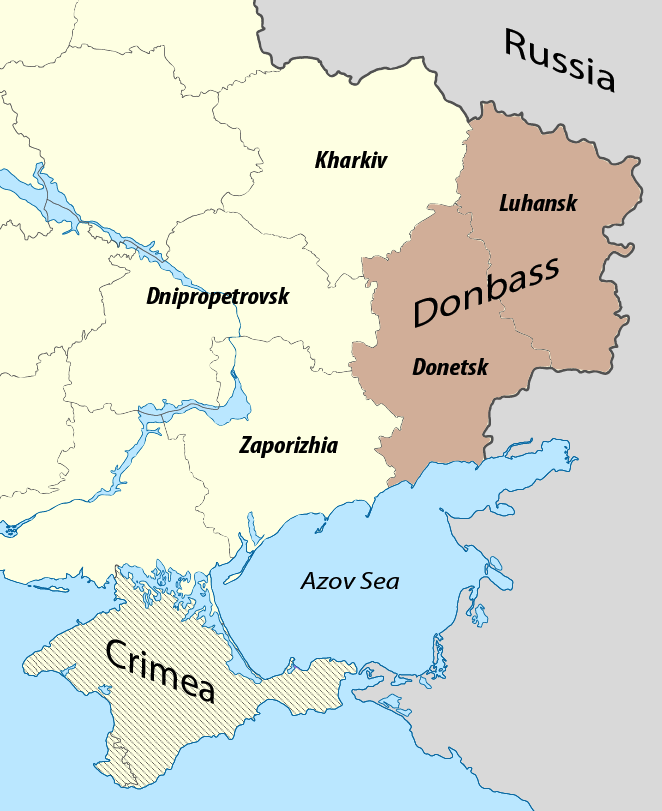
I want to remind viewers that under Putin, in 2014 Russia invaded Ukraine, annexed Crimea, and is still occupying the Donbass region.
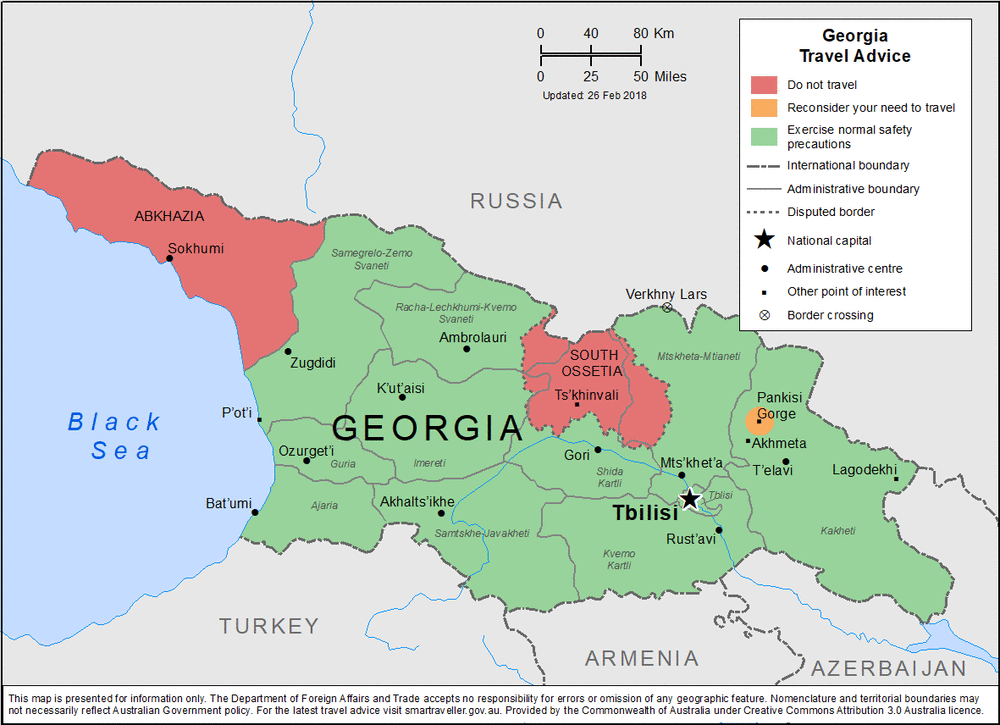
In 2008 Russia invaded Georgia, occupying Abkhazia and South Ossetia.
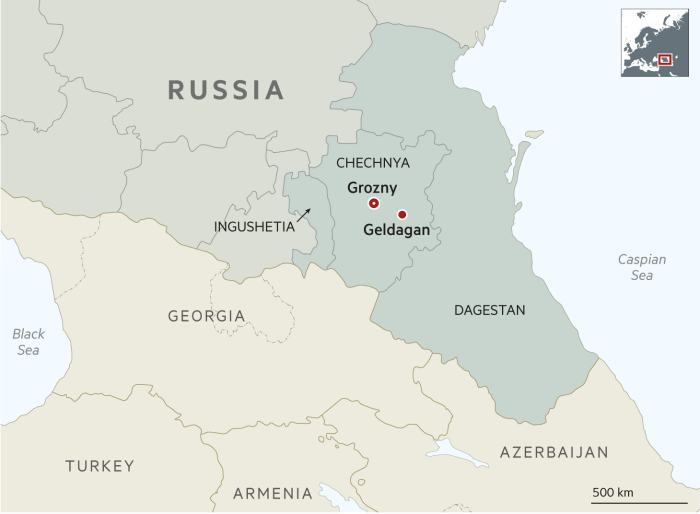
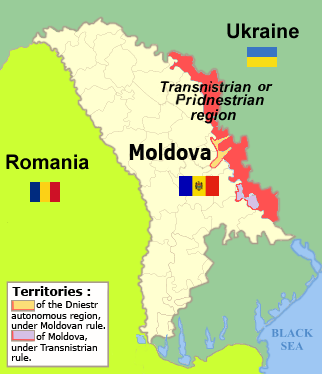
In 1992 Russia’s army supported the breakaway war of Transnistria from Moldova.
He has also brought together all types of celebrities for interviews and discussion panels. All this is admirable and captured my interest.
What has displeased me is his insistence on rooting for the lesser of the two evils — I mean his preference of Democrats over Republicans (among other preferences). Consequently, he becomes annoyed when the evils of Democrats are pointed out — always saying that the evils of Republicans are much worse.
Few of his guests take the position that both Democrats and Republicans are evil — perhaps even to an indistinguishable difference. Two stand out: George Carlin and Cornel West.
Below is a clip of Bill Maher defending what he thinks is the lesser of two evils.
Below is Jimmy Dore commenting on how Trump is almost even with Biden in the polls. How does one really distinguish the lesser of two evils?