Ukraine is in a pickle

To be in a pickle means to be in a very difficult situation.

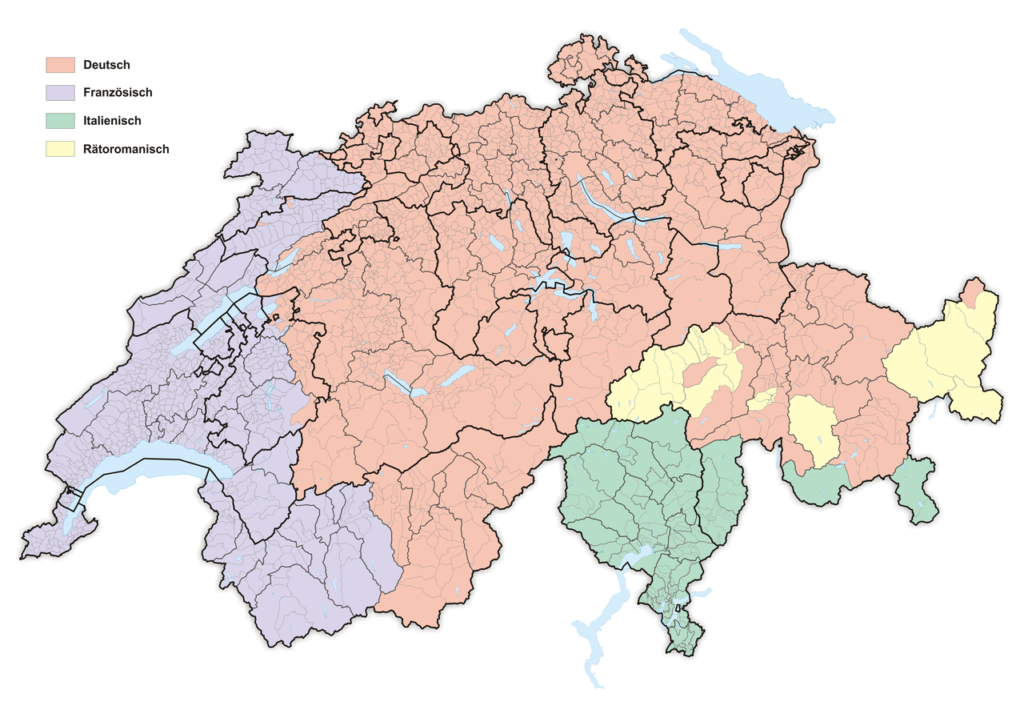
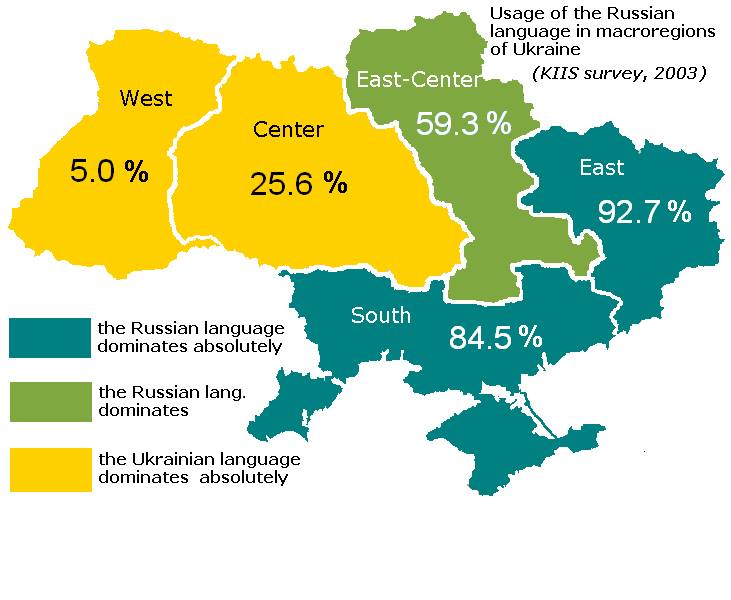
In my view, the number one problem is that in Ukraine there are two nationalities. Those in the North and West are Ukrainian speakers; those in the South and East are Russian speakers. I suppose this would be tolerable if Ukraine were a federated State like Switzerland with two distinct linguistic groups, but it is not; it is a centralized hierarchival State. Moreover, most citizens of Ukraine are bi-lingual. The tension is over domination and discrimination.


The second problem is irrendentism. Ukraine’s neighbor on the East is Russia. This means that like Hitler who annexed the Sudetenland of Czechoslovakia to Germany because this was the area of Czechoslovakia where the dominant language was German; so likewise, Putin annexed Crimea to Russia, and is fermenting trouble in the Donbass region of Ukraine. To add to this situation is the fact that these Russian speaking regions want to be part of Russia. They eagerly accept Russian passports.

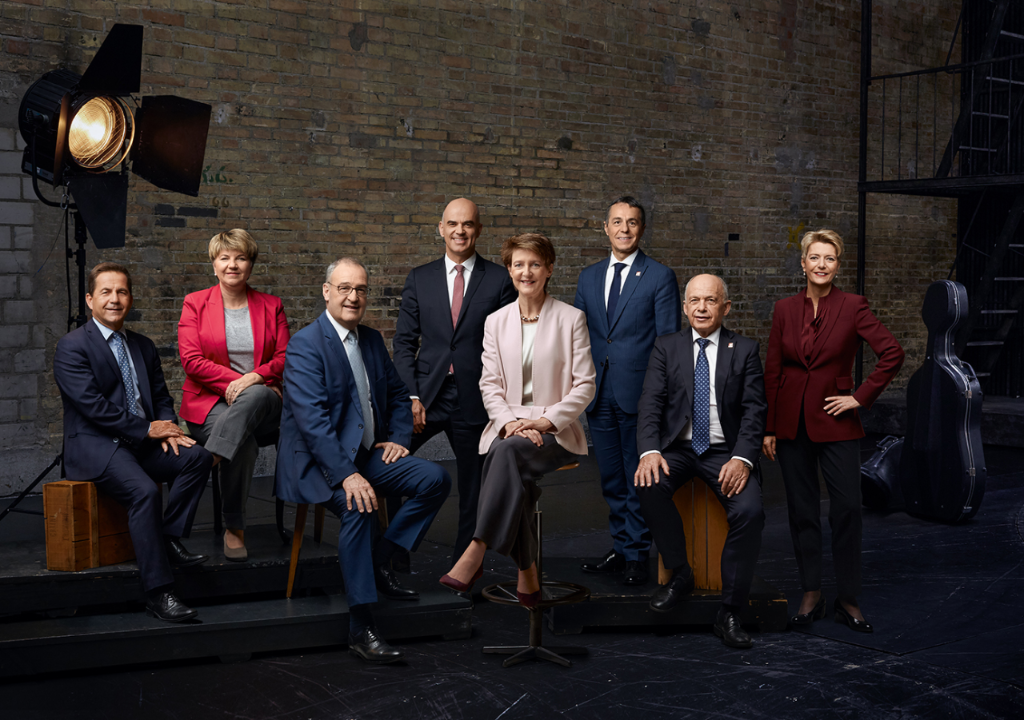
The third problem is that both Ukraine and Russia have bad forms of government. I consider placing power in a single individual to be a form of dictatorship, as did the ancient republican Romans and Spartans. Rome placed power in two consuls who had veto power over each other. Sparta had two kings and five ephors checking them. Thus, power was spread as it is in Switzerland today between seven members of the Federal Council. In Russia there is the “dictator” Putin, while in Ukraine there is President Zelensky with a dubious linguistic standing and sympathies. In any case, both countries are subject to the whims of these individuals.

The fourth problem is that despite signing the Budapest Memorandum (1994) [ signatories: Ukraine, Russia, Britain, United States], in which Ukraine gave up its nuclear arsenal in exchange for a commitment to respect Ukrainian independence and sovereignty, that guarantee has been broken by Russia under Putin by annexing Crimea and creating an ongoing Russian “hybrid” war in the Donbass. And the other signatories have reneged on their commitment to protect Ukraine.
Countries go to war because some individual decides to go to war

As I read political history, I am distracted from understanding what happened by such typical formulations as “Country X went to war with Country Y.” On some level of understanding this is true, but unenlightening. This is just as unenlightening as the recent report that Cornel West was denied tenure by Harvard. The more enlightening description of what happened is that Cornell West was denied the right to apply for tenure by the President of Harvard, Lawrence S. Bacow. And a still more enlightening account would probe into Bacow’s reasons. [ For an analogous case, see my analysis: Andrew Chrucky, “Norman Finkelstein, DePaul, and U.S. Academia: Reductio Ad Absurdum of Centralized Universities,” July 23, 2007]

My point is that when dealing with governed institutions — whatever their nature — it is a prevalent norm to describe these institution as if they were agents. But institutions are like tools or machines which require a particular human agent to use them. And what I am calling as “enlightened” description requires identifying the human agent who makes the machine operate, and it requires a further probing into that agent’s reasons for acting as he did.

Suppose you read in a newspaper that Jones was struck and killed by a car. OK, on one level this is a correct description. But if you want to get into a more enlightened description, you would want to know where and when this happened, what were the circumstances, and who was the driver. Was this an accident? What was the condition of the driver? Was this an intentional act? Deliberate?

I am proposing a similar sort of description for the actions of governments and countries. There is always some “decider” in the government (as President W. George Bush, Jr. described himself — accurately).

Let’s consider the infamous case of the U.S. dropping atomic bombs on Hiroshima and Nagasaki in 1945.
Such an act requires the decision of the Commander and Chief of the Armed Forces: the President of the United States. The responsible agent in this case was Harry S. Truman. And to get some enlightenment, we would need to understand his reasons.

Let’s consider another example. The fall of Constantinople in 1453. On one level, we can describe this event as a successful siege of Constantinople by the Turks. But on a more enlightening level, the siege was the decision of Sultan Mohammed II for whatever reasons.

What am I driving at? It is clear to me that great battles and wars are the decisions of powerful individuals. By “powerful,” I simply mean that they can get others to do what they want. They can use others as chess pawns for their ambitions. Who are these “pawns”? Soldiers and civilians!

Take any battle or war. On both sides, after the battle or war there are countless dead, disabled, sick and suffering. Consider the so-called American Civil War (1861-65). Wikipedia lists 616,222-1,000,000+ dead. Who was the decider who wanted to “preserve the union”? Abraham Lincoln!

Political history with its battles and wars, including the maintenance of internal “order,” is the history of megalomaniacs and other ambitious individuals who sacrifice the lives of countless others for their own profits and glory.

The lesson I draw from this reflection is that the principle of the separation of powers in government should include the separation of powers in the executive branch, as is done, for example, in Switzerland. Switzerland has a seven-member Federal Council; whereas everywhere else there is either a sole President, a Prime-Minister, or sometimes both.

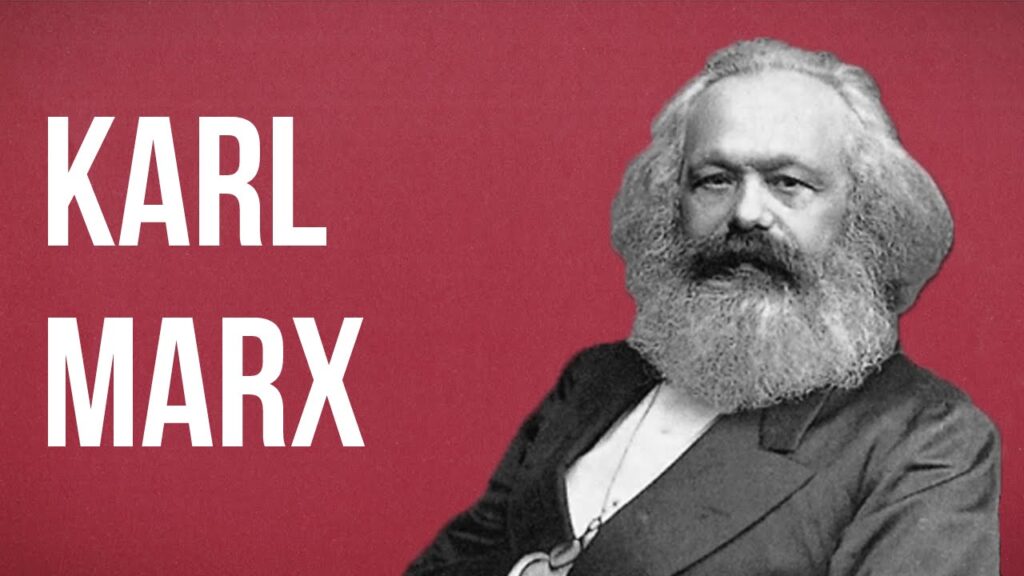
Why I am not a Marxist

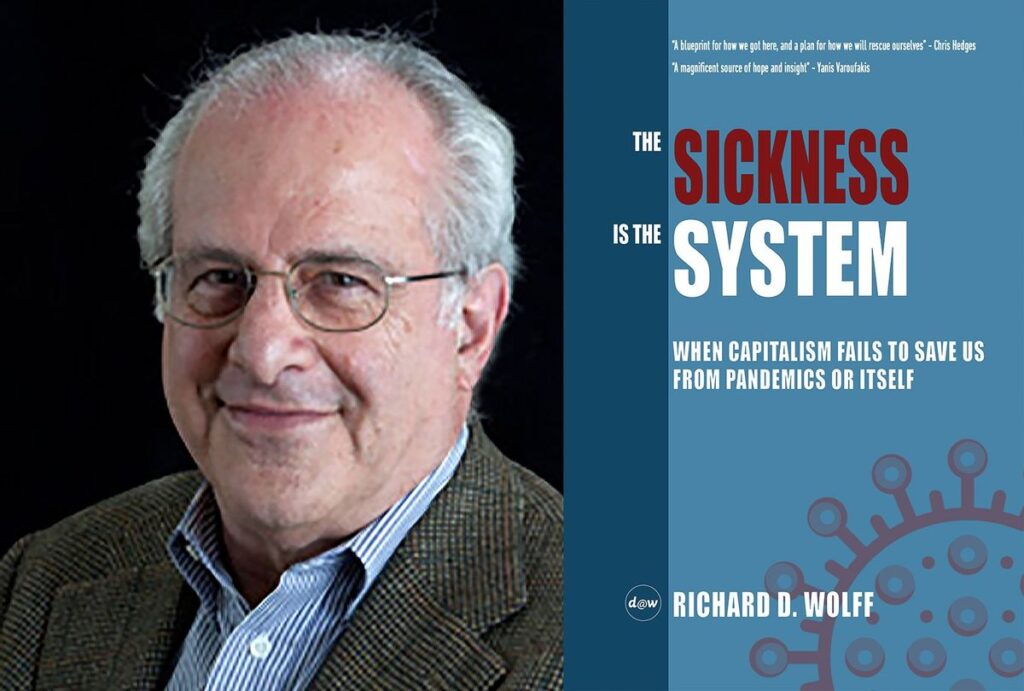
Richard Wolff, whom I admire, calls himself a “Marxist economist.” I find this puzzling and odd. Why?
Because calling oneself a Marxist, suggests that one is a disciple, just as calling oneself a Christian suggests that one is a follower of Christ. It also suggests that one has devoted a considerable time to the study of Marx or Christ. But having devoted a considerable time of study about a person and their teachings, does not imply that one agrees with these teachings. One could very well be a staunch critic. Let us distinguish the latter by calling such a person a Marx or Christ scholar, as contrasted with someone who believes that everthing that Marx wrote or everything that Christ preached is true and worthy of emulation. So, what is a “Marxist”? A Marx-scholar or a disciple?

Now, why is it that if one agrees with the findings of scientists such as Galileo, Kepler, or Newton, one does not call oneself either a Galilean, a Keplerian, or Newtonian, even though one agrees with some of their findings, and can even claim to be a scholar of these men?

Perhaps it has to do with the nature of their writing. Scientists want to find the truth about the universe, while religious figures, such as Christ, Abraham, Muhammad, Zoroasted, prescribe a way of life.

So the question becomes: was Marx a scientist, a prescriber, or both? And calling oneself a Marxist makes some sense if Marx offered prescriptions.

I am not a Marx scholar; so my knowledge of what Marx wrote is limited. But I have read some of what Marx wrote as well as some of what Marx scholars have written. And my understanding is that Marx — on the basis of his analysis of the nature of capitalistic production — predicted that capitalism will self-destruct. And his prediction was based on an idealized version of capitalist production. But given that he did not include the various deviation from his model of capitalism, his prediction in the short-run did not occur, but it is still too early to say that even a modified version of capitalism will not self-destruct.

Richard Wolff, who calls himself a Marxist economist, is perpetually looking not only at the short-comings of capitalism, but also at its cruel repercussions on the environment and humanity. I too see the evil and injustice of capitalism, but I am also more cynical than either Wolff or Marx. I do not anticipate the self-destruction of capitalism, but the destruction of humanity as such.

Although I am not a Marxist either as a disciple or scholar, I find the truth about capitalism spelt out superbly in the last part of Capital I: Part III: The so-called Primitive Accumulation (pp.713-74).

In my own words: It is through conquest that the State arose giving rise to a class division between the rulers and the ruled. This took several forms. The rulers took tribute and taxation; the ruled became slaves, serfs, or free-laborers. And underlying all these relations was the fact that the rulers controlled access to land. [For some reason Richard Wolff focuses on the employer-employee relation, but refrains from examining how such a relation arose in the first place or how it is possible.]

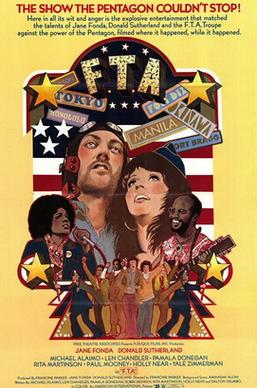
Two films: “Manufacturing Consent” (1992), on the views of Noam Chomsky, and “Salt of the Earth” (1954), a movie recommended by Chomsky.


Below is part of Chomsky’s reaction to the film:

Noam Chomsky interviewed by various activists. Excerpted from Understanding Power, The New Press, 2002


. . .

CHOMSKY: It is, it’s completely missing the point. It’s simply not factually accurate, for one thing — because like I say, the real work is being done by people who are not known, that’s always been true in every popular movement in history. The people who are known are riding the crest of some wave. Now, you can ride the crest of the wave and try to use it to get power, which is the standard thing, or you can ride the crest of the wave because you’re helping people that way, which is another thing. But the point is, it’s the wave that matters — and that’s what people ought to understand. I don’t know how you get that across in a film.

Actually, come to think of it, there are some films that have done it. I mean, I don’t see a lot of visual stuff, so I’m not the best commentator, but I thought Salt of the Earth really did it. It was a long time ago, but at the time I thought that it was one of the really great movies — and of course it was killed, I think it was almost never shown.
WOMAN: Which one was that?
CHOMSKY: Salt of the Earth. It came out at the same time as On the Waterfront, which is a rotten movie. And On the Waterfront became a huge hit — because it was anti-union. See, On the Waterfront was part of a big campaign to destroy unions while pretending to be for, you know, Joe Sixpack. So On the Waterfront is about this Marlon Brando or somebody who stands up for the poor working man against the corrupt union boss. Okay, things like that exist, but that’s not unions — I mean, sure, there are plenty of union bosses who are crooked, but nowhere near as many as C.E.O.s who are crooked, or what have you. But since On the Waterfront combined that anti-union message with “standing up for the poor working man,” it became a huge hit. On the other hand, Salt of the Earth, which was an authentic and I thought very well-done story about a strike and the people involved in it, that was just flat killed, I don’t even think it was shown anywhere. I mean, you could see it at an art theater, I guess, but that was about it. I don’t know what those of you who know something about film would think of it, but I thought it was a really outstanding film.


Below is the film: Salt of the Earth (1954)


Commentaries on Salt of the Earth, see:
Herbert J. Biberman, Salt of the Earth; The Story of a Film (Boston: Beacon Press, 1965) [includes the screenplay by Michael Wilson];
James J. Lorence, The Suppression of Salt of the Earth: How Hollywood, Big Labor, and Politicians Blacklisted a Movie in Cold War America (Albuquerque: University of New Mexico Press, 1999).

What is the difference between a Mercenary and a Paid Soldier?

“People view soldiers like wives and mercenaries as prostitutes, who turn love into a transaction. But every soldier has a little mercenary in him, and vice versa. Troops often reenlist for big bonuses, a transactional practice common in most militaries. For example, the U.S. Army sometimes offers up to $90,000 for Soldiers to reenlist, enough to make modern mercenaries salivate. The author has also seen mercenaries refuse jobs on political grounds. Some American-hired guns will never take money from Russia, China, Iran, or a terrorist group; America’s enemies are their enemies. The line between soldier and mercenary is fuzzy.” Sean McFate, Mercenaries and War: Understanding Private Armies Today, National Defense University Press, 2019.

Interview with Sean McFate about mercenaries

Jeremy Scahill, Blackwater: The Rise of the World’s Most Powerful Mercenary Army, 2007.

Russian Mercenaries — The Wagner Group

Candace Rondeaux, Decoding the Wagner Group: Analyzing the Role of Private Military Security Contractors in Russian Proxy Warfare, 2019.

On Nation-States and Federalism

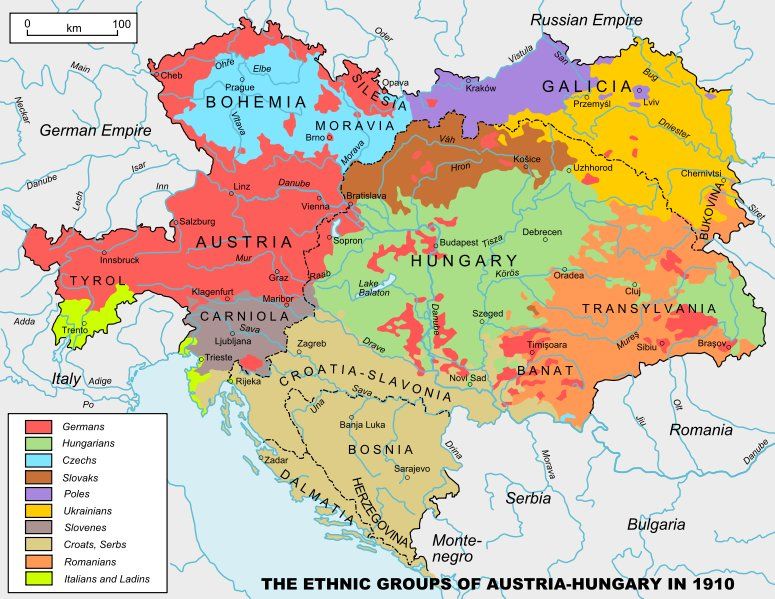
I am reading Oscar Jaszi’s book, The Dissolution of the Habsburg Monarchy, 1929. It is interesting for me from several perspectives. Jaszi’s thesis is that Austria should have been divided along its ethnic or national units into a federated State like that of Switzerland. He enumerates and discusses the various tensions between the various nationalities and “irredentist” aspirations. [An “irredentist” aspiration is one of wanting to unite with one’s ethnic group in an adjoining State (Country).)

Below is a map of the Austro-Hungarian Empire with its various ethnic groups in 1910:

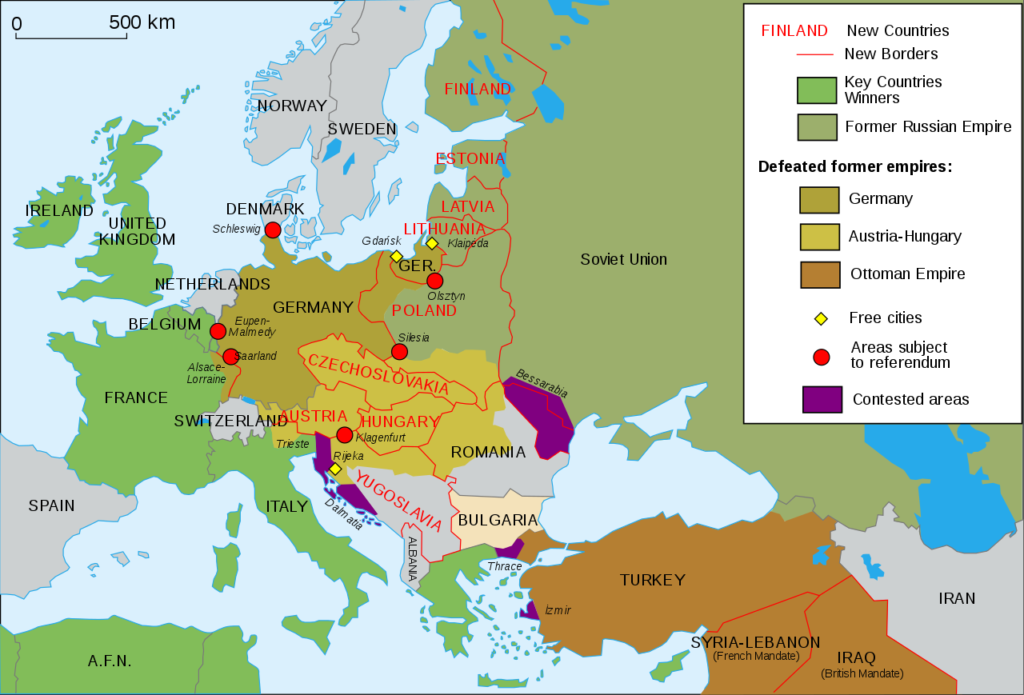
As a result of the First World War, Austria was defeated, and by the Treaty of Versailles its territory was divided more equitably (but not enough) along ethnic groupings as illustrated by the map below:
I am in agreement with Jaszi about federalism — i.e., that a State should be organized on the basis of autonomous smaller units. I take it that he would be satisfied with the example of the United States, and more so with that of Switzerland. Let us call the former, Large Federalism; the latter, Moderate Federalism. However, I advocate a more radical federalism — call it Small or Radical Federalism. Radical Federalism requires the local unit of government to represent about 150 families. Radical Federalism is equivalent to Anarchism. This is why Proudhon’s tract “The Principle of Federation” (1863) is synonymous with anarchism (contrary to those who think otherwise).

The federalism of the United States consists of 50 States. The whole country of over 300 million people elects a President. Each State elects two Senators to Congress — by thousands and millions of people. The number of Representatives to Congress is relative to the population of the State. But this too is by thousands and millions of people voting. As far as the government of a State is concerned, the Governor and the Representative to the State Legislature are also elected by thousands and millions of people.

This huge number of voters is also present on the municipal level. I live in Chicago which has a Mayor elected by the nearly 3 million citizens. There is also a City Council of 50 Alderman, each elected at 50 Wards by some 40,000 voters each.

I describe the federalism of Switzerland as Moderate as contrasted with that of the United States. Its territory is much smaller than that of the United States, and its population of nearly 9 million approximates the population of Greater Chicago (i.e., including the surrounding suburbs of Chicago). It consists of 26 Cantons, grouped by languages (German, French, Italian, and Romansh).

Here is a video explaining the Swiss political system: Video

My objection to both the government of the United States as well as to the government of Switzerland is that they base themselves on, what I call, Mass or Macro-Democracy in which thousands and millions of people vote either for politicians or laws. Instead I favor Micro-Democracy as a unit of government of roughly 150 voters. This is my ideal of anarchism. Lately it has been called Participatory Democracy, Municipal Confederalism, Strong Democracy, and a system of Nested Councils. I found the following article clearly explaining this point of view [it also has relevant links!]: Sveinung Legard, Scaling Up: Ideas about Participatory Democracy

The Conquered Earth

I am interested primarily in understanding how our social world operates. By “social” I mean how humans interact with one another. And to do this I will rely on the vocabulary and explanations used by Franz Oppenheimer in his book The State (which is part of the second volume of his four volume Systems of Sociology [never completely translated into English]).

In the past (19th century) there was a constant concern with “the Social Problem.” Although this problem was seen from a symptomatic perspective as poverty, I think this problem can be expresses fundamentally and succinctly in the following way: some people by force prevent other people from taking up and occupying subsistence land. Put thus, all this means pre-historically is that groups of people delimited a territory as their property. This results in a scattering of tribes. Anthropologists study such “stateless people” especially indigenous people which were referred to as “savages” and “barbarians”, as contrasted with “civilized people.” The vocabulary comes from Lewis Morgan’s, Ancient Society (1877), which distinguished people by their tools, and “civilized people” by having a written script.

Now, because, as Oppenheimer calculated, there is and was enough land to go around. The prevention of someone taking up subsistence land can occur only by force. Presently this force is exercised by governments in States.

Oppenheimer believed that such governments and States can occur only by conquest of one external group by another. Some anthropologists quibble about this, contending that States can be formed through internal class divisions. Without entering into this quibble, let me offer the following two claims:
1. a sufficient condition for the formation of States is conquest by an external group.
2. the empirical data in recorded history is of warfare, strife, protest, rebellion, and conquest.

Moreover, these violences are almost invariably associated with particular individuals who are called emperors, kings, princes, rulers, conquerors, presidents, prime ministers, chancellors, and such. It is the deeds of these individuals which constitutes the history of States.

The Social Problem of forceful barring people from a free use of subsistence land is called by Oppenheimer the “political means” as contrasted with a free exchange of goods and services called by him the “economic means.”

Oppenheimer contrasted two ways of getting “honey.” (Honey is his metaphor for economic subsistence.) One is the method of the bear: attack the hive regardless of what happens to the bees and take the honey. The other method is that of the bee-keeper: take some honey, but leave enough so that the bees thrive and produce more honey for further taking.

Oppenheimer distinguished six stages (or ways) of how conquerors deal with the conquered people. The first stage in like that of the bear: kill the people and take the loot. This is illustrated in the Bible as the extermination of the Canaanites by Israelites, early Viking raids and pillages, and generally historic and modern ethnic cleansings and genocides. The second and subsequent stages or ways is that of the bee-keeper: make the conquered people slaves, or demand tribute, or settle among them as in feudalism and require goods and services, and later also payments (taxes), or just fees, licenses, and taxes. The so-called constitutional states attempt to give this class division legitimacy through such myths as the will of the people or a social contract, and finally as mass democracy (where thousands and millions vote for so-called “representatives”).

The essence of capitalism — which predated industrialization — is the continued barring of people from a free access to subsistence land. And since all the earth is now divided into States, the only places to go in order to escape a State are: a war zone, border lands, a frontier, mountains, swamps and jungles — where pursuit is difficult or unprofitable.