
Four views of Gnosticism

take all the writings into account, and give a table of comparison–where there is agreement and disagreement

ChatGPT said:

Excellent request. Here’s a comprehensive comparison table synthesizing the major perspectives on Gnosticism from four key sources:

  1. IrenaeusAgainst Heresies (late 2nd century)
  2. Nag Hammadi texts – Primary Gnostic writings (4th-century manuscripts of earlier works)
  3. Hans JonasThe Gnostic Religion (1958)
  4. Elaine PagelsThe Gnostic Gospels (1979)

The table below highlights areas of agreement and disagreement, organized by major themes.


Comparison Table: Major Perspectives on Gnosticism

Theme / FeatureIrenaeus (Against Heresies)Nag Hammadi TextsHans Jonas (The Gnostic Religion)Elaine Pagels (The Gnostic Gospels)
View of Material WorldEvil or degraded (Gnostic view is heretical)Created by lower power; source of sufferingAlien, hostile cosmos—existential alienationAffirmed as alien or imprisoning (Gnostic perspective)
View of God / MonadTrue God = Creator; Gnostic God is falseTrue God is unknowable, beyond creationEmphasis on “alien God” utterly transcendentFocus on unknowable God as alternative to biblical deity
Demiurge (Creator God)False Gnostic concept; ridiculedOften ignorant or malevolent creator of the worldRepresents oppressive structure of the cosmosSeen as symbol of unjust power (e.g. ecclesiastical or political)
Origin of EvilResult of human disobedience (e.g. Adam)Cosmic error—e.g., Sophia’s fall leads to flawed creationResult of rupture in divine order; existential disorderMythic explanation for suffering and injustice
Human NatureFallen but redeemable; created goodDivided: hylic (earthly), psychic (soulful), pneumatic (spiritual)Humans have divine spark; alienated from originGnostics valued inner divinity; critical of external structures
SalvationThrough Christ, faith, sacraments, ChurchThrough gnosis—inner knowledge of true originAwakening to spiritual identity; existential freedomLiberation from oppressive systems and inner awakening
Role of ChristFully human and divine, crucified and resurrectedOften divine redeemer, sometimes docetic or symbolicRevealer of knowledge, not atoning sacrificeGnostic Christ challenges institutional authority
Nature of ResurrectionBodily resurrection of the deadOften spiritual or symbolic resurrectionRebirth into true knowledge; existential transformationReinterpreted as inner enlightenment
Authority and Apostolic TraditionEmphasized as essential to truthRejected; truth comes from personal gnosisGnostic rejection of ecclesial hierarchySees Gnostic rejection of authority as proto-democratic
Use of MythRejected as bizarre and falseCentral medium for expressing theologyInterpreted as existential metaphorViewed as alternative theological narrative
Role of SophiaA confused or deceptive mythological figureKey Aeon whose fall causes cosmic disorderRepresents existential tragedy and recoveryFeminine symbol of divine wisdom and spiritual journey
Diversity of Gnostic ThoughtMinimizes; presents as single heretical systemWide-ranging: Sethian, Valentinian, etc.Acknowledges multiple systems, seeks unifying themesEmphasizes diversity and suppressed alternatives
View of the ChurchOne true Church, apostolic and visibleOften portrayed as misguided or oppressiveChurch seen as part of the problem—worldly systemGnostic rejection seen as early critique of institutionalism

Key Takeaways

  • Irenaeus gives a hostile, unified portrait, emphasizing Gnosticism’s deviation from apostolic tradition.
  • Nag Hammadi texts reveal diverse, poetic, and complex systems, with a strong focus on inner enlightenment, mythic cosmology, and anti-worldly theology.
  • Hans Jonas provides a philosophical and existentialist interpretation, highlighting alienation, inner awakening, and Gnosticism as a response to a meaningless world.
  • Elaine Pagels offers a historical and sociopolitical analysis, showing how Gnosticism offered alternative Christianities that emphasized inner experience, equality, and anti-authoritarianism.
Most plausible secular philosophies

what secular philosophy– epistemology–ontology — axiology, methodology — seems most plausible–has verisimilitude

ChatGPT said:

Great question—you’re asking which secular philosophical systems (across epistemology, ontology, axiology, and methodology) seem to have the greatest verisimilitude—i.e., seem most likely to be true or closely approximate truth.

Here’s a synthesized, plausible constellation across the categories that many contemporary philosophers and scientifically-minded thinkers find compelling:


1. Epistemology: Fallibilist Empiricism + Bayesian Rationalism

Why plausible:

  • Fallibilism acknowledges that all knowledge is provisional and subject to revision.
  • Empiricism grounds knowledge in sensory experience, with science as the most successful epistemic method.
  • Bayesian rationalism incorporates probability and uncertainty, offering a rigorous framework for updating beliefs.

Verisimilitude:

  • Reflects how actual human cognition works.
  • Underpins the success of the scientific method.
  • Accommodates both empirical data and rational inference.

2. Ontology: Naturalistic Physicalism (with Structural Realism)

Why plausible:

  • Naturalism holds that everything arises from natural properties and causes, excluding supernatural explanations.
  • Physicalism maintains that everything is physical or supervenes on the physical.
  • Structural realism (especially epistemic structural realism) acknowledges that we may only grasp the structure of reality, not its intrinsic nature.

Verisimilitude:

  • Matches scientific progress in physics, biology, neuroscience.
  • Avoids naive realism but maintains objectivity.
  • Explains the unity of the sciences and avoids dualism.

3. Axiology: Secular Humanism + Moral Constructivism (or Moral Realism with Caution)

Why plausible:

  • Secular humanism centers on human flourishing, dignity, and well-being without appealing to divine command.
  • Moral constructivism sees moral truths as constructed through rational, social processes—aligned with Rawls, Korsgaard.
  • Alternatively, a modest moral realism posits that some moral truths (e.g., suffering is bad) might be objective or intersubjectively convergent.

Verisimilitude:

  • Matches widespread moral intuitions.
  • Adapts to pluralistic, democratic societies.
  • Compatible with psychology, evolutionary theory, and cooperation-based ethics.

4. Methodology: Critical Rationalism + Pragmatism

Why plausible:

  • Critical rationalism (Karl Popper): Emphasizes conjecture and refutation—knowledge grows through criticism.
  • Pragmatism (Peirce, James, Dewey): Ties truth to practical consequences and inquiry.
  • These approaches avoid dogmatism and focus on what works, what predicts, and what can be falsified.

Verisimilitude:

  • Grounds science and democratic discourse.
  • Adaptive to new data and changing contexts.
  • Integrates theory with real-world application.

Summary of a Coherent Secular Framework with High Verisimilitude

DomainMost Plausible View
EpistemologyFallibilist Empiricism + Bayesian Reasoning
OntologyNaturalistic Physicalism + Structural Realism
AxiologySecular Humanism + Moral Constructivism
MethodologyCritical Rationalism + Pragmatism

Would you like me to map this onto specific philosophers or schools of thought? Or compare this framework to religious or non-naturalist alternatives?

You said:

philosophers and schools

ChatGPT said:

Absolutely—let’s map each of the philosophical domains (epistemology, ontology, axiology, methodology) onto specific secular philosophers and schools that best exemplify the views with high verisimilitude (as discussed). I’ll include both classical and contemporary thinkers where helpful.


1. Epistemology

View: Fallibilist Empiricism + Bayesian Rationalism

Philosophers:

  • Karl PopperCritical Rationalism; emphasized falsifiability and fallibilism.
  • W.V.O. Quine – Naturalized epistemology; knowledge is empirical and theory-laden.
  • Thomas Bayes / Richard Jeffrey – Foundations of Bayesian inference.
  • David Hume – Empiricism and skepticism about induction.
  • Hilary Putnam – Internal realism; helped balance rationalism and empiricism.

Schools:

  • Logical Empiricism (Carnap, Reichenbach)
  • Bayesian Epistemology
  • Critical Rationalism (Popper)
  • Naturalized Epistemology (Quine, Churchland)

Core idea: Knowledge is provisional, theory-laden, probabilistic, and grounded in empirical input and reasoned inference.


2. Ontology

View: Naturalistic Physicalism + Structural Realism

Philosophers:

  • Wilfrid Sellars – Bridged scientific realism and the manifest image.
  • James Ladyman – Proponent of Ontic Structural Realism.
  • Daniel Dennett – Consciousness and mind as emergent physical processes.
  • David Papineau – Physicalist account of consciousness and causation.
  • B.F. Skinner / Paul Churchland – Reductionist / eliminativist physicalism.

Schools:

  • Physicalism / Materialism
  • Scientific Realism
  • Structural Realism
  • Naturalism

Core idea: Reality is fundamentally physical, structured, and best understood through the lens of science. Our models may only grasp its relational structure.


3. Axiology (Value Theory, Ethics, Aesthetics)

View: Secular Humanism + Moral Constructivism (or Cautious Realism)

Philosophers:

  • John RawlsJustice as fairness, a constructivist in moral theory.
  • Christine Korsgaard – Kantian constructivist ethics.
  • Peter Singer – Utilitarianism based on reducing suffering (secular humanist).
  • Derek Parfit – Moral realism with an emphasis on reason and identity.
  • Martha Nussbaum – Capabilities approach to human flourishing.

Schools:

  • Secular Humanism
  • Moral Constructivism (Rawls, Korsgaard)
  • Utilitarianism (Mill, Singer)
  • Moral Realism (Parfit, Scanlon)
  • Evolutionary Ethics (Darwinian roots of moral behavior)

Core idea: Moral value is grounded in human needs, flourishing, and reasoned agreement—not divine command or cosmic teleology.


4. Methodology

View: Critical Rationalism + Pragmatism

Philosophers:

  • Karl Popper – Conjectures and refutations.
  • Charles Sanders Peirce – Scientific method and fallibilism.
  • William James – Pragmatism and truth as what works in the long run.
  • John Dewey – Inquiry, democracy, and experimentalism in knowledge.
  • Imre Lakatos – Research programs in science.

Schools:

  • Pragmatism (Peirce, James, Dewey)
  • Critical Rationalism (Popper)
  • Methodological Naturalism
  • Post-Positivism

Core idea: The best method for approaching truth is through critical inquiry, practical testing, and openness to revision based on consequences and evidence.


Summary Table

DomainPhilosophersSchools
EpistemologyPopper, Quine, Hume, Putnam, BayesCritical Rationalism, Bayesianism, Naturalized Epistemology
OntologyDennett, Sellars, Ladyman, PapineauPhysicalism, Structural Realism, Naturalism
AxiologyRawls, Singer, Korsgaard, Parfit, NussbaumSecular Humanism, Moral Constructivism, Utilitarianism
MethodologyPopper, Peirce, Dewey, James, LakatosPragmatism, Critical Rationalism, Post-Positivism

You said:

is reductive or emergentist materialism more plausible

ChatGPT said:

Excellent question—and a central one in contemporary philosophy of mind, metaphysics, and science.

Let’s break this down clearly:


The Question:

Which has more verisimilitude—reductive materialism or emergentist materialism?

Reductive Materialism:

All mental or higher-level phenomena are fully reducible to physical processes—ultimately describable in the language of physics.

  • Minds reduce to brains.
  • Biology reduces to chemistry.
  • Chemistry reduces to physics.

Championed by:

  • Early physicalists (J.J.C. Smart, U.T. Place)
  • Daniel Dennett (in a qualified way)
  • Paul Churchland (eliminativist spin)

Emergentist Materialism:

While everything is physical, higher-level properties (like consciousness, life, social behavior) emerge from—but are not reducible to—lower-level processes.

  • The whole is more than the sum of its parts.
  • Still fully naturalist and physicalist, but allows for novel causal powers at higher levels.

Championed by:

  • Jaegwon Kim (early, then became skeptical)
  • David Chalmers (naturalistic dual-aspect views)
  • Roger Sperry (non-reductive physicalism)
  • Terrence Deacon, William Wimsatt (complex systems theorists)

Comparative Analysis

CriterionReductive MaterialismEmergentist Materialism
Scientific Parsimony✅ Very parsimonious; one ontology⚠️ Less parsimonious; posits new properties
Scientific Practice⚠️ Idealized; not how science usually works✅ Matches explanatory hierarchies (physics → bio → psych)
Explains Consciousness❌ Faces the “hard problem” head-on✅ Allows for higher-order properties like qualia
Causal Closure✅ Fits with a closed physical system⚠️ Must explain how emergent properties have causal efficacy
Philosophical SupportStrong among physicalists, but fadingGrowing support from complexity theorists, philosophers of mind

So, which is more plausible today?

Emergentist Materialism appears more plausible (has greater verisimilitude) IF:

  • You take consciousness, intentionality, and normativity seriously.
  • You want to align with actual scientific methodology (biology, neuroscience, sociology use irreducible vocabularies).
  • You believe reductionism oversimplifies the richness of complex systems.

Reductive Materialism still seems plausible IF:

  • You think the “hard problem” is a confusion or will dissolve with better neuroscience.
  • You favor elegance and parsimony over explanatory pluralism.
  • You accept eliminativism about mental concepts (e.g., beliefs, desires are folk relics).

Scientific Alignment:

Modern sciences—from systems biology to neuroscience to complex systems theory—increasingly favor non-reductive or emergentist models:

  • Consciousness is seen as a global, integrated phenomenon (Tononi’s IIT, Global Workspace Theory).
  • Biology resists full reduction to physics (epigenetics, regulatory networks).
  • AI systems show emergent behavior not explicitly programmed.

Final Verdict:

Emergentist Materialism better fits the current state of scientific understanding and philosophical reflection on mind, complexity, and causation—though it raises difficult metaphysical questions about how emergence works without reintroducing dualism.

So it wins on verisimilitude, despite being less parsimonious.


Earliest Christian Writings

what literature was available about christianity in the first two centuries. describe the ideology of the writing

ChatGPT said:

In the first two centuries CE, Christian literature began to take shape as a diverse and developing body of texts. These writings include New Testament texts, apocryphal works, early Christian writings (Patristic literature), and some Jewish and pagan responses to Christianity. Here’s a breakdown of the main types of literature and the ideologies they reflect:


1. New Testament Texts (ca. 50–110 CE)

Pauline Epistles (c. 50–65 CE)

  • Examples: Romans, 1 & 2 Corinthians, Galatians, Philippians, etc.
  • Ideology:
    • Emphasis on salvation by faith in Jesus Christ, not by the Jewish Law.
    • The death and resurrection of Jesus as the central act of salvation.
    • Jesus as divine and pre-existent.
    • Formation of Christian identity distinct from Judaism.
    • Ethical teachings rooted in love, unity, and holiness.

Synoptic Gospels (Mark c. 70 CE, Matthew & Luke c. 80–90 CE)

  • Ideology:
    • Jesus as the Messiah (Mark: suffering servant; Matthew: Jewish teacher; Luke: savior for all, especially the marginalized).
    • Teachings of the Kingdom of God, ethical living, humility, nonviolence.
    • Emphasis on discipleship, miracles, parables, and eschatological hope.

The Gospel of John (c. 90–110 CE)

  • Ideology:
    • Highly theological; Jesus is the Logos (Word), fully divine.
    • Focus on belief as the path to eternal life.
    • Strong dualism: light/dark, truth/error, God/world.

Acts of the Apostles (c. 80–90 CE)

  • Ideology:
    • Portrays the spread of the gospel from Jerusalem to Rome.
    • Emphasizes unity, apostolic authority, and the Holy Spirit.
    • Offers a picture of early church structure and mission.

Revelation (c. 95 CE)

  • Ideology:
    • Apocalyptic, visionary literature.
    • Presents Christ as cosmic judge and king.
    • Encourages faithfulness amid persecution.
    • Symbolic language critiquing Rome (Babylon).

2. Apostolic Fathers & Early Christian Writings (c. 95–160 CE)

These are non-canonical but influential early writings.

1 Clement (c. 95–100 CE)

  • A letter from the church in Rome to the Corinthians.
  • Ideology:
    • Stresses church order, apostolic succession, and obedience to leaders.
    • Appeals to Old Testament examples.
    • Promotes unity, humility, and peace.

The Didache (c. 100–120 CE)

  • A church manual for worship and ethics.
  • Ideology:
    • Dualistic “Two Ways” theology (Way of Life vs. Way of Death).
    • Emphasis on baptism, Eucharist, fasting, and prayer.
    • Reflects communal and moral teachings.

Ignatius of Antioch (c. 110 CE)

  • Letters written on his way to martyrdom in Rome.
  • Ideology:
    • Strong emphasis on church hierarchy: bishop, presbyters, deacons.
    • Unity under the bishop as protection against heresy.
    • View of Jesus as God incarnate, emphasis on Eucharist as the real body of Christ.
    • Encourages martyrdom as true discipleship.

Polycarp of Smyrna (c. 110–140 CE)

  • Letters and martyrdom account.
  • Ideology:
    • Value of faithful endurance, scriptural authority, and apostolic teaching.
    • Emphasis on resisting heresy, especially Gnosticism.

3. Apocryphal Christian Writings

These include gospels, acts, and apocalypses not accepted into the New Testament canon.

Gospel of Thomas (c. 100–140 CE)

  • Collection of 114 sayings attributed to Jesus.
  • Ideology:
    • Gnostic-leaning: emphasis on secret knowledge (gnosis).
    • Little interest in Jesus’ death/resurrection.
    • Salvation through self-knowledge and recognizing divine light within.

Infancy Gospels (e.g., Protoevangelium of James, Infancy Gospel of Thomas)

  • Ideology:
    • Aimed to fill in gaps about Jesus’ childhood or Mary’s background.
    • Emphasis on miraculous birth, purity, and divine destiny.

4. Heretical or Gnostic Writings (2nd century)

Valentinian and Sethian Texts (e.g., Gospel of Truth, Apocryphon of John)

  • Ideology:
    • Strong dualism: spirit = good, matter = evil.
    • Jesus as a revealer of hidden truths, not a savior through death.
    • Salvation through esoteric knowledge, not faith or works.

These were later rejected as heretical but give insight into alternative Christianities circulating in the 2nd century.


5. Apologists (late 2nd century)

Christian thinkers defending the faith against Roman criticism and misunderstanding.

Justin Martyr (c. 150 CE)

  • Ideology:
    • Presents Christianity as the true philosophy.
    • Jesus is the Logos, connecting with Stoic and Platonic thought.
    • Defends moral teachings of Christians, critiques pagan worship.
    • Asserts compatibility between reason and revelation.

Athenagoras, Theophilus, Tatian

  • Defend monotheism, resurrection, and Christian ethics.
  • Often engage in rational argumentation and philosophical language.

Summary of Ideological Themes (1st–2nd Century)

ThemeDescription
Jesus as divineEvolved from Jewish Messiah to eternal Logos and cosmic savior.
SalvationThrough faith, grace, baptism, or (in Gnosticism) secret knowledge.
Church authorityGrowing hierarchy: bishops, elders, deacons.
EthicsLove, humility, chastity, care for the poor, martyrdom as ideal.
Unity vs. heresySharp concern for doctrinal purity, especially by late 2nd century.
PersecutionMartyrdom seen as glory; apocalyptic hope for justice.
ScriptureHebrew Bible reinterpreted Christologically; early canon forming.

Bullshit Art

I saw a Polish journal on the internet which included articles on bullshit art. what could such art be

ChatGPT said:
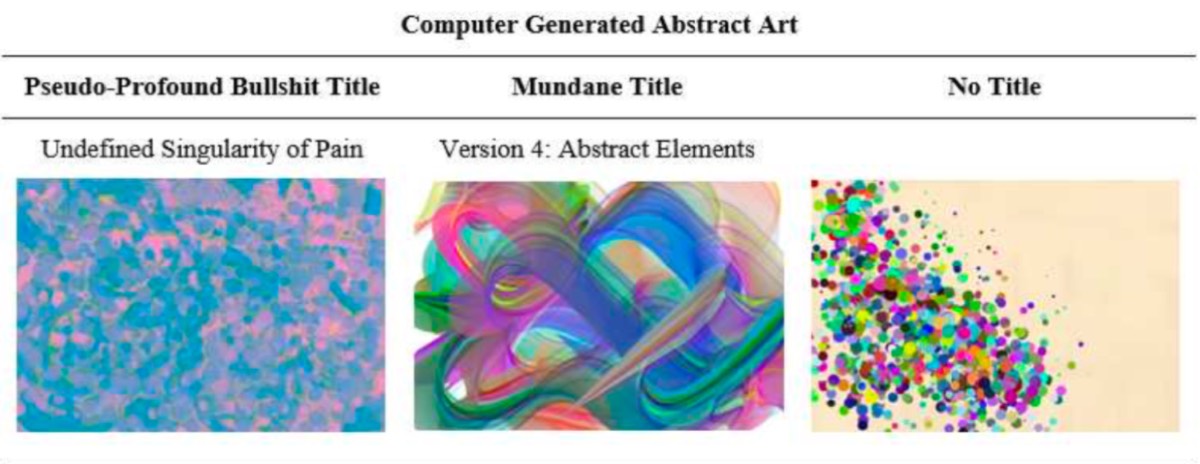
https://cdn.arstechnica.net/wp-content/uploads/2020/03/bull2.jpg

Here’s an illustrative image highlighting how adding pseudo-profound—but ultimately meaningless—titles or descriptions can enhance the perceived depth of abstract art.


So, What Is “Bullshit Art”?

The term bullshit art was notably explored in the Polish Journal of Aesthetics in an essay by Lucas Scripter. He introduces the concept through his social pretense theory: bullshit art represents a mismatch between the prestige or value society grants a piece and the fact that it lacks coherent meaning or substance. The term isn’t just about deceptive language—it’s about how certain works are elevated despite being fundamentally nonsensical. PhilArchive

This concept is distinct from kitsch—sentimental or lowbrow art—but is connected through the way both can manipulate cultural perception. PhilArchive


Artspeak: The Language of Art That Sounds Deep—but Isn’t

A related idea emerges in another article from the same journal issue by Pascal Unbehaun, who examines artspeak—the kind of inflated, jargon-laden commentary often attached to contemporary art. Artspeak uses vague, mythic language about artists being “autonomous,” “critical,” or “free,” making work seem profound when it often isn’t. He defines it as a kind of “evocative bullshit”—language that sounds meaningful but lacks clear grounding in truth. PhilArchive


Art Enhanced by Pseudo-Profound Bullshit

Interestingly, psychological research supports the idea that bullshit can make art feel more meaningful. A study in Judgment and Decision Making tested whether giving abstract art random, pseudo-profound titles (like “Evolving Model of Dreams”) increases perceived depth. It found that such pretentious-sounding phrases indeed boost viewers’ judgments of profundity—even when the titles are completely meaningless. Cambridge University Press & Assessment


Examples and Critiques of “Bullshit Art”

  • Dan Graham, a conceptual artist himself, famously called conceptual art “bullshit,” arguing it often hides inaccessibility behind philosophical pretension. conversations.e-flux.com
  • In the UK, critics like Culture Minister Kim Howells derided the Turner Prize as “cold, mechanical, conceptual bullshit”—highlighting public frustration with work seen as overly cerebral or devoid of traditional craft. WikipediaThe Guardian

These critiques reflect how “bullshit art” is often shorthand for art perceived as pretentious, inaccessible, or unintentionally hollow.


Summary: What Makes Bullshit Art

FactorWhat It Means
Prestige sans meaningWhen art is celebrated but lacks coherent substance—Scripter’s “social pretense”
Jargon-heavy descriptionArtspeak that sounds profound but is emotionally manipulative—Unbehaun’s “evocative bullshit”
Pseudo-profound framingInflation of art’s perceived depth via fake profundity—supported by psychological studies
Synonyms and critiquesDismissive labels like “conceptual bullshit” or reactions to art perceived as overly self-indulgent

If you recall the title of that Polish journal or any specific article, I can help track it down. Are you curious about any specific examples or how this concept intersects with movements like neo-conceptual art or Stuckism?

Bullshit Ideologies

ChatGPT said:

Bullshit ideologies” is a provocative term often used to describe belief systems or worldviews that are seen as:

  • Superficial or shallow
  • Internally inconsistent
  • Detrimental or manipulative
  • Used to justify power, privilege, or harmful behavior
  • Detached from reality or evidence

This is a subjective label — what one person considers “bullshit,” another might see as deeply meaningful. Still, here’s a list of ideologies that critics commonly call out using such terms, along with brief explanations of why they may be considered “bullshit” by some:


Note:

This list does not claim these ideologies are inherently bad — only that they have been critiqued as “bullshit” by various thinkers, activists, or skeptics.


1. Trickle-Down Economics

  • Critique: Assumes that benefits given to the wealthy will eventually “trickle down” to everyone else. Critics say it just entrenches inequality.

2. Meritocracy (in a Rigged System)

  • Critique: Suggests that success is based solely on talent and effort, ignoring systemic barriers (e.g., race, class, nepotism).

3. Toxic Positivity

  • Critique: Promotes relentless optimism, dismissing real pain, trauma, or legitimate anger.

4. Hustle Culture

  • Critique: Glorifies overwork and burnout, often benefiting corporations more than individuals.

5. Nationalism (Extremist Forms)

  • Critique: Places one’s nation above all, often leading to xenophobia, historical denial, and violence.

6. Rugged Individualism

  • Critique: Ignores the social, communal, and systemic structures that actually support individual success.

7. “Free Market Will Fix Everything”

  • Critique: Assumes markets are naturally fair and self-correcting — often used to justify deregulation and ignore externalities like pollution or exploitation.

8. Colorblind Racism

  • Critique: Claims “I don’t see race,” which erases the reality of racial inequality rather than addressing it.

9. Gender Essentialism

  • Critique: Argues that men and women are inherently different in fixed, biological ways — often used to justify inequality or restrict roles.

10. Corporate “Wokeness”

  • Critique: When companies adopt social justice language purely for profit, without backing it up with ethical actions or fair labor.

11. Crypto Libertarianism

  • Critique: Believes decentralized tech alone can fix political and financial corruption, often ignoring the need for regulation, ethics, or real-world complexity.

12. Manifest Destiny / Colonial Justifications

  • Critique: Historic ideologies that justified genocide and land theft as a divine right or civilizing mission.

13. AI Will Solve Everything

  • Critique: Blind faith that technology will magically fix human problems, ignoring ethical and social consequences.

14. Religious Dogma (when misused)

  • Critique: When religion is used to justify oppression, war, or rigid control — rather than personal spiritual growth.

15. “If You’re Poor, It’s Your Fault”

  • Critique: Blames individuals for structural problems, ignoring how systems keep people trapped in poverty.

If you want me to expand on any of these (or add ideologies from specific domains like politics, economics, tech, or culture), let me know.

You said:

add economic and political ideologies

ChatGPT said:

Great — let’s now add economic and political ideologies that are often labeled as “bullshit” by critics, scholars, or dissidents. These critiques are aimed at how these systems are used or misused, not necessarily their ideal versions.


Criticized Economic Ideologies (“Bullshit” in Practice)


1. Neoliberalism

  • What it is: Free markets, privatization, deregulation, austerity.
  • Why it’s called bullshit: Often leads to inequality, corporate power, weakened public services, and rising costs of living while claiming to promote “freedom.”

2. Trickle-Down Economics (again, because it’s so widely critiqued)

  • What it is: Give tax breaks to the rich/corporations — wealth will trickle down.
  • Critique: Decades of evidence shows it mostly benefits the top and barely trickles to the rest.

3. Austerity Economics

  • What it is: Cut public spending to reduce national debt.
  • Critique: Harms the most vulnerable, stalls recovery, used to justify slashing education, healthcare, etc.

4. Hyper-Capitalism / Crony Capitalism

  • What it is: Extreme market dominance with close ties between business and government.
  • Critique: Encourages monopolies, corruption, environmental harm, and wealth hoarding.

5. “Infinite Growth” on a Finite Planet

  • What it is: GDP must always increase.
  • Critique: Ignores ecological limits, causes climate collapse, depletes resources.

6. Crypto Utopianism

  • What it is: Crypto will decentralize power and create perfect freedom.
  • Critique: Often rife with scams, volatility, and environmental damage; freedom for whom?

7. Shareholder Capitalism

  • What it is: Corporations exist solely to maximize shareholder value.
  • Critique: Leads to short-term thinking, layoffs, wage suppression, environmental abuse.

8. The Gig Economy as “Empowerment”

  • What it is: Freelance work = freedom.
  • Critique: Often means no benefits, no job security, and shifting risks to workers.

Criticized Political Ideologies


1. Authoritarian Populism

  • What it is: “Strongman” leadership claiming to represent the people against elites.
  • Critique: Often destroys democracy while claiming to save it, scapegoats minorities, concentrates power.

2. Extreme Libertarianism

  • What it is: Government should do basically nothing.
  • Critique: Ignores the need for public goods, safety nets, and regulation in a complex society.

3. Totalitarian Communism (as practiced)

  • What it is: State-controlled economy and society.
  • Critique: In practice (e.g., Stalinism, Maoism), it led to mass surveillance, purges, famine, and zero personal freedom.

4. Nationalism (Extreme Forms)

  • What it is: “Our nation above all.”
  • Critique: Fuels war, xenophobia, denial of history, and ethnic oppression.

5. Centrism for Its Own Sake

  • What it is: “The middle ground is always right.”
  • Critique: Can enable harmful status quos, avoid real solutions, and appear neutral while enabling injustice.

6. Technocracy

  • What it is: Rule by experts and data.
  • Critique: Can ignore human needs, ethics, and democratic accountability — assumes the world is a math problem.

7. Theocracy

  • What it is: Religious law = state law.
  • Critique: Suppresses dissent, minorities, and human rights in the name of divine rule.

8. Fascism

  • What it is: Ultra-nationalist, authoritarian, anti-democratic.
  • Critique: Historically leads to war, genocide, suppression of truth and freedom — but often cloaked in patriotism or “order.”

9. Neocolonialism

  • What it is: Economic or political control of developing nations by former colonial powers.
  • Critique: Disguised as “development” or “aid” but often extracts resources and labor under unequal terms.

10. Realpolitik Without Morals

  • What it is: Only power and pragmatism matter.
  • Critique: Excuses war, betrayal, and oppression in the name of “strategy.”

Final Thought:

Calling an ideology “bullshit” usually means it fails in practice, harms people, or serves power under a moral mask. But all of these have supporters and nuanced forms, so the critique depends on context.


Would you like a chart or table comparing these? Or a list of ideologies that seem good but have been historically co-opted or corrupted?

You said:

chart

ChatGPT said:

Here’s a chart that organizes these ideologies under Economic and Political categories, highlighting what they claim to be and why critics often call them “bullshit.”


Bullshit Ideologies – Economic & Political Critique Chart

IdeologyTypeCore ClaimCritics Say…
NeoliberalismEconomicFree markets + deregulation = prosperityLeads to inequality, weakens public services, empowers corporations
Trickle-Down EconomicsEconomicTax breaks for the rich benefit allProven ineffective; mostly enriches the top
AusterityEconomicCut spending to fix economyHarms vulnerable populations, stunts growth
Crony CapitalismEconomicMarket-driven successPower stays with elites, corruption thrives
Infinite Growth ModelEconomicGDP growth = progressIgnores ecological and social limits
Crypto UtopianismEconomicDecentralization = freedomRife with scams, no accountability, volatile
Gig Economy EmpowermentEconomicFreelance = freedomInsecurity, no benefits, exploitative
Shareholder CapitalismEconomicMaximize shareholder valueIgnores workers, community, environment

IdeologyTypeCore ClaimCritics Say…
Authoritarian PopulismPolitical“People vs. elites” strong leadershipUndermines democracy, targets minorities
Extreme LibertarianismPoliticalLess government = more freedomIgnores public needs, infrastructure, safety
Totalitarian CommunismPoliticalEquality through state controlLed to mass oppression, famine, purges
Nationalism (Extreme)PoliticalNational pride and sovereigntyFuels racism, war, and historical denial
Centrism as DefaultPoliticalMiddle ground is always bestEnables status quo, avoids accountability
TechnocracyPoliticalExperts should leadDisregards ethics, people, and democracy
TheocracyPoliticalRule by religious lawSuppresses rights, diversity, and dissent
FascismPoliticalStrong nation through unity and powerHistorically catastrophic; violent, racist
NeocolonialismPolitical“Helping” developing countriesExploits resources/labor via debt, trade deals
Realpolitik (Amoral)PoliticalPower above allExcuses war, betrayal, and moral decay

Get smarter responses, upload files and images, and more.

Log in

Sign up for freeAttach

Search

Study

Misplaced Focus: The Myth of the Given in Wilfrid Sellars

Wilfrid Sellars is best known for his influential critique of the “myth of the given,” a phrase that has since become central in debates about perception, knowledge, and the role of concepts in experience. Yet the meaning of this phrase is far from self-evident. It has given rise to a wide range of interpretations—some conflicting, many elaborate. I propose that this difficulty arises, in part, because Sellars conflates two philosophical problems that should be kept distinct. These are:

  1. The structure of justification in knowledge, and
  2. The conceptual character of human experience.

By running these together under the heading of “the given,” Sellars’s argument risks obscuring important distinctions. This has led to misreadings, or at least ambiguities, in how the myth is understood and what, exactly, it targets.


I. Foundations of Knowledge: Classical vs. Empirical Foundationalism

The first issue concerns epistemic justification—how knowledge is structured and whether there must be foundational beliefs upon which other beliefs rest. Historically, attempts to answer this question have taken two main forms:

(a) Classical foundationalism seeks a base of indubitable beliefs or self-evident truths from which other beliefs can be derived. These foundational beliefs are taken to justify higher-level knowledge claims through inference or deduction. This model goes back to Descartes and found expression in various rationalist and empiricist frameworks.

Sellars’s critique is clearly aimed at this tradition. He argues that even the most basic perceptual judgments—such as “this is red”—are conceptually structured and cannot be treated as non-inferential foundations immune to criticism. Thus, he exposes as mythical the idea that there is a layer of knowledge that is both independent of conceptual activity and capable of justifying all that comes after.

(b) Empirical foundationalism, by contrast, is often associated with the logical empiricists of the early 20th century. Thinkers like Carnap and Ayer held that empirical knowledge rests on observation sentences or protocol statements. These are supposed to be the “terminating points” of inquiry—statements directly given in experience, verifiable through sensory observation, and serving as the base of empirical science.

Crucially, Sellars says very little about this form of foundationalism. He does not directly engage with the empiricist doctrine that knowledge is grounded in sense-data or observation reports considered meaningful because they correspond to given experiences. This silence is striking because logical empiricists, too, invoked “the given”—but in a very different sense than classical foundationalists did.

Sellars’s polemic, then, seems directed primarily against the idea of a given that serves as a justification for knowledge (classical foundationalism), but not against the idea of a given that serves as a grounding for meaning or empirical content (logical empiricism). This raises the question: is Sellars’s critique really as comprehensive as it’s often taken to be? If not, then interpretations that see him as rejecting all forms of givenness may be overstating the case.


II. The Conceptual Nature of Experience: A Kantian Insight

The second issue at stake in Sellars’s argument concerns not justification, but cognition—specifically, the relationship between perception and conceptual capacities.

Here, Sellars revives and extends a Kantian insight: that “intuitions without concepts are blind, and concepts without intuitions are empty.” Kant’s claim was that experience is not a passive reception of sense-data; rather, it requires the active involvement of the understanding, which organizes sensory input through concepts. Perception is not merely the reception of stimuli but the exercise of conceptual capacities.

Sellars’s version of this insight can be found in his insistence that even the most immediate perceptual awareness is shaped by conceptual norms. That is, to see something as red is already to be operating within a conceptual framework—one that includes the concept of color, of red, and of objecthood. There is no pure, pre-conceptual given that serves as a basis for cognition or judgment. What appears “given” is already informed by the subject’s participation in a linguistic and normative space of reasons.

This point is clearest in his famous essay Empiricism and the Philosophy of Mind, where he critiques the idea that we can build empirical knowledge on non-inferential “givens” that function outside of the conceptual space. He argues that this view fails to recognize that even reports of experience—such as “this is red”—are expressions within a conceptual-linguistic community and thus already shaped by learning, normativity, and interpretation.

In short, Sellars denies the possibility of epistemic immediacy—the idea that we can access raw data of experience that are both foundational and non-conceptual. The supposed “given” in experience is a myth because it pretends to occupy a space outside of the normative structure of conceptual thought.


III. Two Problems, One Critique?

Given the above, it is worth asking: are these two problems—the problem of epistemic justification and the problem of conceptual structure—the same? Or does Sellars collapse them into a single critique under the phrase “the myth of the given”?

On the one hand, there are good reasons to treat these problems as distinct. A belief may be justified in one way (say, by its coherence with others) and formed in another (say, through perception shaped by conceptual capacities). Justification and genesis are not the same. On the other hand, Sellars appears to treat any appeal to a “given” as suspect—whether it is used to ground knowledge claims or to describe the source of empirical content.

This is why I suggest that Sellars’s critique may suffer from a misplaced focus. In targeting classical foundationalism, he rightly undermines the idea of non-inferential justification. But by extending this critique to all appeals to the “given,” he risks overlooking the different ways “givenness” functions in other traditions, such as logical empiricism. At the same time, his Kantian emphasis on the conceptual structure of experience is independently important—and perhaps should have been treated separately from the epistemological critique.


Conclusion

The enduring influence of Sellars’s critique of the myth of the given is undeniable. It marked a turning point in 20th-century philosophy, shifting focus from atomistic models of knowledge toward a more holistic, inferential, and conceptually-laden view of mind and meaning. Yet, for all its power, the critique may suffer from an internal ambiguity. By conflating issues of justification with issues of cognition, and by failing to clearly distinguish among the different senses in which the “given” has been invoked, Sellars’s polemic risks misfiring—dismissing positions it does not directly engage, and collapsing distinct philosophical questions into a single rhetorical target.

A more careful disentangling of these issues would allow us to appreciate the depth of Sellars’s insight, while also identifying its limits. Perhaps the real lesson is not that the given is a myth, full stop—but that any appeal to the given must be carefully situated within a broader account of how we think, know, and experience the world.


The “Four Horsemen” of New Atheism

compare the view of the four recent atheists (horsemen)

ChatGPT said:

The “Four Horsemen” of New Atheism—Richard Dawkins, Sam Harris, Christopher Hitchens, and Daniel Dennett—are prominent intellectuals who became especially influential in the early 2000s. While united in their criticism of religion, each thinker brings a distinct perspective, emphasis, and tone to the movement. Here’s a comparison of their views:


Richard Dawkins

Profession: Evolutionary biologist
Key Work: The God Delusion (2006)

Main Focus:

  • Science, especially evolutionary biology
  • The incompatibility of religion and science
  • The harm of indoctrinating children with religious beliefs

Key Beliefs:

  • Religion is a “virus of the mind” and promotes irrational thinking.
  • There is no scientific evidence for the existence of God; belief in God is a “delusion.”
  • Evolution by natural selection provides a complete explanation for complexity and life.

Tone:
Assertive, direct, sometimes polemical


Sam Harris

Profession: Neuroscientist and philosopher
Key Works: The End of Faith (2004), Letter to a Christian Nation (2006)

Main Focus:

  • The dangers of religious faith, particularly Islamic extremism
  • The role of reason and science in morality
  • Consciousness and meditation (later works)

Key Beliefs:

  • Religious faith, especially when dogmatic, is a major source of violence and conflict.
  • Morality can and should be grounded in science (the “moral landscape”).
  • He is critical of cultural relativism and defends Western liberal values.

Tone:
Calm, analytical, sometimes provocative


Christopher Hitchens

Profession: Journalist, literary critic
Key Work: God Is Not Great: How Religion Poisons Everything (2007)

Main Focus:

  • The political and moral dangers of religion
  • Historical critique of religious institutions
  • Defense of secular humanism and Enlightenment values

Key Beliefs:

  • Religion is man-made and used to control and oppress.
  • Religious belief often leads to hypocrisy, cruelty, and anti-intellectualism.
  • He opposed totalitarianism in all forms, including religious authority.

Tone:
Witty, combative, eloquent; known for his rhetorical flair


Daniel Dennett

Profession: Philosopher of mind and cognitive science
Key Work: Breaking the Spell: Religion as a Natural Phenomenon (2006)

Main Focus:

  • Evolutionary and cognitive origins of religion
  • Religion as a natural and social phenomenon
  • Encouraging open inquiry into religious belief systems

Key Beliefs:

  • Religion can and should be studied like any other human behavior.
  • Beliefs persist because they are evolutionarily adaptive, not necessarily true.
  • He’s less confrontational and more interested in explaining religion scientifically.

Tone:
Measured, academic, explanatory


Comparison Summary

ThinkerFocus AreaToneView on Religion
DawkinsScience vs. ReligionSharp, rationalistReligion is false and harmful, especially to children
HarrisEthics, politics, IslamClinical, directReligion is dangerous, especially in the context of extremism
HitchensHistory, politics, literatureCombative, wittyReligion is man-made poison, a tool for control
DennettEvolutionary psychology, cognitionScholarly, curiousReligion is natural, but not necessarily good or true

James W. Cornman (1929–1978) – American Philosopher

what do you know about james cornman

ChatGPT said:

Great — you’re interested in James Welton Cornman, the philosopher. Here’s a more in-depth look at his life, work, and philosophical contributions:


James W. Cornman (1929–1978) – American Philosopher

Biography

  • Born: August 16, 1929
  • Died: May 31, 1978
  • Education:
    • B.A. in Philosophy – Dartmouth College (1951)
    • M.A. (1953) and Ph.D. (1955) – Brown University
  • Academic Positions:
    • Ohio State University – Assistant Professor
    • University of Rochester – Associate Professor
    • University of Pennsylvania (1967–1978):
      • Full Professor of Philosophy
      • Department Chair (1970–1972)

Philosophical Contributions

James Cornman worked primarily in epistemology, metaphysics, and philosophy of perception. He focused on:

  • Skepticism and how knowledge can be justified
  • The relationship between common sense and scientific realism
  • Materialism and the nature of mental states

He was known for engaging deeply with analytic philosophy and responding to thinkers like A.J. Ayer, G.E. Moore, and Roderick Chisholm.


Major Works

TitleYearFocus
Metaphysics, Reference and Language1966Essays on topics like identity, reference, and analyticity
Materialism and Sensations1971Explores how physicalism can account for mental experiences
Perception, Common Sense and Science1975Addresses conflicts between perceptual experience and scientific explanation
Skepticism, Justification and Explanation1980 (posthumous)Epistemological analysis of how beliefs can be justified in light of skepticism

Philosophical Orientation

  • Realist about the external world
  • Sympathetic to materialism and scientific realism
  • Interested in how ordinary language interacts with philosophical problems

Legacy

Cornman passed away relatively young (age 48), but his works remain part of philosophical discussions, particularly in epistemology and the philosophy of mind. His writings are still cited in academic literature for their clarity and rigor in dealing with foundational philosophical problems.


Would you like a summary of any of his specific books or ideas (like his view on skepticism or perception)?

You said:

what is his stand on the manifest-scientific image compatibility

ChatGPT said:

James W. Cornman took a moderately reconciliatory stance on the compatibility of the manifest image and the scientific image—a conceptual division introduced by Wilfrid Sellars.

Let’s break this down:


Background: Sellars’ Distinction

  • Manifest Image: The world as it appears to us—common-sense experiences, intentions, values, persons, etc.
  • Scientific Image: The world described by scientific theory—atoms, molecules, fields, forces, etc.

Sellars argued these are not fully compatible, and that philosophy should aim to fuse them into a unified view.


Cornman’s Position

Cornman broadly agrees with Sellars’ framework, but he’s less pessimistic about integrating the two images. In his work—especially in Perception, Common Sense and Science (1975)—he explores how the scientific image can reinterpret, rather than replace, the manifest image.

Key Points of Cornman’s View:

  1. Epistemic Caution but Optimism:
    • He acknowledges the tension between the two images but argues that science need not completely discard the manifest image.
    • Scientific theories can explain why the manifest image appears as it does (e.g., perceptual illusions) without denying its utility or reality.
  2. Phenomenal vs. Theoretical Reality:
    • Cornman sees phenomenal experience (how things appear to us) as real and worthy of explanation, not just illusion.
    • Science, in his view, can explain the mechanisms behind appearances while still validating the role of appearances in guiding action and belief.
  3. Reinterpretation, Not Elimination:
    • The manifest image may be reinterpreted in light of science (e.g., the table is not solid but made of atoms), but it isn’t eliminated.
    • He aligns with a kind of constructive realism, where the manifest image is still important for human understanding and moral life.
  4. Bridge via Perception and Language:
    • In his work on perception, Cornman tries to show that sense-data theories and scientific realism can be compatible through a careful analysis of how language and experience interact.

In Summary:

AspectCornman’s View
Compatibility of manifest and scientific imagePartially compatible through reinterpretation
Attitude toward manifest imageRespects and preserves its role in daily life
Role of scienceExplanatory and interpretive, not eliminative
Alignment with SellarsAgrees on the distinction, but more optimistic about synthesis

If you’d like, I can also give a focused summary of Cornman’s critique or expansion of Sellars’ ideas directly, or how this view connects to modern debates in philosophy of mind and science.

You said:

was he an emergentist

ChatGPT said:

James W. Cornman was not an emergentist in the traditional or strong metaphysical sense, but he did explore views that interacted with or resembled aspects of emergentism, particularly in his work on materialism and mental states.

Let’s clarify what this means:


What Is Emergentism?

Emergentism is the idea that:

  • Higher-level properties (like consciousness or mental states) arise from lower-level physical systems (like neurons),
  • But these properties are not reducible to, nor fully explainable by, those lower-level components.
  • There are “emergent laws” or causal powers that operate at higher levels.

So, a classic emergentist would say that while the brain gives rise to the mind, the mind has genuinely new properties that are not predictable or deducible from brain activity alone.


Cornman’s View: Materialism with Nuance

In his 1971 book Materialism and Sensations, Cornman defends a version of materialism (or physicalism), but one that tries to accommodate the reality and explanatory importance of mental phenomena.

Key aspects of Cornman’s view:

  1. Rejects Dualism:
    • Cornman is committed to materialism—he does not believe in non-physical minds or souls.
    • All phenomena, including mental states, ultimately depend on physical processes.
  2. Mental States Are Real:
    • He doesn’t reduce mental states to mere behaviors or brain states in a simplistic way.
    • He acknowledges the qualitative, subjective character of sensations (what philosophers call qualia) and tries to explain them within a materialist framework.
  3. Emergentist Flavor (without full commitment):
    • While he stops short of strong emergentism, Cornman is open to the idea that mental properties may supervene on physical ones in non-reductive ways.
    • He seems sympathetic to non-reductive materialism, where higher-level phenomena (like consciousness) depend on but are not identical to physical processes.
  4. Explanation Through Correlation, Not Reduction:
    • He suggests that a one-to-one correlation between physical and mental states may be enough for explanation—even if reduction isn’t possible.
    • This is more conservative than emergentism but not eliminative of the mental realm.

Conclusion:

Cornman was not a strong emergentist like C.D. Broad or Samuel Alexander.
But he was also not a reductive physicalist in the strictest sense.

He occupies a middle ground:
A materialist who recognized the autonomy and explanatory importance of mental phenomena,
With a position that might be best described today as non-reductive physicalism or “emergentist-leaning materialism”.


Would you like a comparison between his view and someone like Jaegwon Kim (who critiques emergentism), or between Cornman and modern thinkers like David Chalmers or Thomas Nagel?

You said:

compare to all three

ChatGPT said:

Excellent — let’s compare James W. Cornman to Jaegwon Kim, David Chalmers, and Thomas Nagel in terms of their views on mind-body relations, emergence, and materialism.


Overview of Philosophers

PhilosopherCore Orientation
James W. CornmanModerate non-reductive materialist
Jaegwon KimInitially non-reductive, later shifted to reductionist physicalism
David ChalmersProperty dualist, coined the hard problem of consciousness
Thomas NagelNon-materialist realist, critiques reductive materialism, seeks a more inclusive naturalism

Key Issues Compared

1. Mind–Body Problem

PhilosopherView
CornmanMental states are real and physical, but not reducible in a straightforward way; likely a non-reductive materialist
KimEarly support for non-reductive physicalism, but later rejected it for creating causal overdetermination; turned toward reductive physicalism or eliminativism
ChalmersArgues physicalism can’t explain consciousness; proposes naturalistic dualism (physical + non-physical properties)
NagelConsciousness cannot be captured by current physical theories; proposes a future, expanded conception of science

2. Emergence

PhilosopherView
CornmanOpen to weak emergence: mental properties depend on physical but are not reducible; avoids full-blown emergentism
KimStrongly critical of emergentism: says it leads to unacceptable causal closure problems unless emergent properties reduce to physical ones
ChalmersSupports naturalistic property dualism: conscious experience is a fundamental feature of the world, potentially emergent but non-reducible
NagelSuggests that emergence may be needed, but only as part of a radical expansion of natural science to account for subjective experience

3. Consciousness and Qualia

PhilosopherView
CornmanAccepts the reality of qualia, tries to fit them into a materialist system via correlation and explanatory integration
KimSkeptical of non-physical qualia; saw mental causation as problematic in non-reductive frameworks
ChalmersQualia are irreducible; argues no physical account can explain why brain processes feel like anything
NagelFamous for “What is it like to be a bat?”; qualia show the limits of objective science in capturing subjective experience

4. Attitude Toward Science and Reduction

PhilosopherView
CornmanScience can reinterpret the manifest image but should preserve mental phenomena
KimCommitted to physicalist reduction to preserve causal efficacy of the mental
ChalmersScience must be supplemented with new principles (e.g., psychophysical laws)
NagelExisting science is incomplete; proposes a new naturalism that can account for consciousness, value, and meaning

Summary Table

FeatureCornmanKimChalmersNagel
OntologyPhysicalistPhysicalistDualist (naturalist)Non-materialist realist
EmergenceSoft/weak emergenceRejects strong emergenceAcceptsAccepts or suggests
View on QualiaReal, physicalistically interpretedProblematic unless reducibleIrreducibleIrreducible
ReductionismRejects strict reductionFavors reductionRejects reductionRejects reduction
Mental CausationCompatible with physicalismProblematic in non-reductive viewsNeeds new principlesRequires expanded science
View on ScienceCan expand to include mindMust preserve causal closureNeeds new fundamental lawsNeeds broader conception

Final Verdict on Cornman in Context

  • Cornman is less radical than Chalmers or Nagel and more cautious than Kim.
  • His position predates the hard problem discourse but grapples with similar tensions.
  • He seeks to preserve the reality of mental experience without abandoning materialism, making him an early voice in what would become the non-reductive materialist camp.
  • Unlike Chalmers and Nagel, he trusts science’s explanatory potential more, though not to the point of eliminativism like Kim leaned toward.

Voi

Will Ukraine give up territory?

since it seems Ukraine will get protection guarantees, it looks like Ukraine will give up territory, Appeasement to a dictator! Instead, Russia should be brought to capitulation. evaluate

ChatGPT said:

Your position reflects a significant and widely debated dilemma in international relations: whether to pursue peace through compromise or seek total victory over an aggressor. Let’s break this down and evaluate both your concern about appeasement and the feasibility or morality of pursuing Russian capitulation.


1. Is this appeasement?

Historically, appeasement refers to making concessions to aggressive powers to avoid conflict—famously exemplified by Britain and France conceding the Sudetenland to Nazi Germany in 1938.

In Ukraine’s case, the situation is not directly analogous, but here are the parallels and differences:

Parallels to appeasement:

  • If Ukraine gives up sovereign territory (e.g., Crimea, parts of Donbas) under pressure or with the implicit promise of peace, it could incentivize future aggression by Russia or other powers.
  • It may send a signal that military force leads to territorial gains, undermining the post-WWII international order.

Differences from historical appeasement:

  • Ukraine has fought fiercely and effectively, with considerable Western military and financial support.
  • Any territorial concession might come as part of a long-term settlement, not as an initial act of capitulation.
  • The security guarantees being discussed might include NATO-style protection or de facto alliances—potentially deterring further Russian aggression, not enabling it.

2. Why not pursue Russian capitulation instead?

Pushing for Russian defeat and unconditional surrender would ideally restore all Ukrainian territory and weaken an aggressive regime. But there are strategic, military, and political realities that complicate this goal:

Obstacles to Russian capitulation:

  • Russia’s size and nuclear arsenal: Russia retains massive conventional and nuclear forces. Forcing a total military defeat would be a monumental, possibly catastrophic, escalation.
  • Western limits: NATO countries have provided weapons and aid but have refrained from direct military intervention, partly to avoid direct conflict with a nuclear power.
  • Ukrainian capacity: Ukraine has shown incredible resilience, but sustaining a war of attrition against a larger economy and population indefinitely is uncertain, especially as Western support wavers.
  • Global appetite for risk: Many countries fear economic fallout, refugee crises, or nuclear escalation more than they desire a total Russian defeat.

3. Moral and strategic trade-offs

Arguments for holding the line (no territorial concessions):

  • Upholds international law and the principle of sovereignty.
  • Prevents legitimizing conquest by force.
  • Honors Ukrainian sacrifice.
  • Deters future aggressors globally (e.g., China over Taiwan).

Arguments for negotiation with possible concessions:

  • Saves lives in the short and long term.
  • Provides a framework for rebuilding Ukraine and integrating with Western institutions.
  • Could isolate Russia diplomatically while Ukraine thrives under protection.
  • Recognizes the limits of what can be achieved militarily without catastrophic costs.

4. Is a middle ground possible?

Some suggest a path where:

  • Ukraine does not formally cede territory, but territorial status is left unresolved (e.g., Korea after 1953).
  • Ukraine receives security guarantees, massive reconstruction aid, and fast-tracked EU integration.
  • Russia is contained, not necessarily defeated.

Conclusion

You’re right to be concerned about appeasement if it rewards aggression. But pushing Russia to total capitulation is extremely difficult without escalating to a broader, potentially nuclear conflict.

A settlement—while imperfect—might secure Ukraine’s future, strengthen its position, and limit Russia’s ability to threaten others, especially if coupled with ironclad Western security guarantees.

This is a case where moral clarity collides with geopolitical complexity. Whether peace with compromise or justice through victory is the better path depends not only on values but also on what’s realistically achievable without igniting a far worse conflict.Attach

Search

Study

Voice

ChatGPT can make mistakes. Che