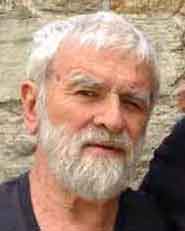
Andrew Chrucky’s essay “C. D. Broad: The Default Philosopher of the Century” is a passionate, well-reasoned defense of a highly unorthodox thesis: that C. D. Broad, a relatively obscure figure by popular philosophical standards, should be regarded as the default philosopher of the 20th century — akin to Aristotle in earlier times. Below is an evaluation of Chrucky’s main claims, arguments, and the overall coherence and persuasiveness of his position.
1. Thesis and Structure
Chrucky opens with a bold claim: Broad is the most important philosopher of the century, but he anticipates resistance and immediately reframes his assertion. His argument hinges on defining a new criterion of importance: the “default philosopher” — someone who offers the most dialectically comprehensive, methodically clear, and technically refined body of work, one that serves as a foundation or starting point for future philosophical inquiry.
This approach is well-structured:
- First, he dismisses conventional criteria of fame or influence.
- Second, he introduces the ideal of the “dialectical system builder” as an alternative standard of philosophical importance.
- Third, he positions Broad as the exemplary figure in this category.
- Finally, he gives detailed support for Broad’s mastery across a wide range of philosophical domains.
2. Critique of Conventional Measures of Fame
Chrucky rightly critiques the sociological mechanisms that drive fame in academic philosophy:
- The pressure to publish rewards interpretation over original thought.
- Philosophical popularity often correlates with obscurity, which allows for endless reinterpretation.
- Public intellectuals may gain traction through iconoclasm and style, rather than clarity or rigor.
This line of critique is not unique to Chrucky, but it’s well-articulated and persuasive. It clears space for his unconventional evaluation of Broad, while also making a broader point about how philosophical canons are formed.
3. The Notion of a “Dialectical System Builder”
The heart of the argument is the concept of dialectical philosophy:
- A dialectical system builder is one who doesn’t merely defend one vision, but systematically surveys all plausible alternatives, with fairness and clarity.
- This stands in contrast to the “visionary” system builders (like Plato, Nietzsche, or Heidegger) who promote powerful but partial perspectives.
Here, Chrucky echoes Aristotle, Aquinas, and Kant — philosophers who sought to map out and evaluate the philosophical terrain.
Broad, he argues, belongs in this tradition because:
- He meticulously catalogued and assessed philosophical alternatives.
- He was analytically rigorous and clear.
- He prioritized logical structure and fairness over ideological commitments.
This is a compelling characterization of Broad, and of philosophical importance more generally. It provides a viable alternative to fame-based or purely historical assessments of influence.
4. Broad as “Default Philosopher”
The metaphor of the default settings in a word processor is apt: a default philosopher is one you should begin with — not because they’re infallible, but because they provide the most comprehensive, balanced, and clear framework to start from.
Broad fits this role, in Chrucky’s view, because:
- He was dialectical: he surveyed alternatives impartially.
- He was analytically precise: carefully making distinctions, using formal tools when appropriate.
- He was accessible: his clarity makes his work a suitable launching point.
- He was synoptic: integrating knowledge from across philosophy and even parapsychology.
This framing is original and helps justify the central claim. It also sidesteps traditional objections (e.g., Broad’s lack of notoriety), because the standard being proposed is not popularity, but methodological centrality.
5. Strengths of the Argument
- Conceptual innovation: Chrucky doesn’t just assert Broad’s importance — he builds a new conceptual framework to explain it.
- Rich historical context: He places Broad alongside Aristotle, Aquinas, Kant, and Hegel — giving intellectual pedigree to the idea of dialectical system building.
- Specific examples: Chrucky demonstrates Broad’s strengths in ethics, epistemology, metaphysics, philosophy of mind, and induction, and backs this with references to works like Mind and Its Place in Nature, Five Types of Ethical Theory, and others.
- Fair acknowledgment of weaknesses: He addresses Broad’s association with parapsychology, and even defends it as part of a commitment to covering all experience, including the anomalous.
6. Weaknesses or Limitations
- Narrow appeal: The concept of a “default philosopher” is useful for scholars with a systematic orientation, but may not resonate with those interested in social critique, phenomenology, or aesthetics.
- Uncritical idealization: Chrucky may understate the philosophical limitations or biases Broad did have (e.g., limitations of his views on the mind-body problem or moral realism).
- Sociological detachment: While he critiques academic trends well, Chrucky’s view arguably isolates philosophy from cultural forces that shape its relevance and application.
Still, these are relatively minor and do not undermine the broader thrust of his position.
7. Final Assessment
Chrucky’s essay is an original, thoughtful, and compelling defense of C. D. Broad’s overlooked philosophical importance. By introducing the dialectical and default philosopher categories, he offers an insightful lens for re-evaluating the 20th-century philosophical landscape — one that values clarity, comprehensiveness, and fair engagement with alternatives over fashion or fame.
Even if one disagrees with the ranking, Chrucky’s framework encourages a more reflective and systematic approach to evaluating philosophical contributions — and that, in itself, is philosophically valuable.
Recommendation
This essay is highly recommended for:
- Philosophers interested in analytic traditions and their development.
- Students seeking a methodical entry point into philosophical debates.
- Historians of philosophy reconsidering the criteria for significance.
- Anyone frustrated with philosophical fads and looking for intellectual substance.
In short, Chrucky makes a serious case that deserves serious consideration — and that alone is a mark of philosophical success.
Ask ChatGPT